
By Sarah Jenkins
Published: October 24, 2023
Location: Detroit, Michigan
Powering the Motor City: The Race to Expand Detroit EV Infrastructure
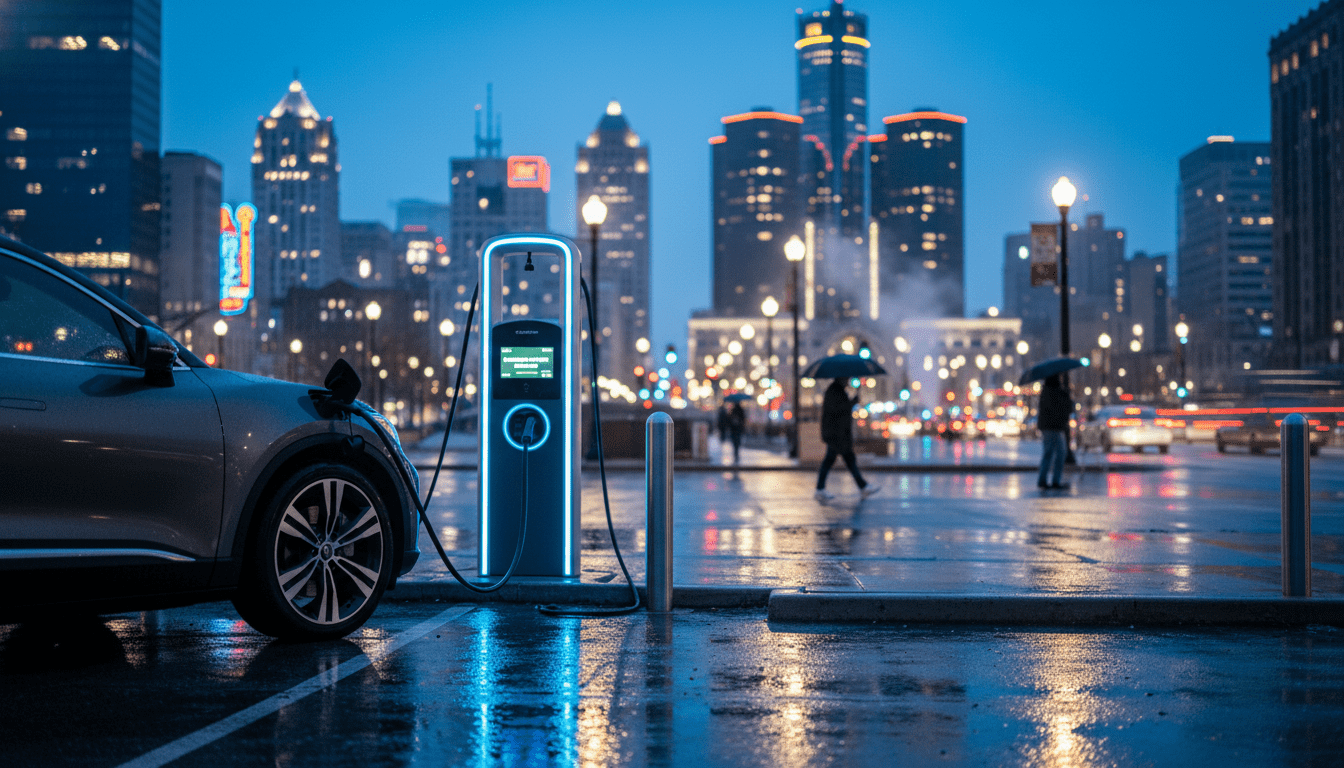
For over a century, Detroit has been defined by the internal combustion engine. Today, however, the Motor City faces a critical pivot point. As automakers like General Motors and Ford commit billions to electrification, the city’s physical landscape is playing catch-up. The state of Detroit EV infrastructure is becoming a central topic for city planners, utility providers, and residents alike, as the demand for reliable charging stations begins to outpace availability.
While the highways surrounding Metro Detroit are seeing rapid deployment of fast chargers, the city’s neighborhoods face a more complex challenge: creating an equitable, reliable charging grid that can support a population where not everyone has a driveway or a garage.
The Funding Surge: Federal and State Support
The expansion of Detroit EV infrastructure is being fueled largely by the National Electric Vehicle Infrastructure (NEVI) formula program. According to the Michigan Department of Transportation (MDOT), Michigan expects to receive approximately $110 million in federal funding to build out EV charging sites across the state over the next five years.
This influx of capital is designed to eliminate “range anxiety”—the fear that an electric vehicle will run out of power before reaching a charging station. For Detroit, this means placing Level 3 DC fast chargers in strategic corridors. However, local officials emphasize that highway charging is only half the battle.
“To truly electrify Detroit, we cannot just focus on the I-75 corridor,” said a representative from the Southeast Michigan Council of Governments (SEMCOG) during a recent planning brief. “We need curbside charging and community hubs within the city limits to support residents who live in multi-unit housing.”
DTE Energy and Grid Reliability
Expanding the charging network places a new load on the electrical grid. DTE Energy, the primary utility provider for the region, has been upgrading substations to handle the anticipated spike in demand. The utility has launched several pilot programs aimed at understanding how Detroit EV infrastructure interacts with peak energy usage times.
According to DTE’s clean energy reports, the utility is offering rebates for residential charger installations and working with commercial developers to pre-wire new buildings for EV readiness. This proactive approach is essential to prevent brownouts as EV adoption scales up over the next decade.
For more on how local businesses are adapting to these energy shifts, read our coverage on Detroit business sustainability initiatives.
Impact on Detroit Residents
For the average Detroiter, the shift to EVs presents both opportunities and hurdles. The primary concern remains access. In neighborhoods like Jefferson Chalmers or the North End, public charging stations are currently sparse compared to the density seen in Midtown or Downtown.
Local advocacy groups are pushing for “charging equity,” ensuring that the rollout of Detroit EV infrastructure does not bypass lower-income neighborhoods. The goal is to ensure that as the used EV market becomes more affordable, residents in all zip codes have the means to power these vehicles.
“It’s about future-proofing our communities,” says Marcus Hall, a community organizer in District 3. “If we don’t have the chargers, we don’t get the clean air benefits or the economic savings of driving electric.”
Real Estate and Development Trends
The push for electrification is also reshaping Detroit real estate. Property developers are increasingly viewing EV charging stations as a necessary amenity rather than a luxury. New residential developments in Corktown and New Center are marketing on-site charging as a key feature to attract tech-savvy tenants.
Commercial landlords are also taking note. Retail centers that offer fast charging are seeing increased foot traffic, as drivers spend 20 to 40 minutes shopping or dining while their vehicles power up.
Background & Data
- Current Status: As of mid-2023, Michigan had over 2,600 public charging stations, but a significant concentration remains in affluent suburbs rather than Detroit’s urban core.
- State Goals: The State of Michigan aims to have 2 million electric vehicles on the road by 2030.
- Federal Data: Data from the U.S. Department of Energy indicates that 80% of EV charging currently happens at home, highlighting the need for solutions for street-parking residents.
What Happens Next?
The next 12 to 24 months will be crucial for Detroit EV infrastructure. The city is expected to announce partnerships with private charging networks to utilize city-owned lots for charging hubs. Furthermore, the Michigan Central innovation district is acting as a living lab for wireless charging technology, which could eventually be deployed on public roads.
As the automotive industry transforms, Detroit is fighting to ensure its infrastructure evolves in tandem, securing its title as the transportation capital of the world—regardless of what fuels the engine.