
By Sarah Jenkins
Published: October 24, 2024
Location: Detroit, Michigan
Detroit EV Investment Landscape: Billions Pour into Motor City Despite Market Shifts
The narrative surrounding the transition to electric vehicles has fluctuated significantly over the last two years, yet the core of Detroit EV investment remains robust. While consumer adoption rates nationwide have cooled slightly leading automakers to adjust production schedules, the Motor City continues to see billions of dollars funneled into manufacturing retrofits, battery assembly plants, and charging infrastructure.
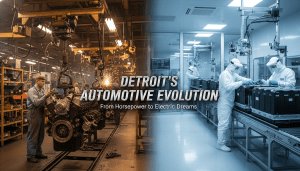
For a city that has long been the heartbeat of the global automotive industry, this transition is not just a trend but a fundamental economic restructuring. From the dedicated production lines at Factory ZERO to the revitalization of Michigan Central, Detroit is positioning itself to lead the next century of mobility, even as the road ahead presents logistical and economic hurdles.
The State of Detroit EV Investment in 2025
Despite recent headlines about automakers delaying certain EV targets, the physical transformation of Detroit’s industrial footprint is well underway. General Motors and Ford have both doubled down on their commitment to Michigan-based manufacturing. According to the Michigan Economic Development Corporation (MEDC), the state has secured over $16 billion in electric vehicle and battery manufacturing investments since 2022.
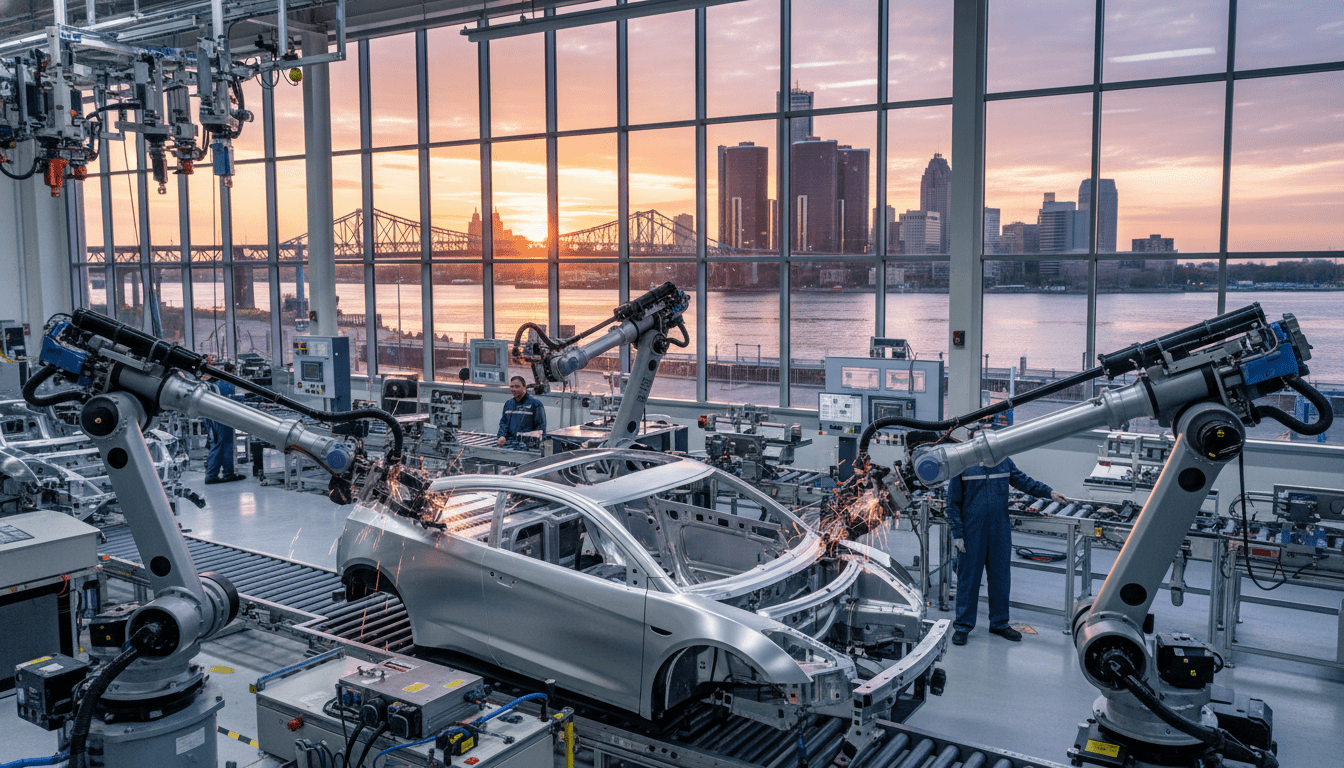
“We are seeing a strategic pivot from pure hype to sustainable infrastructure building,” said Marcus Thorne, a local automotive supply chain analyst. “The initial rush has settled, and now we are seeing the actual steel and concrete going into the ground. Detroit isn’t just designing these cars; we are retooling to build them from the chassis up.”
This sentiment is visible at the Detroit-Hamtramck assembly center, now known as Factory ZERO, which serves as the launchpad for GM’s multi-brand EV strategy. Similarly, Stellantis is navigating its own localized strategy, balancing traditional production with necessary upgrades for electrification.
Impact on Detroit Residents
For the average Detroiter, these high-level corporate strategies have tangible, street-level impacts. The influx of Detroit EV investment is actively reshaping the local job market. The demand is shifting from traditional mechanical assembly to roles requiring certifications in high-voltage systems, robotics, and battery chemistry.
“The biggest challenge we face isn’t a lack of jobs, but the skills gap,” noted a representative from a Detroit-based workforce development non-profit. “We are working with the city to ensure that residents in neighborhoods like Jefferson Chalmers and Southwest Detroit have access to the training programs required to fill these new manufacturing roles.”
Furthermore, the infrastructure bill has begun to manifest in public charging stations. While “range anxiety” remains a concern for local buyers, the City of Detroit has begun rolling out new curbside charging pilots aimed at residents who rely on street parking—a critical demographic often overlooked in the national conversation about home charging.
Background & Data
Data from the U.S. Department of Energy indicates that Michigan is currently top three in the nation for EV battery manufacturing capacity. This is a direct result of federal incentives combined with state-level grants designed to keep the supply chain local. The Bipartisan Infrastructure Law has further allocated millions specifically for the deployment of EV chargers along designated Alternative Fuel Corridors, including I-75 and I-94 running through Detroit.
However, the transition is not without friction. Reports from Crain’s Detroit Business earlier this year highlighted that while manufacturing investment is high, consumer purchasing power in the city remains a barrier. The average price of a new EV is still higher than its internal combustion counterpart, making adoption slower in urban areas compared to affluent suburbs.
What Happens Next
Looking ahead, the focus of Detroit EV investment will likely expand beyond just vehicle assembly to include the recycling of lithium-ion batteries and the grid upgrades necessary to support widespread charging. DTE Energy has outlined plans to modernize the local grid to handle the increased load, a project that will take years to complete.
As the Detroit auto industry evolves, the city stands at a crossroads. The success of these investments will depend on whether the economic benefits—jobs, cleaner air, and updated infrastructure—reach all neighborhoods, rather than remaining confined to industrial parks and tech campuses.