

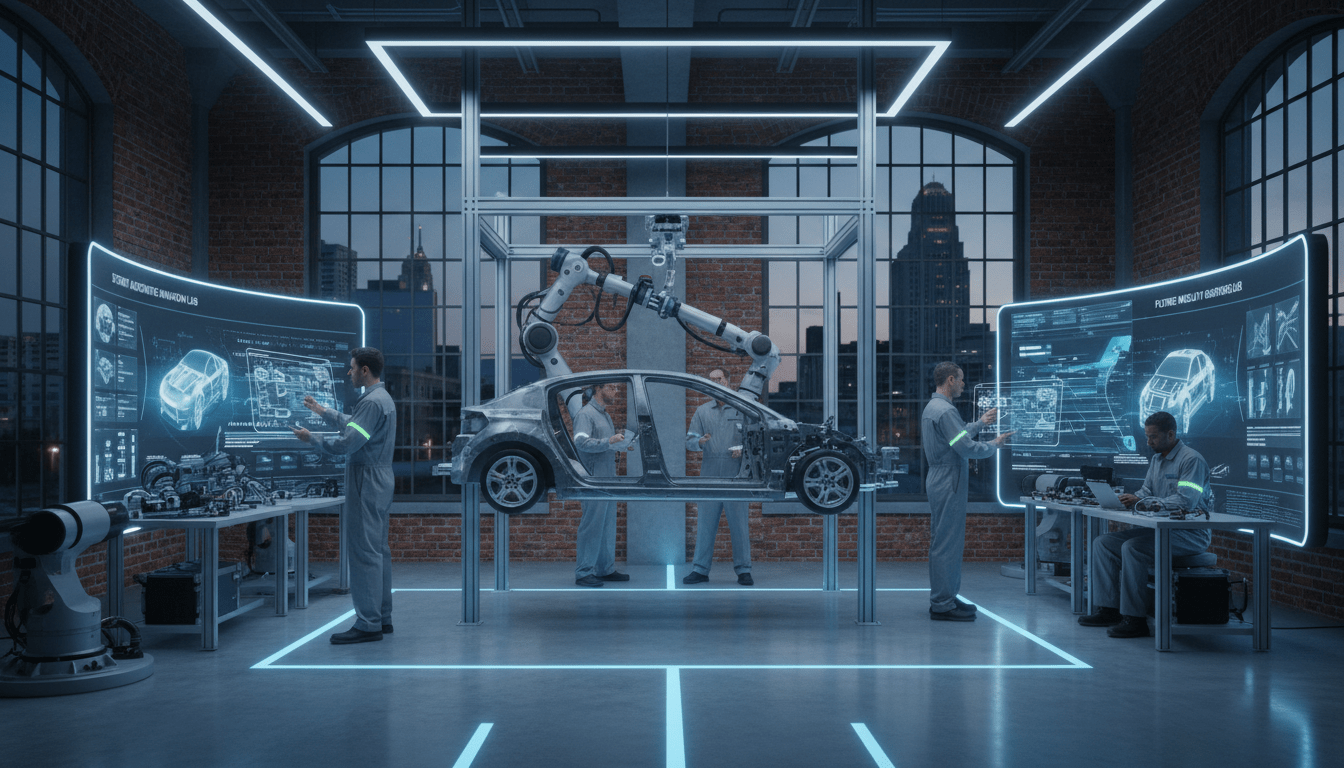
For over a century, Detroit has held the undisputed title of the Motor City, a global icon of internal combustion engine dominance. However, as the automotive industry undergoes its most significant transformation since the assembly line, a new wave of innovation is taking root. While the legacy giants—Ford, General Motors, and Stellantis—dominate the headlines with their transition to electrification, a burgeoning ecosystem of Detroit EV startups is quietly working to reshape the region’s economic and technological landscape.
The narrative of Detroit’s automotive sector is no longer solely defined by massive assembly plants turning out gas-powered trucks. Instead, it is increasingly being written in incubators, converted warehouses, and the gleaming corridors of the newly restored Michigan Central, where entrepreneurs are tackling the complex challenges of electric mobility, from battery chemistry to charging infrastructure.
The New Class of Detroit Auto Innovators
Unlike Silicon Valley, where software often takes precedence over hardware, Detroit’s startup scene remains deeply rooted in the physical engineering of vehicles. However, the path for independent vehicle manufacturers is notoriously difficult, often referred to by venture capitalists as the “Valley of Death” due to the immense capital required to bring a vehicle to mass production.
Despite these hurdles, local players are making strides. Companies like Hercules Electric Vehicles, based in the Detroit area, are targeting specific niches such as electric pickups and marine applications. Similarly, Bollinger Motors, which operates out of Oak Park just north of the city limits, has shifted its focus towards commercial electric trucks, aiming to electrify fleets rather than just consumer driveways.
According to the Michigan Economic Development Corporation (MEDC), the state has invested heavily in creating a supportive environment for these ventures. The creation of the Office of Future Mobility and Electrification signals a clear government mandate: ensure Michigan remains the center of gravity for the auto industry, regardless of what powers the drivetrain.
Beyond the vehicle manufacturers, the most robust growth is occurring in the supply chain and technology sectors. Startups focusing on thermal management systems, solid-state battery technology, and grid integration software are proliferating. These companies benefit significantly from their proximity to the Big Three, allowing for rapid prototyping and B2B partnerships that are harder to secure from the coasts.
Impact on Detroit Residents and the Local Economy
For the average Detroiter, the rise of the EV startup ecosystem represents both opportunity and a challenge in workforce adaptation. The shift from mechanical assembly to electromechanical engineering and software integration changes the nature of available jobs.
Local workforce development agencies are actively trying to bridge this gap. “The demand for high-voltage technicians and software engineers is outpacing supply,” noted a recent report on workforce trends in Southeast Michigan. This has led to new certification programs at institutions like Wayne State University and various community colleges intended to retrain workers for the electric era.
The growth of these startups also diversifies the local automotive sector, potentially offering a buffer against the cyclical nature of traditional auto manufacturing. By fostering a dense network of smaller, agile companies, the city aims to create a more resilient economy that isn’t entirely dependent on the quarterly earnings of three major corporations.
Background & Data: The Capital Challenge
While the talent pool in Detroit is unmatched—boasting the highest concentration of industrial engineers in the country—access to early-stage venture capital has historically been a bottleneck compared to California or New York. Data from PitchBook and the National Venture Capital Association has consistently shown the Midwest trailing the coasts in VC funding totals.
However, this trend is showing signs of reversal. The launch of initiatives like the Michigan Central innovation hub in Corktown aims to centralize talent and attract investors. By clustering startups, venture capital firms, and established tech partners in one geographic location, Detroit is attempting to create the “density” that sparks innovation.
Furthermore, federal incentives from the Inflation Reduction Act have trickled down to the local level, making it more attractive for hardware-focused startups to set up manufacturing pilot lines in the region. Recent announcements suggest that supply chain localization is becoming a priority for investors, making Detroit’s logistical advantages more appealing than they were a decade ago.
Infrastructure and the Road Ahead
One of the critical areas where Detroit EV startups are finding traction is in solving the charging infrastructure puzzle. Startups focusing on curb-side charging solutions and smart-grid load balancing are testing their technologies directly on Detroit streets. This “living lab” approach allows companies to validate their products in real-world weather conditions—a crucial test for EV technology.
According to city planning documents, the integration of smart mobility solutions is a key pillar of Detroit’s future urban planning. This cooperation between the public sector and private startups is essential for scaling technologies that can handle the power demands of widespread EV adoption.
What Happens Next?
The next five years will be a litmus test for Detroit’s electric ambitions. Industry analysts predict a consolidation phase where successful startups may be acquired by Tier 1 suppliers or major OEMs looking to fast-track their technology stacks. For the city, the goal is to ensure that even if companies are acquired, the jobs and the innovation remain within the metro area.
As the industry races toward 2030 electrification targets, the innovation stemming from Detroit will likely play a pivotal role. The success of these startups will determine whether Detroit remains the global capital of the automotive world or simply a historic manufacturing hub. For now, the energy in the sector suggests the former is well within reach.