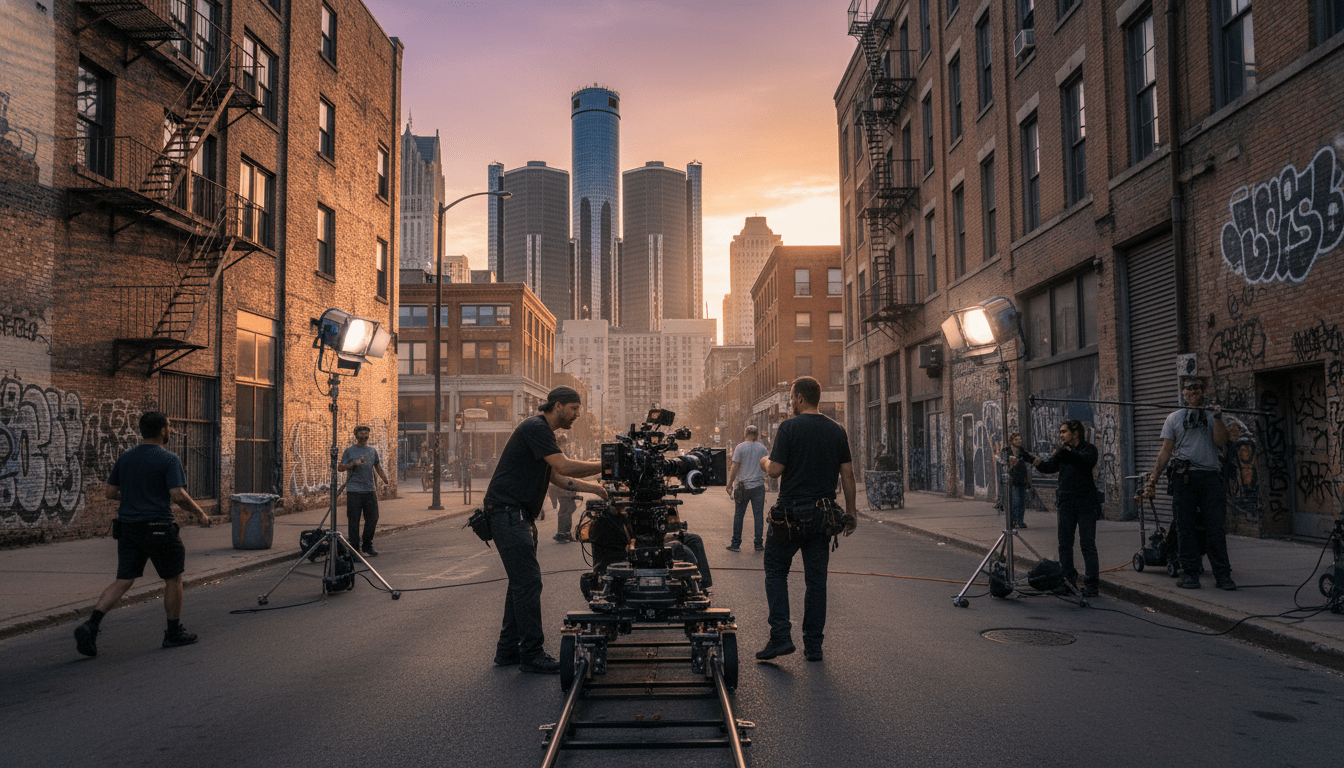
Despite the elimination of the state’s aggressive film tax incentives nearly a decade ago, the Detroit film industry has refused to fade to black. While the days of massive Hollywood blockbusters regularly shutting down Woodward Avenue may have paused, a resilient ecosystem of independent filmmakers, commercial production houses, and industry advocates is working tirelessly to keep the Motor City on the cinematic map.
For many Detroiters, the film industry represents more than just entertainment; it is a potential economic engine capable of diversifying a region long reliant on automotive manufacturing. As 2025 progresses, the conversation surrounding film production in Southeast Michigan has shifted from nostalgia for the “incentive era” to a pragmatic push for sustainable growth, legislative support, and the cultivation of local talent.
The Legislative Landscape: The Push for Credits
The primary topic of conversation among local producers and union representatives remains the legislative battle in Lansing. Industry advocates have long argued that Michigan is losing millions in potential revenue to states like Georgia, Ohio, and Illinois, which offer robust tax credits to production studios.
According to the Michigan Film Industry Association (MiFIA), the lack of incentives places Detroit at a significant competitive disadvantage. Data provided by the association suggests that for every dollar invested in film incentives, there is a multiplier effect that benefits local hotels, lumber yards, caterers, and transportation services. The proposed “Multimedia Jobs Act,” which has seen various iterations in the state legislature, aims to bring a tiered tax credit system back to the state.
Supporters of the legislation emphasize that a revitalized Detroit film industry would not just attract transient productions but build permanent infrastructure. “We aren’t looking for a handout; we are looking for a return on investment for the state,” a representative from a local IATSE union chapter noted during a recent town hall. “Right now, our skilled electricians, carpenters, and camera operators are forced to travel to Atlanta or Toronto to find steady work. We want to keep that talent here in Detroit.”
Commercials and Indies: Keeping the Lights On
While the blockbuster films may be fewer, the commercial and industrial production sector in Detroit remains robust. As the global headquarters for General Motors, Ford, and Stellantis, the region naturally generates a high volume of automotive advertising work. These productions, while often shorter in duration than feature films, provide critical “bread and butter” income for local crews.
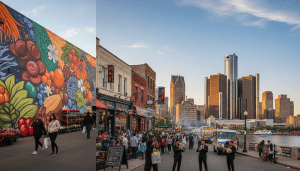
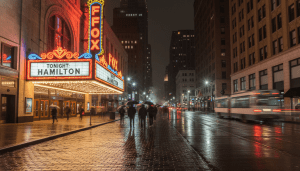
Furthermore, the independent film scene has flourished. Lower production costs compared to Los Angeles or New York make Detroit an attractive canvas for indie filmmakers. The city’s unique architecture—ranging from Art Deco skyscrapers to industrial grit—provides a production value that is difficult to replicate elsewhere.
Local production houses have pivoted to service these smaller to mid-sized projects. “The narrative that filming in Detroit is dead is simply false,” says a local location scout who has worked in the city for fifteen years. “We are seeing a lot of music videos, documentaries, and mid-budget indie features. The difference is that these productions rely heavily on local grit and less on massive state checks.”
For more on how local businesses are adapting to changing economic tides, read our coverage on Detroit small business resilience and the shifting landscape of downtown development.
Impact on Detroit Residents
The health of the Detroit film industry has a direct ripple effect on the daily lives of residents, often in ways that are not immediately visible. When a production comes to town, it functions like a traveling small business. They hire local security firms, rent private properties for location shoots, and utilize city services.
For residents in neighborhoods like Corktown, Midtown, and West Village, an active film industry translates to short-term rental income and increased foot traffic for neighborhood coffee shops and delis. However, the lack of consistent large-scale productions means these economic boosts are currently sporadic rather than structural.
Education is another critical sector impacted by the industry’s flux. Institutions like the College for Creative Studies (CCS) and Wayne State University continue to graduate talented filmmakers and animators. Without a thriving local ecosystem, this results in a “brain drain,” where young creatives are educated in Michigan but pay taxes in California or New York. Retaining this demographic is cited by city planners as essential for Detroit’s long-term population growth.
Infrastructure and Soundstages
One of the lingering challenges for the Detroit film industry is the maintenance of physical infrastructure. During the height of the incentive era, several soundstages were retrofitted from old warehouses. Some of these facilities have since been repurposed for other industrial or storage uses.
However, recent interest from streaming services has sparked conversations about renewed infrastructure investment. With content demand at an all-time high for platforms like Netflix and Amazon Prime, the need for affordable studio space is growing. Detroit’s abundance of industrial real estate offers a unique opportunity to convert vacant structures into state-of-the-art soundstages, provided the financial model makes sense for investors.
Reports from the City of Detroit’s Film Office indicate that permitting requests have remained steady, particularly for reality television and documentary filmmaking, genres that require less infrastructure but still utilize local labor.
Looking Ahead: The 2025 Outlook
The trajectory of the film sector in Detroit largely depends on the legislative decisions made in the coming year. If the state government passes a competitive incentive package, experts predict a rapid return of mid-to-high budget productions, drawn by Michigan’s diverse seasons and skilled—yet currently underutilized—workforce.
Conversely, if the status quo remains, the industry is expected to continue its current path: a strong, reliable commercial sector bolstered by a scrappy, creative independent scene. For the producers, directors, and crew members calling Detroit home, the passion for telling stories in the Motor City remains undiminished.
“Detroit has a character you can’t fake,” the location scout added. “Whether the tax credits come back or not, people will always want to point a camera at this city. The question is just how many jobs we want to create while they do it.”