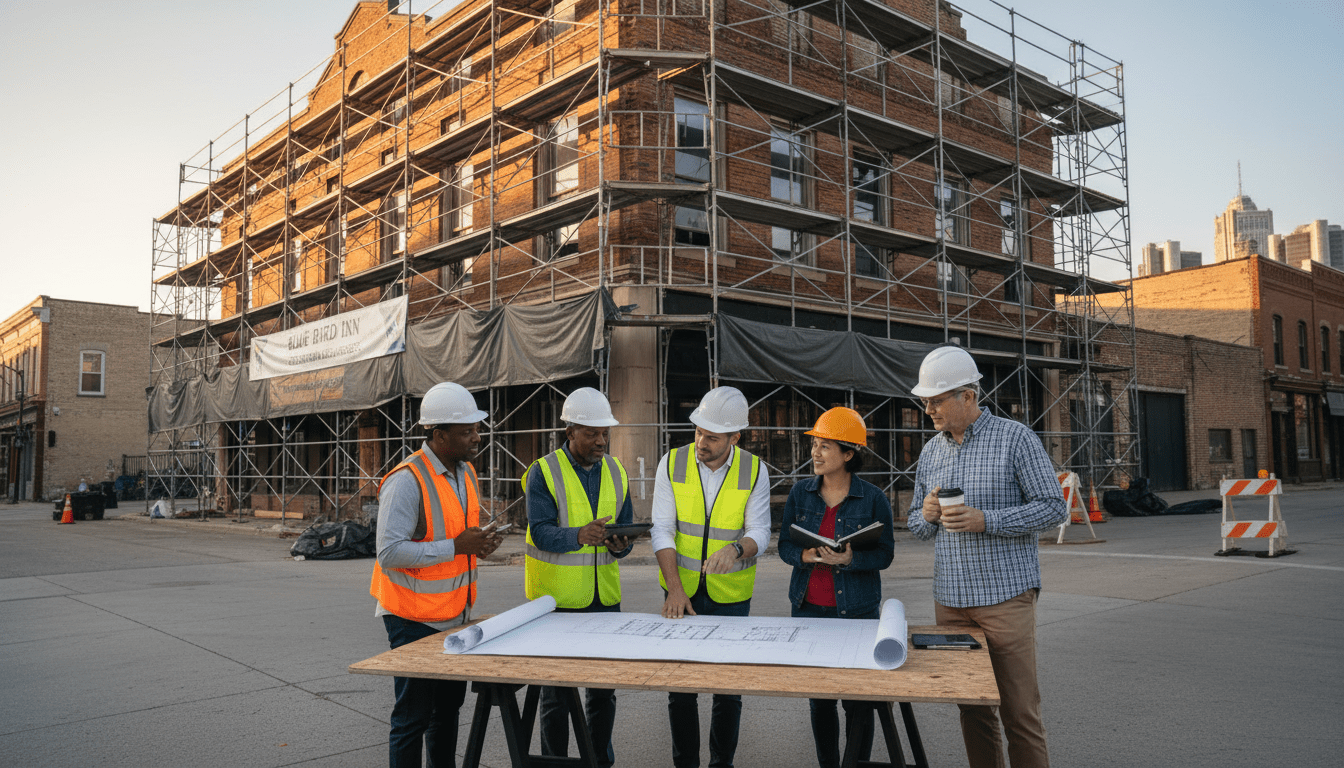
In a city celebrated for its resilience and reinvention, a quiet but powerful movement is gaining momentum: the fight to save Detroit’s architectural and cultural soul. Across the city, municipal leaders, nonprofit organizations, and community activists are doubling down on Detroit historic preservation, ensuring that the physical remnants of the city’s complex past are not lost to time or redevelopment.
From the jazz legacy of the Blue Bird Inn to the civil rights significance of the Ossian Sweet Home, new funding streams and strategic partnerships are targeting sites that tell the story of Detroit’s Black history, labor movements, and architectural innovation.
A Renewed Focus on Cultural Landmarks
For decades, Detroit struggled with a surplus of vacant structures, leading to the demolition of many buildings deemed blighted. However, the narrative has shifted significantly in recent years. City officials and preservationists are now prioritizing rehabilitation over demolition, recognizing that these structures hold immense cultural capital.
According to the City of Detroit’s Historic Designation Advisory Board, the focus has broadened beyond the grandiose skyscrapers of downtown to the vernacular architecture of residential neighborhoods. This shift is crucial for preserving the diverse narratives of the city’s residents.
Recent grants from national entities, such as the Mellon Foundation and the National Trust for Historic Preservation, have injected millions of dollars into local projects. These funds are specifically aimed at stabilizing sites that have historically been underfunded or overlooked. For instance, the restoration of the Blue Bird Inn on Tireman Avenue is not just about fixing a building; it is about reviving a venue that once hosted jazz legends like Miles Davis and John Coltrane, serving as a cultural anchor for the West Side.
Impact on Detroit Residents
The impact of Detroit historic preservation extends far beyond aesthetic improvements. For local residents, these projects represent a reclamation of identity and a potential economic driver for their neighborhoods.
Community leaders argue that restoring historic sites creates a sense of place and continuity. When a neighborhood retains its historical landmarks, it fosters pride and attracts heritage tourism, which can support local small businesses. Residents in areas like the Old West End and the North End are seeing firsthand how preservation can spur broader neighborhood development without erasing the community’s character.
“It’s about more than bricks and mortar,” said a representative from a local community development corporation during a recent town hall. “It’s about telling our children that this place mattered, that the people who lived here made history, and that their legacy is worth saving.”
Background & Data: The Economics of Heritage
Data supports the economic argument for preservation. Studies often show that historic districts tend to stabilize property values and attract long-term investment. According to a report by the Detroit Historical Society and preservation partners, adaptive reuse projects contribute significantly to the local tax base while being more environmentally sustainable than new construction.
The challenge remains significant, however. The City of Detroit has identified hundreds of structures of historical significance that are currently at risk. The cost of stabilizing these buildings often exceeds their immediate market value, creating a “funding gap” that requires philanthropic or public intervention.
In response, the city has been exploring tax abatements and streamlined zoning processes to make it easier for developers and homeowners to invest in historic properties. The Strategic Neighborhood Fund has also played a pivotal role, channeling corporate and philanthropic donations into corridors that include historic structures.
Highlighting Civil Rights History
A major pillar of current Detroit historic preservation efforts is the recognition of Civil Rights sites. The Ossian Sweet Home, the site of a pivotal 1925 self-defense case involving a Black physician and his family, is currently the subject of ongoing preservation work. Transforming this home into a museum and educational center ensures that future generations understand Detroit’s role in the national struggle for racial justice.
Similarly, efforts to mark and preserve the footprint of the destroyed Black Bottom and Paradise Valley neighborhoods have gained traction. While the physical buildings are largely gone—replaced by the I-375 freeway—historical markers, digital archives, and augmented reality projects are being deployed to preserve the memory of these vibrant economic centers.
What Happens Next?
Looking ahead to 2025 and beyond, the trajectory for preservation in Detroit appears robust. The city is expected to designate several new local historic districts, providing legal protection against demolition for more neighborhoods.
Furthermore, the impending I-375 reconnection project offers a unique opportunity. Planners and community members are in active discussions about how the new boulevard can incorporate physical tributes to the displaced communities of the past, blending infrastructure improvement with historical restorative justice.
As these projects move forward, they will rely heavily on continued community engagement. For the preservation movement to succeed, it must remain rooted in the desires and stories of the people who call these neighborhoods home today. To stay updated on upcoming cultural events and dedications, readers can follow our coverage on Detroit’s evolving culture scene.