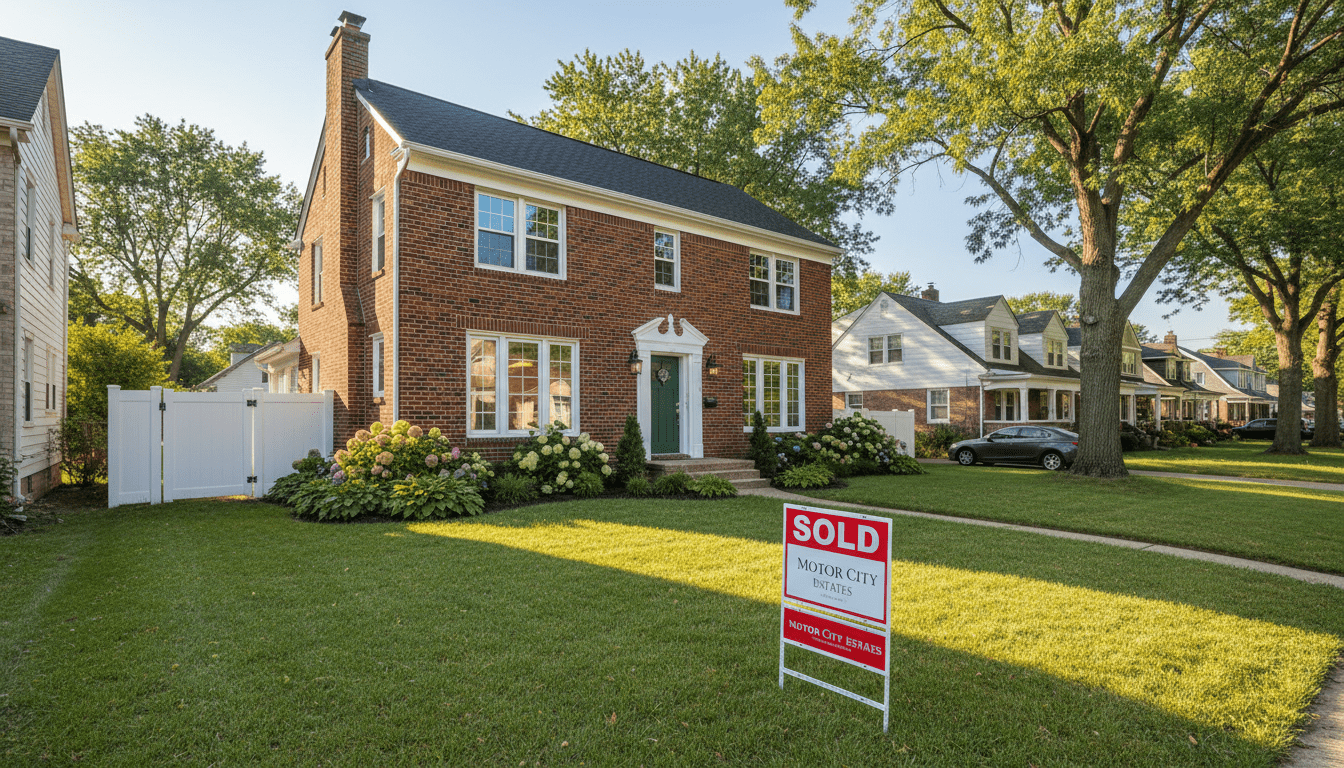
The Detroit real estate market is entering a pivotal phase this quarter, characterized by a persistent imbalance between available inventory and buyer interest. While national trends show a cooling in some metropolitan areas, Detroit housing demand remains robust, driven by relative affordability and ongoing neighborhood revitalization efforts.
Data released this month indicates that despite fluctuating mortgage rates, competition for move-in ready homes in the city continues to intensify. Real estate professionals across Wayne County are reporting multiple-offer scenarios for properties priced correctly, suggesting that the city’s housing sector has decoupled somewhat from national volatility.
However, this surge in activity comes with significant caveats for prospective buyers, particularly regarding the shortage of quality housing stock. As development projects ramp up, the gap between the number of buyers and the number of livable homes is creating a complex landscape for locals.
Inventory Crunch Defined by Scarcity
The primary driver of the current market dynamic is a severe lack of inventory. According to recent figures from the local Multiple Listing Service (MLS), the supply of homes for sale in Detroit has dipped below pre-pandemic averages. This scarcity is most acute in neighborhoods that have seen recent investment, such as the University District, Bagley, and Southwest Detroit.
Local real estate analysts point out that many homeowners are “locked in” to low interest rates obtained several years ago, making them reluctant to sell. This hesitation freezes a significant portion of potential inventory, forcing buyers to compete for a shrinking pool of properties.
“We are seeing a bottleneck effect,” said a representative from a local housing advocacy group during a recent community town hall. “The demand is there, especially from first-time homebuyers who view Detroit as one of the last affordable urban markets in the country. But the supply simply isn’t keeping pace with that enthusiasm.”
Furthermore, reports from The City of Detroit’s Housing and Revitalization Department suggest that while new construction permits are up, the timeline for these units to hit the market is often 12 to 18 months out, offering little immediate relief for today’s buyers.
Impact on Detroit Residents
The rising Detroit housing demand is a double-edged sword for long-time residents. On one hand, property values are appreciating, which builds equity for existing homeowners. On the other hand, the competitive market is pushing affordability limits for renters looking to transition into homeownership.
Tenants across the city are facing higher barriers to entry. As investors compete for properties to convert into rentals or flip for resale, the entry-level price point for a standard single-family home has crept upward. This creates a challenging environment for residents whose wages have not kept pace with housing inflation.
“It is becoming a game of speed and cash,” notes a local housing counselor. “Families using FHA loans or requiring down payment assistance are finding themselves outbid by cash offers, often from out-of-state investors who see Detroit’s price per square foot as a bargain compared to the coasts.”
To combat this, the city has emphasized programs like the Down Payment Assistance Program, yet the efficacy of these programs relies on there being houses available to purchase in the first place. Residents interested in improving their financial readiness are urged to consult with HUD-certified counselors early in the process.
Background & Data Trends
Historical context is vital to understanding the current Detroit housing demand. Following the foreclosure crisis of the late 2000s, Detroit had a surplus of distressed inventory. Over the last decade, the Detroit Land Bank Authority has worked to move thousands of these properties back into private hands. However, the supply of salvageable structures is finite.
Recent economic data supports the narrative of a tightening market:
- Days on Market: The average time a move-in ready home stays on the market has decreased year-over-year.
- Median Sale Price: Prices have shown a steady incline, outperforming many suburbs in terms of percentage growth.
- Rehab Activity: Permits for renovations have spiked, indicating that buyers are increasingly willing to purchase fixer-uppers due to the lack of turnkey homes.
According to forecasts from regional economists, Detroit is positioned uniquely. Unlike “boom towns” in the Sun Belt that are seeing prices correct downward, Detroit’s growth is considered a “catch-up” phase, where undervalued assets are finally reaching market equilibrium.
For more on how infrastructure is supporting these neighborhoods, read our coverage on major road repairs scheduled for 2025, which often correlates with increased property interest in affected zones.
What Happens Next?
Looking ahead to the remainder of the year, experts predict that Detroit housing demand will remain high, specifically in the $100,000 to $200,000 price range. The key variable will be interest rates. If rates stabilize or drop slightly, a new wave of buyers could flood the market, exacerbating the inventory shortage.
Development focus is also shifting. City planners are encouraging higher-density developments and infill housing to utilize vacant lots. While these projects take time, they represent the long-term solution to the supply crisis.
For now, potential buyers in Detroit must be prepared for a competitive landscape. The days of abundant, ultra-cheap inventory appear to be waning, replaced by a more traditional, albeit stressed, real estate cycle.