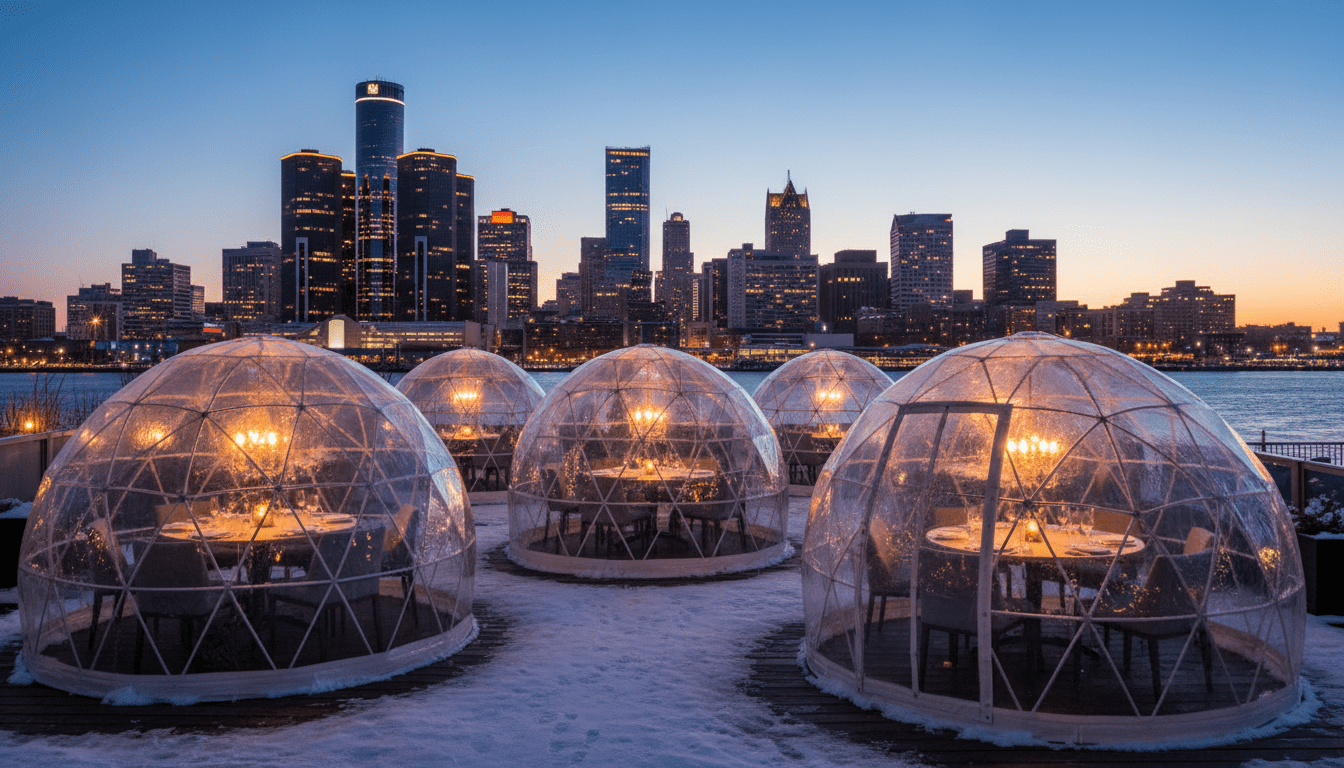
As temperatures across Southeast Michigan plunge and the first signs of winter settle over the city, a familiar sight is reemerging across the Metro Detroit hospitality landscape. Transparent geodesic domes, heated chalets, and greenhouse-style structures are popping up on patios and sidewalks, signaling the return of Detroit igloo dining. What began as a pandemic-era necessity for survival has evolved into a critical seasonal revenue stream for local businesses facing the traditional post-holiday economic slump.
For Detroit restaurateurs, the shift to winterized outdoor seating is no longer just a novelty; it is a calculated economic strategy. With the days shortening and residents seeking indoor-style comfort with outdoor safety and ambiance, venues from Downtown to Royal Oak are racing to install infrastructure that extends their seating capacity during the coldest months of the year.
The Economics of Winter Outdoor Seating
The hospitality industry typically faces a contraction in revenue during January and February. However, the installation of heated igloos allows restaurants to monetize patio square footage that would otherwise lie dormant until May. According to data from the Michigan Restaurant & Lodging Association (MRLA), outdoor dining capabilities significantly bolstered restaurant survival rates over the last three years.
Local business owners report that these structures do more than just provide extra seats; they create a “destination experience” that justifies higher check averages. Many venues require reservation fees or minimum spending limits for igloo rentals, securing guaranteed revenue in an industry often plagued by last-minute cancellations.
“It changes the math for the winter quarter,” said a manager at a popular Corktown venue. “Previously, we lost 40% of our capacity when the patio closed. With the igloos, we retain about half of that outdoor volume, and because it is a premium experience, the revenue per table is often higher.”
Adapting to the Cold: How Venues Are pivoting
Across the metro area, the implementation of Detroit igloo dining varies, with establishments investing heavily in aesthetics and heating technology to attract diners. At Beacon Park, Lumen Detroit has become synonymous with the winter dining experience, transforming its patio into a glowing landscape of transparent domes that offer views of the downtown skyline.
In the suburbs, venues like Deadwood Bar & Grill in Northville and Blake’s Tasting Room have constructed elaborate chalet and igloo villages. These setups require significant logistical planning, including running electrical lines for heaters, installing localized lighting, and ensuring structural integrity against Michigan’s unpredictable wind and snow loads.
The trend is not limited to high-end dining. Casual establishments and breweries are also adopting the model. Local business trends indicate that consumers are increasingly prioritizing unique social experiences over standard indoor dining, driving demand for these semi-private spaces.
Impact on Detroit Residents
For Detroit residents, the return of igloo dining offers a solution to the “cabin fever” that often sets in during Michigan winters. It provides a social outlet that balances the desire to go out with the need for comfort. However, the popularity of these setups has created a competitive reservation environment.
Residents looking to book prime weekend slots often find themselves planning weeks in advance. The exclusivity of the pods—usually limited to 6 to 8 people—makes them popular for small gatherings, birthdays, and corporate outings.
“It’s become a winter tradition for our friend group,” said Sarah Jenkins, a resident of Midtown. “It allows us to be in the city, enjoying the atmosphere, without being crowded into a packed dining room during flu season. The only downside is trying to get a reservation on a Saturday night.”
Furthermore, this continuity of service helps stabilize local employment. By maintaining higher customer counts through the winter, restaurants can retain waitstaff and kitchen crews who might otherwise face reduced hours or seasonal layoffs. This stability ripples through the Detroit economy, keeping service industry workers employed year-round.
Safety and Infrastructure Regulations
The proliferation of outdoor structures has also led to tighter oversight from local fire marshals and city inspectors. Unlike the makeshift solutions seen in 2020, the current wave of igloos must meet strict safety codes regarding heating elements and ventilation.
Propane heaters are largely prohibited inside enclosed structures due to carbon monoxide risks, leading venues to switch to electric infrared heating or forced-air systems piped in from the main building. Additionally, sanitation protocols remain high priority, with venues scheduling gaps between reservations to air out and sanitize the pods.
What Happens Next
As winter settles in, the competition for diners will heat up. Industry analysts expect the trend of Detroit igloo dining to continue evolving, with restaurants offering themed packages, dedicated winter menus, and partnered events with local distilleries to enhance the value proposition.
While the initial investment for these structures is high—often costing thousands of dollars per unit—the return on investment has proven robust. As long as Detroiters are willing to brave the walk from the car to the pod, the city’s hospitality sector appears ready to turn the cold weather into a hot commodity.