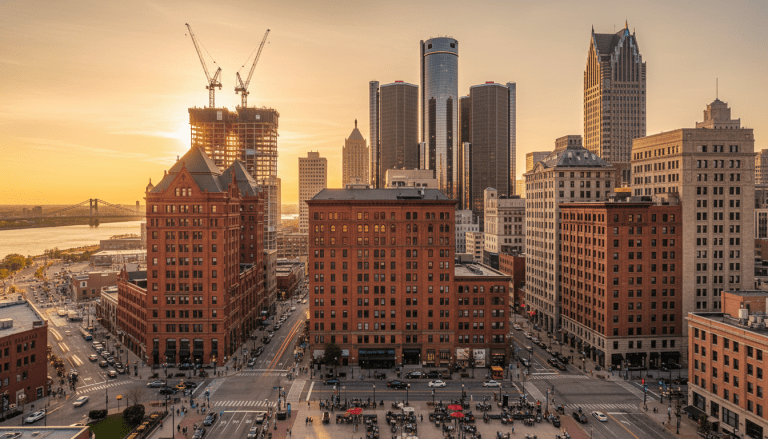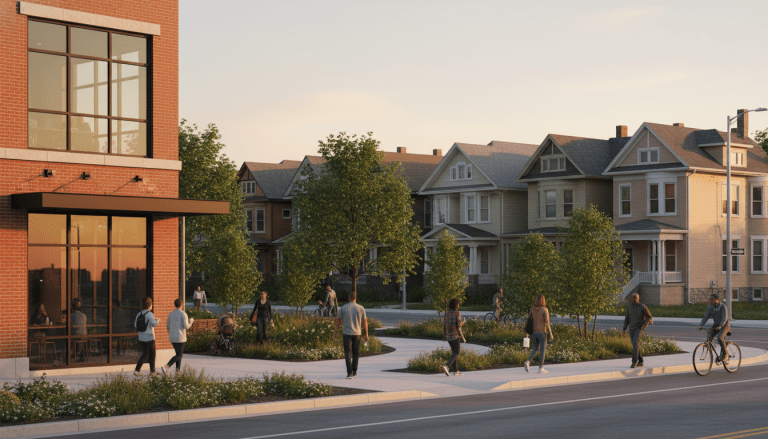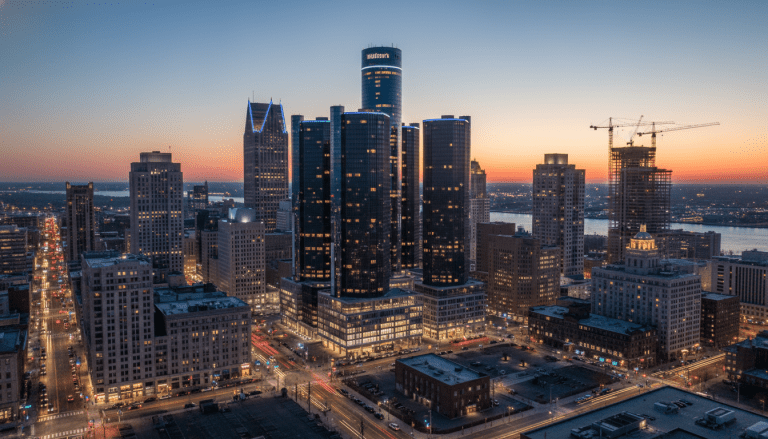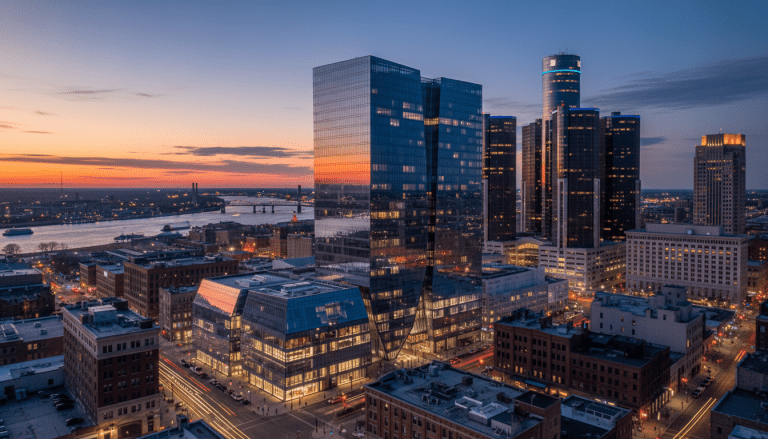

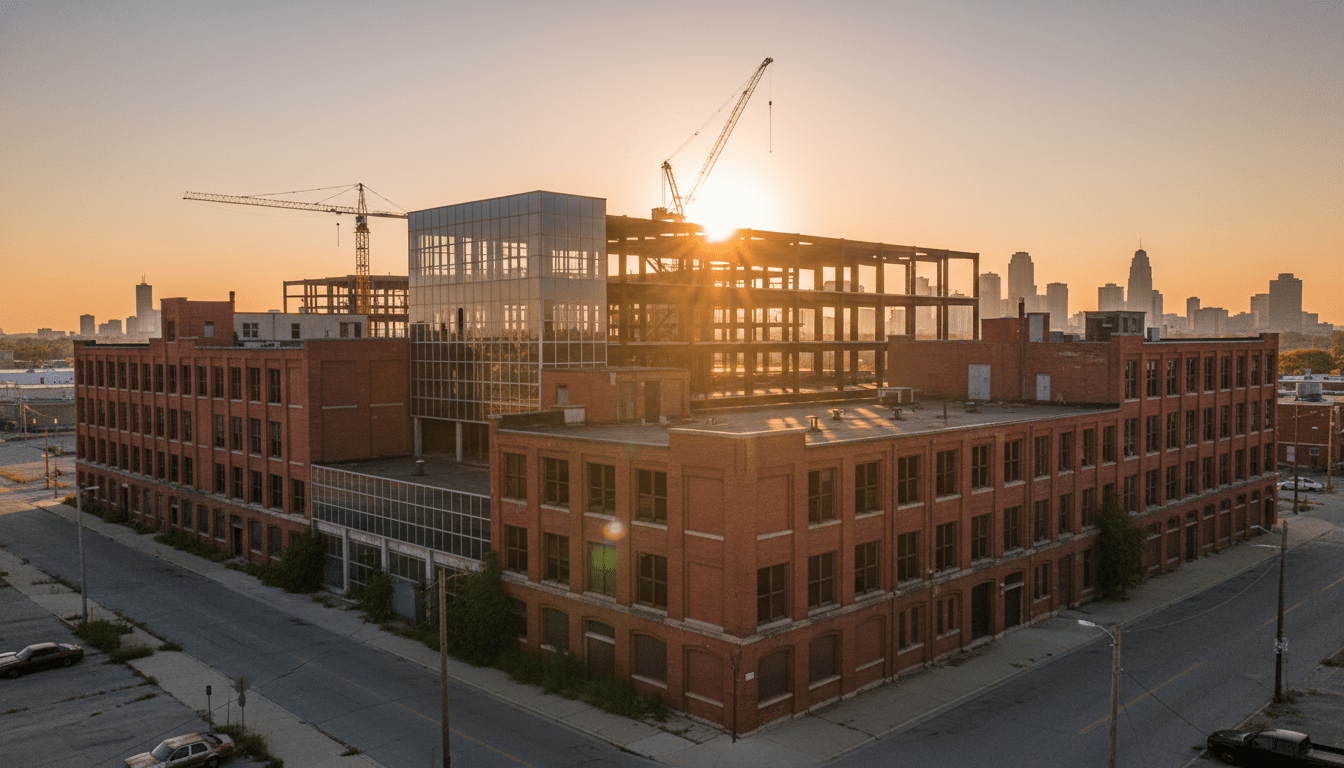
For decades, the skeletal remains of the Fisher Body Plant No. 21 have loomed over the interchange of I-94 and I-75, a concrete symbol of Detroit’s manufacturing decline. Today, however, that narrative is shifting. A massive wave of Detroit industrial redevelopment is sweeping the city, turning blighted brownfields and abandoned factories into mixed-use housing, modern logistics hubs, and community centers.
This transformation is not limited to a single building. Across the city, developers and city planners are collaborating to repurpose millions of square feet of vacant industrial space. From the Milwaukee Junction neighborhood to the expansive sites formerly occupied by American Motors Corporation (AMC), the focus has moved from demolition to adaptive reuse and strategic remediation.
The Fisher Body Plant No. 21 Project
At the forefront of this movement is the ambitious redevelopment of the Fisher Body Plant No. 21. Once a bustling hub where auto bodies were stamped for Cadillac and Buick, the site sat vacant for nearly 30 years. Now, it is the centerpiece of a $134 million project known as the Fisher 21 Lofts.
According to the City of Detroit, this project represents the largest African-American-led development in the city’s history. The plan involves transforming the 600,000-square-foot structure into 433 apartments, accompanied by extensive retail and coworking space. Unlike previous eras where such structures might have been razed for scrap, the current strategy emphasizes preserving the historic industrial architecture while updating the infrastructure for modern living.
Developers Gregory Jackson and Richard Hosey, who are spearheading the project, have emphasized that Detroit industrial redevelopment is about more than just bricks and mortar; it is about reclaiming the city’s history. By stabilizing the structure rather than demolishing it, the project aims to bridge the gap between Detroit’s manufacturing past and its residential future.
Economic Impact on Local Residents
A primary concern for many Detroiters regarding large-scale development is the potential for displacement and the question of who truly benefits. To address this, the Fisher 21 project, along with other industrial makeovers, includes specific mandates for affordability.
City officials have confirmed that at least 20% of the units in the Fisher 21 Lofts will be reserved for residents earning 80% of the Area Median Income (AMI). This inclusionary housing strategy is a requirement for projects receiving tax incentives, ensuring that the revitalization of industrial zones does not completely price out long-term residents.
Furthermore, the construction phase alone is expected to generate significant employment. Data from the Detroit Economic Growth Corporation (DEGC) suggests that large-scale adaptive reuse projects prioritize hiring Detroit residents. The Fisher project is projected to create hundreds of temporary construction jobs and dozens of permanent positions in property management and retail once completed.
Local business owners in the Milwaukee Junction area have expressed cautious optimism. “When these factories come back to life, it brings foot traffic,” said a local coffee shop owner in the district. “We need density to survive, and turning these empty shells into housing provides that density.”
Beyond Housing: Logistics and Manufacturing
While residential conversion garners headlines, Detroit industrial redevelopment also encompasses the return of light industry and logistics. The site of the former AMC headquarters on Plymouth Road is undergoing a different kind of transformation. After sitting as a blighted eyesore for over a decade, the site is being redeveloped into the Detroit Plymouth I-96 Industrial Park.
This project, led by NorthPoint Development, focuses on modern supply chain needs. By cleaning up the environmental contamination—a common hurdle in Detroit’s industrial zones—the project aims to attract suppliers and logistics companies that need proximity to the reinvigorated auto assembly plants in the region.
Environmental remediation is a critical component of these projects. According to the Environmental Protection Agency (EPA) and state environmental departments, stabilizing these brownfields prevents further leaching of contaminants into the soil, directly benefiting the health of surrounding neighborhoods.
Challenges in Adaptive Reuse
Despite the optimism, the path to revitalizing Detroit’s industrial footprint is fraught with challenges. The cost of rehabbing a century-old reinforced concrete structure is often significantly higher than new construction. Developers must navigate complex financing stacks, utilizing historic tax credits, brownfield tax increment financing (TIF), and HUD loans to make the numbers work.
For more insights into how the city manages these financial structures, readers can explore our coverage on Detroit Real Estate trends. The financial complexity means that for every success story like the Fisher Plant, there are other sites, such as the sprawling Packard Plant, where redevelopment has stalled repeatedly due to structural instability and funding gaps.
The Future of Detroit’s Industrial Skyline
As 2025 progresses, the visual landscape of Detroit continues to evolve. The trend of Detroit industrial redevelopment suggests a future where the city does not hide its industrial scars but wears them as badges of resilience. The successful completion of the Fisher 21 Lofts could serve as a blueprint for other difficult sites across the Midwest.
For residents, the changes are tangible. The removal of blight reduces crime associated with vacant properties and increases property values in adjacent neighborhoods. As noted in our recent article on neighborhood revitalization efforts, the stabilization of core structures often leads to a ripple effect of investment in residential streets nearby.
The city is moving away from the era of “ruin porn” photography and toward an era of functional restoration. While the days of mass employment inside these specific factories are gone, their role in Detroit’s economy is being reimagined for a new century.