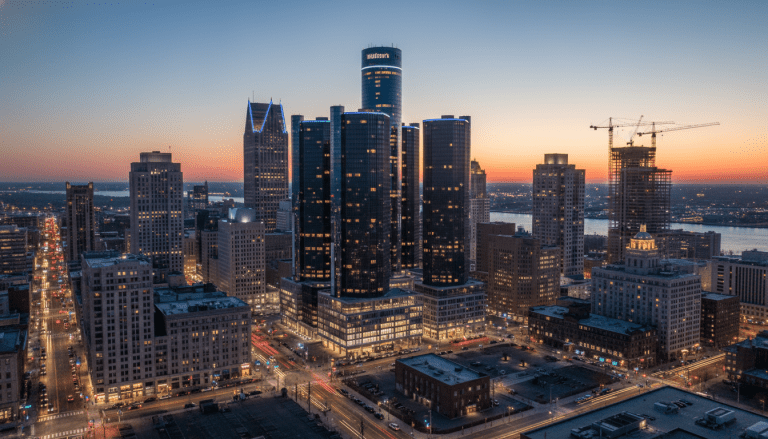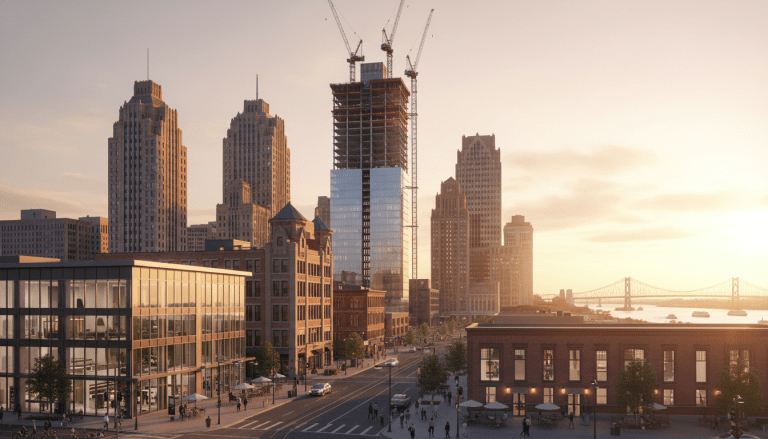

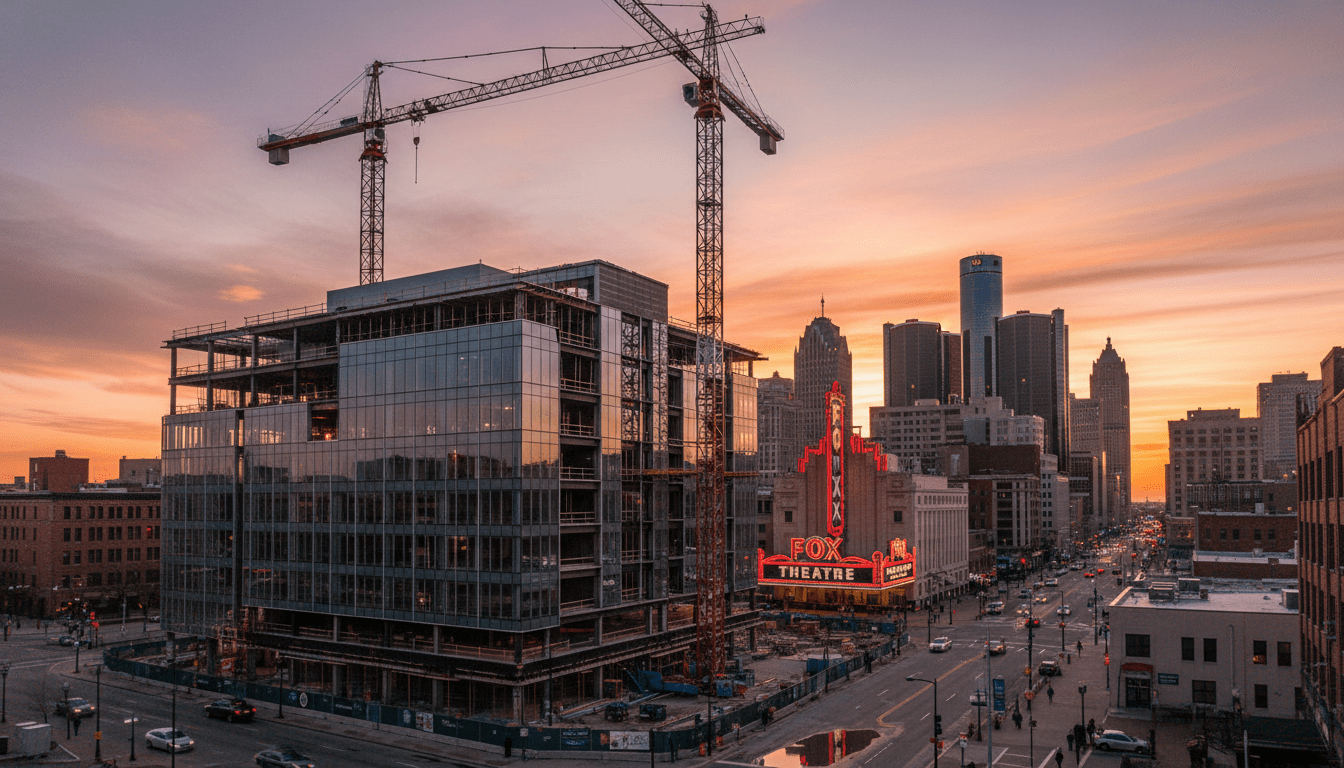
The landscape of downtown Detroit is undergoing its most significant transformation in decades as construction accelerates on the University of Michigan Center for Innovation (UMCI). This development serves as the anchor for the budding Detroit innovation district, a concentrated area designed to bridge the gap between higher education, high-tech enterprise, and local workforce development.
Located in the area widely known as The District Detroit, situated behind the Fox Theatre and flanked by Little Caesars Arena, the project represents a massive collaborative effort between the University of Michigan, Olympia Development of Michigan, and Related Companies. While the vision for a bustling corridor connecting Midtown and Downtown has existed for years, the breaking of ground on the UMCI marks the transition from conceptual renderings to physical reality.
According to planning documents filed with the City of Detroit, the 14-acre development aims to create a density of talent and infrastructure similar to successful innovation hubs like Kendall Square in Cambridge or Cortex in St. Louis. However, the stakeholders maintain that the Detroit model is uniquely tailored to the city’s legacy of manufacturing and engineering.
The Vision: Anchoring a New Economy
At the heart of the Detroit innovation district is the $250 million, 200,000-square-foot academic building funded largely by a donation from Stephen Ross, chairman of Related Companies and a Detroit native. The facility is designed to support graduate-level programs in robotics, computer science, and data analytics.
"This is about more than just a building; it is about creating an ecosystem," University of Michigan President Santa J. Ono stated during the project’s groundbreaking ceremonies. "We are planting a flag in Detroit to say that the future of technology and innovation will happen here."
The strategy relies on the concept of "density"—placing researchers, startups, and established tech firms in close proximity. Data from the Brookings Institution suggests that innovation districts are increasingly replacing isolated suburban office parks as the preferred location for tech companies, which now seek walkable, urban environments to attract young talent.
For Detroit, this development acts as a catalyst. Following the academic anchor, Related Companies and Olympia Development have proposed additional office towers, residential units, and hotel space to fill in the surrounding blocks, many of which have served as surface parking lots for decades.
Economic Impact and Job Creation
The economic implications of the Detroit innovation district are projected to be substantial. A reported economic impact study cited by the developers estimates the project could generate billions of dollars in new economic activity over the next decade.
However, the immediate impact is visible in the construction sector. The project falls under the purview of Detroit’s Executive Order 2016-1, which mandates that 51% of the hours worked on publicly subsidized construction projects must be performed by Detroit residents.
Local trade unions have reported a surge in demand for skilled labor. Local workforce programs are currently ramping up training to ensure that Detroiters can fill the specialized roles required for building high-tech laboratory spaces and sustainable office structures.
Beyond construction, the long-term goal is to diversify Detroit’s economy beyond the automotive industry. By focusing on climate technology, fintech, and advanced mobility, the district aims to insulate the local economy from the cyclical nature of traditional manufacturing.
Impact on Detroit Residents
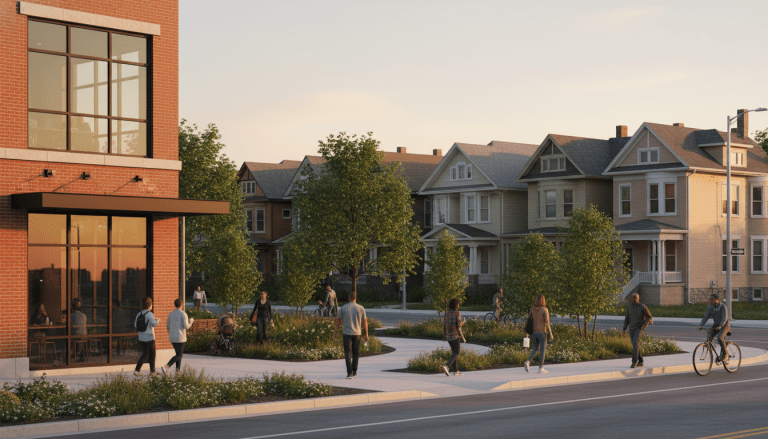
For longtime residents, major developments often bring concerns regarding gentrification and accessibility. The City of Detroit has structured the development agreement to include specific community benefits, aiming to ensure the Detroit innovation district serves the existing population rather than displacing it.
According to the Community Benefits Ordinance (CBO) process concluded last year, the developers committed to a package valued at over $167 million in community benefits. This includes affordable housing requirements for future residential builds within the district and substantial contributions to the Detroit Public Schools Community District.
Local business owners in the Cass Corridor are expressing cautious optimism. "If this brings thousands of students and workers walking past our doors every day, that is a game changer," said the manager of a nearby coffee shop, who asked to remain anonymous. "But we need to make sure the rent doesn’t push the small guys out before the customers arrive."
Furthermore, the UMCI has promised a focus on non-degree credentials and workforce training accessible to Detroiters who may not be seeking a full master’s degree but need certification in high-demand tech skills. This "ladder of opportunity" is critical for connecting the neighborhood’s residents to the high-paying jobs the district intends to attract.
Background & Data
The path to this point has not been without delays. The "District Detroit" was originally announced in 2014, with promises of five bustling neighborhoods. For years, critics pointed to the slow pace of development outside of the arena itself.
However, the involvement of the State of Michigan has accelerated the current timeline. In 2023, the Michigan Strategic Fund approved a "Transformational Brownfield Plan" incentive package worth over $600 million to support the broader development, which includes the rehabilitation of existing structures and new construction.
- Total Investment: Approximately $1.5 billion projected for the initial phase.
- Target Completion: The UMCI is slated to open to students in 2027.
- Housing Units: The broader plan includes proposals for substantial new residential housing, with 20% reserved for affordable housing at 50% of the Area Median Income (AMI).
This public-private partnership model follows a trend seen in other rust-belt cities attempting to pivot toward the knowledge economy. Referencing data from the U.S. Census Bureau, downtown Detroit’s residential population has been steadily increasing, suggesting a demand for the live-work-play environment the innovation district promises to provide.
What Happens Next
As steel rises on the UMCI site, attention is turning to the surrounding parcels. The developers are currently finalizing designs for the potential redevelopment of the office space at 2200 Woodward and a future hotel.
The success of the Detroit innovation district will likely be measured not just by the height of the buildings, but by the tenant mix. Leasing efforts are underway to secure a major corporate partner to establish a headquarters or regional hub within the district, which would serve as a commercial counterweight to the university’s academic presence.
For now, residents can expect road closures and construction crews to be a fixture along the Grand River and Woodward corridors. For more updates on local development projects, visit our Real Estate section.