
By Sarah Jenkins
Published: October 24, 2023
Location: Detroit, Michigan
Detroit International Trade: How the Motor City Drives Global Commerce
While Detroit is historically synonymous with the production of automobiles, its role as a logistical powerhouse for global commerce is often understated. As 2024 approaches, Detroit international trade remains a cornerstone of the regional economy, serving as the busiest trade crossing on the North American border.
New data indicates that despite global supply chain fluctuations, the Detroit region continues to facilitate nearly 30% of the total trade between the United States and Canada. With the highly anticipated completion of the Gordie Howe International Bridge on the horizon, the city is positioning itself not just as a manufacturing hub, but as a premier global logistics gateway.
The Engine of Cross-Border Commerce
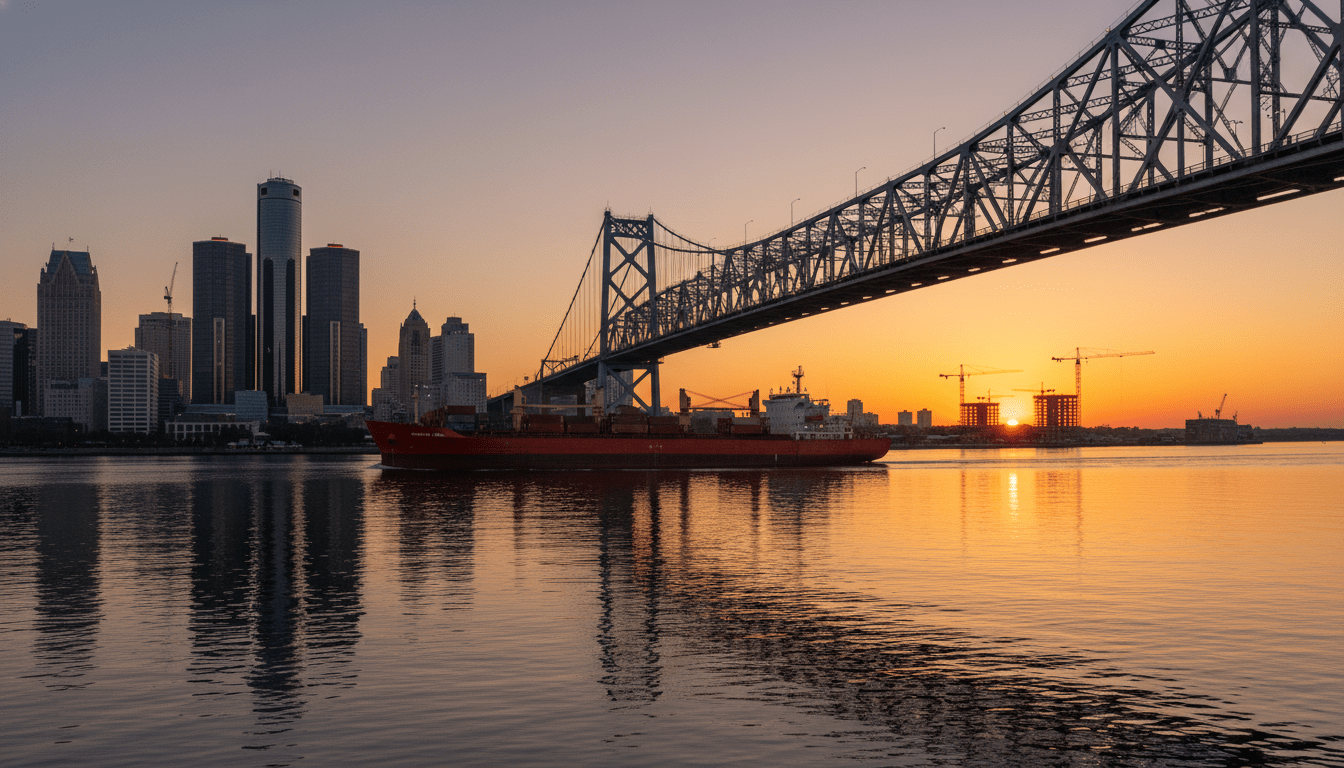
The volume of goods passing through the Detroit-Windsor corridor is staggering. According to the Detroit Regional Chamber, the region handles over $100 billion in annual trade. The Ambassador Bridge alone carries more trade than any other single border crossing in North America.
“Detroit’s geographic advantage is undeniable,” said Michael O’Connor, a supply chain analyst based in Michigan. “We are seeing a shift where Detroit is becoming a critical node for not just automotive components, but for agricultural goods, machinery, and increasingly, technological hardware.”
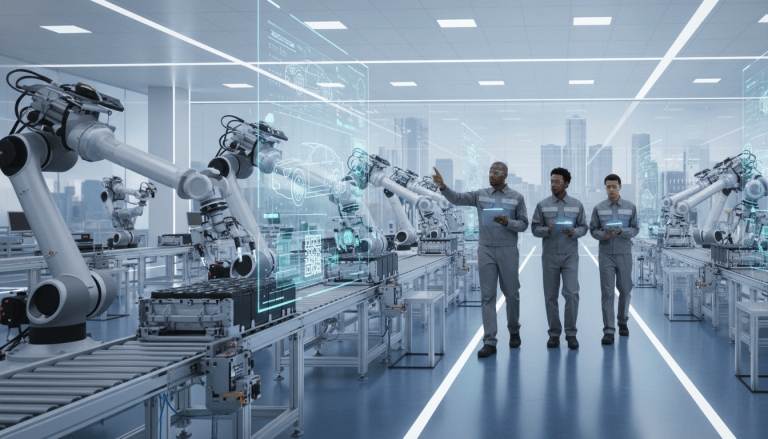
While the automotive sector remains the primary driver—accounting for a significant portion of exports and imports—local officials are noting a diversification in the goods flowing through the city. Advanced manufacturing equipment and raw materials for the burgeoning electric vehicle (EV) battery sector are becoming increasingly common sights at the Port of Detroit.
The Role of Automotive Giants
The “Big Three” automakers—Ford, General Motors, and Stellantis—heavily rely on the seamless flow of Detroit international trade. Parts often cross the border multiple times before a finished vehicle rolls off the assembly line. This “just-in-time” manufacturing process makes the efficiency of Detroit’s border crossings a matter of national economic security.
Recent reports from the International Trade Administration highlight that Michigan ranks among the top states for export-supported jobs, largely fueled by this cross-border integration.
Impact on Detroit Residents
For the average Detroiter, the macro-level trade statistics translate directly into local opportunities. The logistics and transportation sector has seen steady job growth, providing employment options ranging from truck driving and warehousing to customs brokerage and supply chain management.
“The expansion of trade capabilities means more jobs in Southwest Detroit and downriver communities,” noted a representative from a local workforce development agency. “We are seeing increased demand for skilled workers who understand logistics software and international compliance.”
Furthermore, a robust trade economy supports the city’s tax base, funding vital public services. When the local automotive industry thrives through export efficiency, it stabilizes the housing market and encourages further commercial development within the city limits.
Infrastructure: The Gordie Howe International Bridge
The future of Detroit international trade is physically taking shape over the Detroit River. The Gordie Howe International Bridge, a massive infrastructure project, is set to provide a modern, direct highway-to-highway connection between Detroit and Windsor.
Scheduled for completion in 2025, this project is expected to:
- alleviate congestion on the aging Ambassador Bridge.
- Increase the capacity for commercial freight.
- Create thousands of temporary construction jobs and permanent operations positions.
Local business owners are optimistic. “Right now, a delay at the bridge means a delay in our production schedule,” said the owner of a Tier-2 auto supplier in Detroit. “Having a second major crossing option is going to be a game-changer for reliability.”
What Happens Next?
As Detroit looks toward the future, the integration of technology into trade processes is the next frontier. The city is experimenting with “smart corridors” that use data to optimize traffic flow for freight trucks, reducing emissions and wait times.
However, challenges remain. Global geopolitical tensions and shifting trade policies can impact the flow of goods. Yet, the resilience of the Detroit business community suggests the city is well-equipped to adapt.
With the expansion of the Port of Detroit and the new bridge, the city is doubling down on its identity. Detroit is no longer just the place where things are made; it is the essential hub where the world’s economy moves.