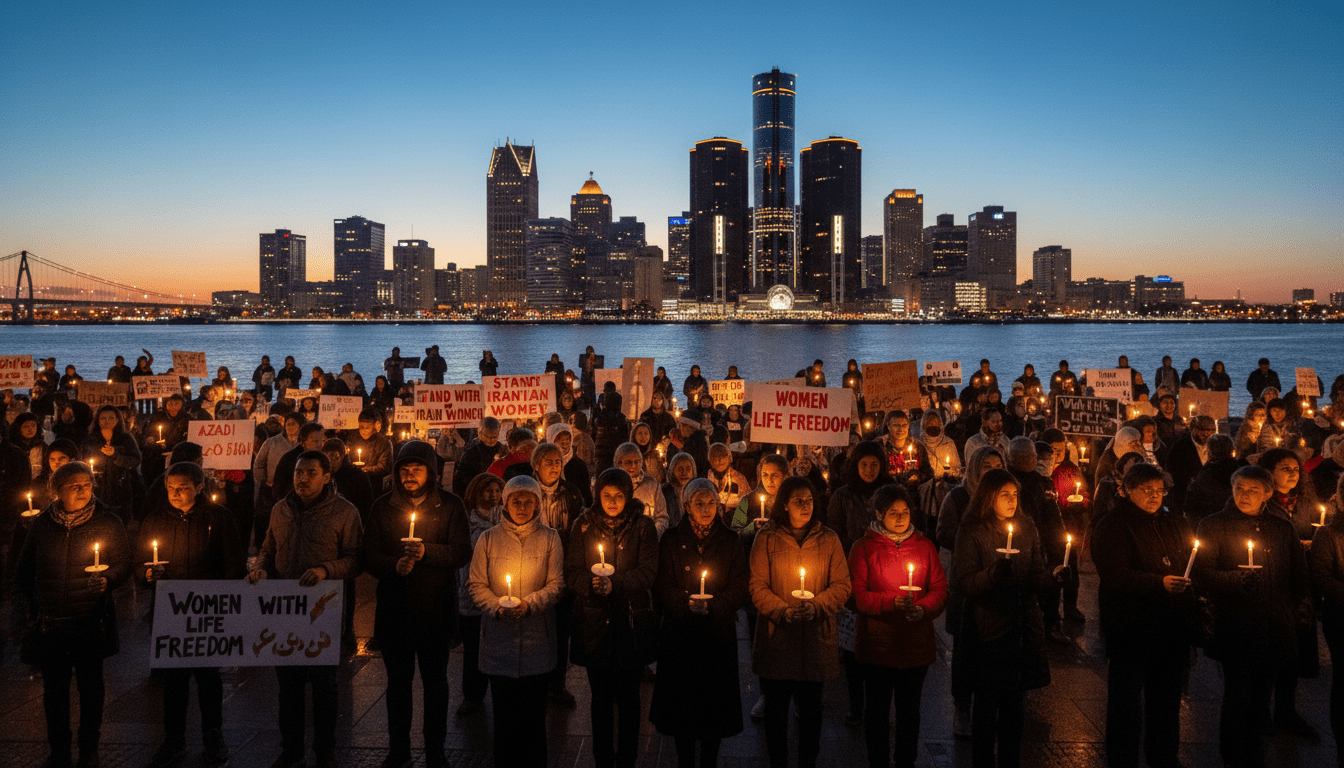
DETROIT — As the death toll continues to mount following weeks of unrest in Iran, the reverberations are being felt acutely in Metro Detroit, home to one of the nation’s most vibrant Middle Eastern diasporas. Local activists and families within the Detroit Iranian community are expressing deepening alarm following new warnings from Iranian officials threatening “maximum punishment” for demonstrators.
The unrest, sparked originally by the death of Mahsa Amini in police custody, has evolved into a nationwide movement in Iran. However, the response from the state has intensified. On Monday, the head of Iran’s judiciary, Gholamhossein Mohseni Ejei, reportedly instructed judges to avoid showing “unnecessary sympathy” to protesters, signaling a potential wave of harsh sentencing including the death penalty. For residents in Detroit and Dearborn with family members still in Tehran, Shiraz, and Kurdistan, the news has turned anxiety into action.
Detroit Community Responds to Escalating Violence
In response to the escalating violence and the new judicial threats, organizers in Detroit have held a series of vigils and solidarity rallies, notably gathering near Hart Plaza and in neighboring Dearborn. The mood at these events has shifted from mourning to urgent advocacy, as attendees call for greater international attention to the human rights violations occurring abroad.
“We are past the point of just asking for awareness. Our families are being threatened with execution for demanding basic freedom,” said a local organizer involved with the Michigan Iranian-American Community group, who asked to remain anonymous to protect relatives in Iran. “When we hear ‘maximum punishment,’ we know exactly what that means in the context of the Islamic Republic’s judicial history. It means show trials and capital punishment.”
According to data from the Human Rights Watch and the Oslo-based group Iran Human Rights, the death toll has continued to climb, with hundreds confirmed dead, including dozens of children. The crackdown has been particularly severe in border regions, but the recent judicial order suggests a systematic legal pursuit of anyone detained during the protests.
Impact on Detroit Residents and Families
The Detroit Iranian community faces a unique emotional burden. While physically safe in Michigan, the psychological toll of the conflict is immense. Many local residents report an inability to contact loved ones due to severe internet blackouts and platform blocking implemented by the Iranian government.
For University of Michigan students and professionals working in Detroit’s tech and medical sectors, the workday is often punctuated by frantic attempts to check messaging apps like WhatsApp or Telegram for proof of life from relatives. The threat of “maximum punishment” has exacerbated this fear, as families worry that mere participation in a street march could lead to a death sentence for their cousins or siblings.
“This isn’t just a foreign policy issue for us; it is a Detroit family issue,” said Dr. Haleh Esfandiari, a local physician assisting with community support efforts. “Detroit is a city built on civil rights and labor movements. We understand the struggle for dignity. But the fear here is palpable because we cannot protect our families from a judicial system that has promised no mercy.”
Local mental health professionals have noted an uptick in anxiety and trauma-related visits among Iranian-Americans in the region. Community centers are now organizing not just protests, but support groups to help residents cope with the helplessness of watching the violence unfold from thousands of miles away.
Background: The Warning of Maximum Punishment
The context of the local fear is grounded in the specific language used by Iranian authorities this week. The judiciary’s directive to prioritize the speedy trial of “rioters” aims to quell the uprising through deterrence. Historically, such language has preceded mass arrests and expedited verdicts lacking due process.
According to reports from the Associated Press and international observers, thousands have been detained. The warning of maximum punishment is seen by analysts as a final attempt to break the momentum of a movement that has crossed ethnic and class lines across Iran.
In Detroit, this news has galvanized local political leaders as well. Representatives from Wayne County have issued statements of solidarity, emphasizing that the right to peaceful protest is a universal human right. The connection between Detroit’s history of social justice and the current struggle in Iran has been a focal point of speeches delivered at rallies in Campus Martius.
For more on how local communities in Detroit organize around international human rights, readers can explore our coverage of Detroit’s history of civil rights activism and recent updates on local community support systems.
Looking Ahead: Continued Mobilization
As the situation in Iran remains volatile, the Detroit Iranian community plans to maintain pressure on U.S. lawmakers to take concrete steps, such as enforcing targeted sanctions on individuals responsible for the violence. Local advocacy groups are coordinating bus trips to Washington D.C. to join larger national rallies, ensuring that the voice of the Midwest diaspora is heard.
The coming weeks will be critical. If the Iranian judiciary follows through on its threats of capital punishment for protesters, local leaders anticipate the largest demonstrations yet seen in Metro Detroit regarding this issue. The community remains united in its message: the world is watching, and Detroit stands with the people of Iran.