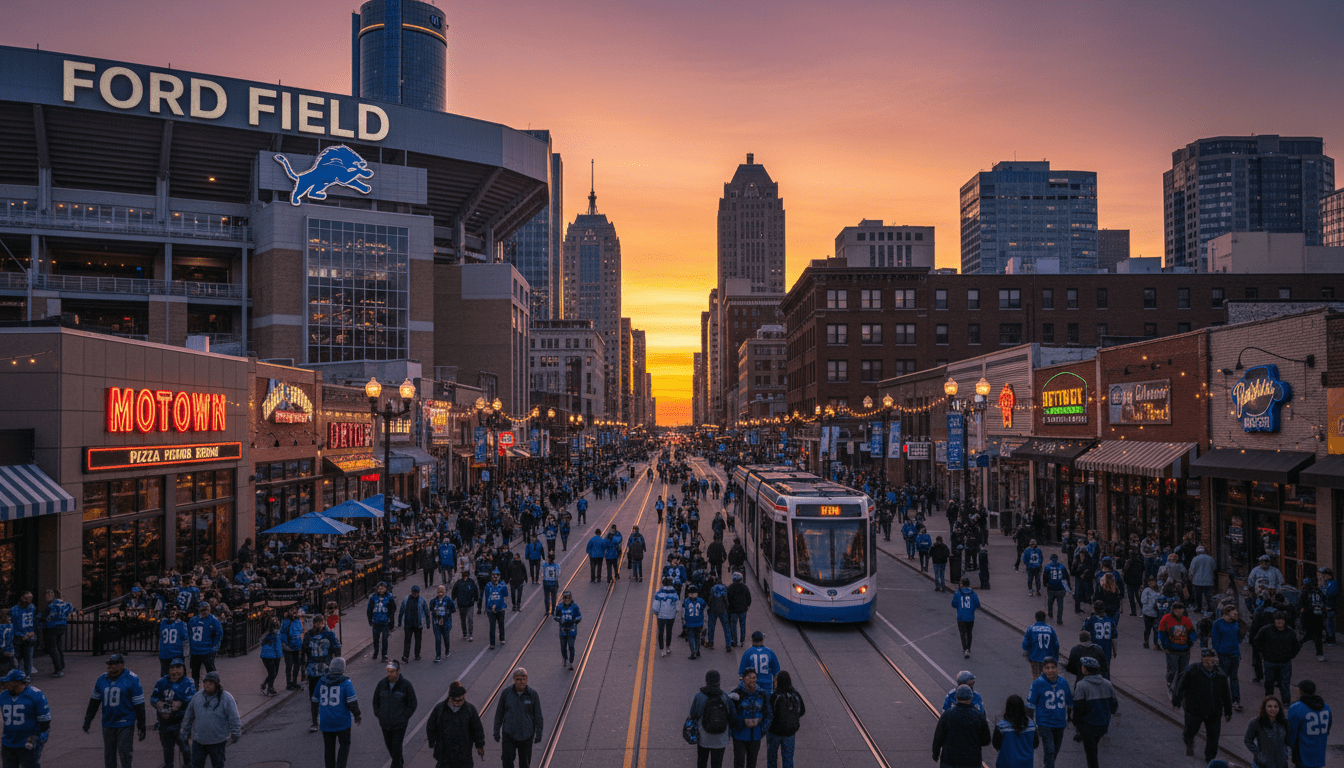
The roar echoing from Ford Field over the past year has signified more than just a sports resurgence; it represents a pivotal shift in the financial and social landscape of downtown Detroit. As the Detroit Lions transition from long-standing underdogs to legitimate Super Bowl contenders, the city is witnessing a tangible surge in economic activity, foot traffic, and development interest that extends far beyond the stadium walls. For many residents and business owners, the team’s success is no longer just a source of pride—it is a critical driver of the local economy.
The New Era of Sports Tourism in Detroit
According to reports from the City of Detroit, the recent playoff runs and high-profile games have brought hundreds of thousands of visitors to the downtown core, many of whom are spending significant capital at local establishments. The ripple effect of a winning season is felt most acutely in sectors like hospitality and transportation. Data from the Michigan Economic Development Corporation (MEDC) suggests that high-attendance sporting events in Detroit can generate millions of dollars in supplemental revenue for the city per weekend.
Local business owners in the nearby Eastern Market and Corktown districts have reported record-breaking sales on game days. The influx of fans from across the state and the country has created a demand for services that was previously seen only during large-scale conventions. This sustained interest has encouraged entrepreneurs to invest in new ventures, viewing the area around the stadium as a high-growth zone. To understand more about these shifts, readers can explore our previous coverage on small business growth in downtown Detroit.
Impact on Detroit Residents and Neighborhoods
While the immediate financial benefits are concentrated downtown, the Detroit Lions economic impact is beginning to filter into residential neighborhoods through infrastructure improvements and job creation. The increased tax revenue generated from ticket sales, parking fees, and hospitality taxes provides the city with additional resources to fund public services. Mayor Mike Duggan’s office has frequently highlighted how a vibrant downtown serves as the “engine” for neighborhood-level investments across the city’s 139 square miles.
For residents, the impact is also seen in the job market. Ford Field and its surrounding vendors employ thousands of part-time and full-time workers, many of whom are Detroit natives. The demand for security, event management, and food service roles has seen a steady climb as the team schedules more high-stakes matches and off-season events. However, some community advocates argue that the city must ensure that the rising costs of living in a popular sports hub do not displace long-term residents. You can read more about these concerns in our report on Detroit development projects and housing equity.
Background & Data: The Numbers Behind the Hype
A closer look at the data reveals the scale of this transformation. According to the U.S. Census Bureau and local economic analysts, Detroit’s downtown population has grown as young professionals seek to live near the city’s sports and entertainment district. The “District Detroit” concept, which aims to link the city’s various stadiums into a cohesive walkable corridor, has gained renewed momentum due to the Lions’ success. The Lions’ 2023 season saw a 10% increase in average home game attendance compared to the previous five-year average, filling the stadium to its 65,000-seat capacity nearly every week.
Furthermore, the city’s official records at Detroitmi.gov indicate that permit applications for new commercial signage and outdoor seating have spiked in the blocks surrounding the stadium. This “halo effect” of professional sports teams is a documented phenomenon in urban planning, where the success of a local franchise correlates with increased property values and a reduction in commercial vacancy rates in the immediate vicinity.
The Role of Infrastructure and Transportation
To accommodate this growth, the city has had to pivot its infrastructure strategy. Improvements to the QLine and expanded DDOT bus routes on game days have become essential. The increased focus on public transit is a direct response to the congestion caused by the thousands of fans descending on the city center. This pressure on the city’s transit system has led to calls for more permanent, high-capacity solutions that could benefit daily commuters just as much as sports fans.
Investment in public spaces like Campus Martius and Grand Circus Park has also been accelerated to provide fans with gathering spots before and after games. These improvements remain in place year-round, benefiting the community even during the NFL off-season. The synergy between team performance and urban design is creating a more resilient downtown that is less dependent on traditional office workers and more focused on experiential tourism.
What Happens Next: Future Outlook
As the Detroit Lions prepare for the upcoming season, the expectations are higher than ever—both on the field and in the city’s accounting offices. The upcoming schedule promises several primetime matches, which typically draw larger out-of-town crowds and higher television viewership, further boosting the city’s national profile. Economists predict that if the team maintains its current trajectory, the long-term Detroit Lions economic impact could facilitate the development of hundreds of new residential units and several new hotel projects currently in the pipeline.
The challenge for city leaders moving forward will be sustaining this momentum during the off-season. While the Lions provide a massive seasonal boost, the goal is to leverage that energy into year-round economic stability. For now, the city remains optimistic, riding the wave of a sports culture that has revitalized the spirit—and the wallet—of the Motor City.