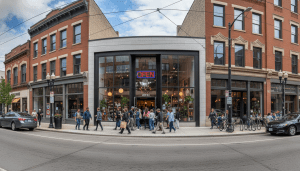


Detroit is currently witnessing a pivotal moment in its economic evolution, driven significantly by a surge in local business ownership. While the city has long been recognized as a hub for Black culture and commerce, a renewed focus on support systems, funding mechanisms, and mentorship programs is empowering Detroit minority entrepreneurs to scale their ventures beyond the startup phase. However, despite these advancements, access to capital and equitable resources remains a critical conversation for city officials and business leaders alike.
In recent years, the narrative of Detroit’s recovery has shifted from downtown development to neighborhood stabilization. At the heart of this transition are minority business owners who are revitalizing commercial corridors in areas like the Avenue of Fashion, Southwest Detroit, and the Villages. According to recent reports from the Detroit Economic Growth Corporation (DEGC), small businesses are the backbone of the city’s employment, providing jobs to thousands of residents who live within walking distance of these enterprises.
The Current Landscape for Minority Business Owners
The ecosystem for Detroit minority entrepreneurs has expanded rapidly, bolstered by a coalition of non-profits, government initiatives, and private investors. Programs such as Motor City Match, managed by the DEGC, have played a distinct role in matching building owners with aspiring entrepreneurs. Since its inception, the program has distributed millions in grant funding, primarily to minority and women-owned businesses.
“The entrepreneurial spirit in Detroit is unmatched, but talent is universal while opportunity is not,” stated a representative from the New Economy Initiative (NEI) in a recent press briefing. “Our goal is to ensure that the infrastructure surrounding these business owners is robust enough to weather economic headwinds.”
This infrastructure includes Community Development Financial Institutions (CDFIs) like Detroit Development Fund and ProsperUs Detroit, which offer micro-lending options to those who may not qualify for traditional bank financing. For many local founders, these organizations are the difference between opening a brick-and-mortar location and remaining a home-based hobby.
Breaking Down Barriers to Capital
Despite the success stories, the capital gap remains the single largest hurdle. Data from the Federal Reserve has historically shown that Black-owned businesses start with significantly less capital than their white counterparts and are denied loans at higher rates, even when credit profiles are similar. In Detroit, where the population is roughly 77% Black, this disparity has macroeconomic implications.
Local banking leaders and city officials have launched initiatives like “Detroit Means Business” to centralize resources. The aim is to simplify the complex web of grant applications and loan requirements. Furthermore, several Detroit-based venture capital firms are now specifically targeting underrepresented founders, acknowledging that diversity in leadership often leads to more innovative market solutions.
Access to affordable commercial real estate is another pressing issue. As property values in Detroit rise, long-time residents trying to open businesses face higher rents. To combat this, the city has implemented zoning updates and land bank programs designed to prioritize local ownership of commercial properties, ensuring that the wealth generated by development stays within the community.
Impact on Detroit Residents
The success of Detroit minority entrepreneurs has a direct ripple effect on the daily lives of residents. When a local resident opens a grocery store, a tech startup, or a boutique in their own neighborhood, it does more than just fill a vacant storefront; it creates local employment and circulates money within the local economy.
Residents benefit from increased access to goods and services without having to travel to the suburbs. Furthermore, successful local entrepreneurs often serve as mentors for the next generation. We are seeing a trend where established business owners in districts like Livernois-McNichols are creating informal incubators, hiring local youth, and sponsoring community events. This strengthens social cohesion and reduces blight, proving that economic development is inextricably linked to crime reduction and neighborhood safety.
For more on how local development affects housing, read our coverage on Detroit real estate trends and the shifting housing market.
Background & Data: The Numbers Behind the Trend
To understand the scope of the issue, one must look at the data. According to the U.S. Census Bureau’s Annual Business Survey, while minority ownership is high in Detroit compared to national averages, the revenue gap persists. Minority-owned firms often have fewer employees and lower annual revenues than non-minority firms.
- Demographics: Detroit has one of the highest concentrations of Black-owned businesses in the country.
- Funding Disparity: National data suggests Black entrepreneurs apply for bank financing at the same rates as white entrepreneurs but are approved at significantly lower rates.
- Growth Sectors: While retail and food services dominate, there is a growing number of minority-owned firms in technology, logistics, and manufacturing entering the Detroit market.
A recent report by Detroit Future City highlighted that closing the revenue gap for Black-owned businesses could generate billions in additional revenue for the region. This statistic underscores that supporting minority entrepreneurship is not just a social imperative but a massive economic opportunity for Southeast Michigan.
Future Outlook for Detroit’s Economy
Looking ahead to the remainder of the decade, the outlook for Detroit minority entrepreneurs is cautiously optimistic. The influx of federal funding from recent infrastructure bills and the State Small Business Credit Initiative (SSBCI) is expected to increase liquidity for lenders.
Moreover, the integration of technology is allowing Detroit businesses to reach a global audience. E-commerce adoption among local retailers has skyrocketed, reducing dependency on foot traffic alone. As the city continues to court large tech companies to set up innovation hubs downtown, there is a concerted effort to ensure local startups are integrated into these supply chains.
The path forward involves sustained collaboration. Banks must re-evaluate risk models, the city must continue streamlining permitting processes, and consumers must prioritize spending locally. As these elements align, Detroit is well-positioned to become a national model for inclusive economic development.
For further reading on local economic shifts, check out our report on Detroit jobs and startup news.