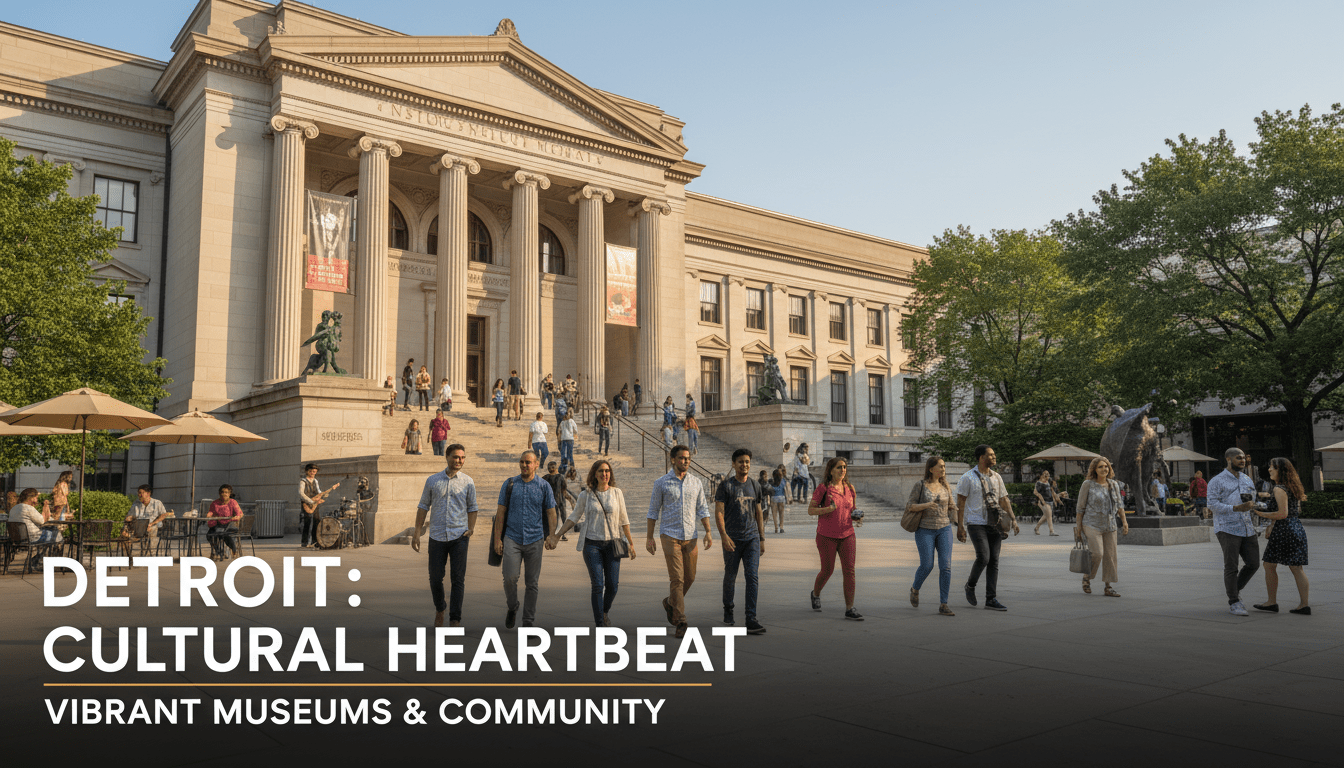
Detroit’s cultural landscape is undergoing a significant transformation, driven by a renewed focus on accessibility, architectural connectivity, and community engagement. As the city continues its economic rebound, Detroit museums and cultural institutions are asserting themselves as central pillars of the region’s identity, moving beyond static repositories of history to become active community hubs. Spearheaded by major players like the Detroit Institute of Arts (DIA) and the Charles H. Wright Museum of African American History, the city’s Midtown Cultural Center is in the midst of a reimagining that promises to reshape how residents interact with art and history.
According to recent reports from Midtown Detroit, Inc., the collective effort to unify the city’s major institutions under the Cultural Center Planning Initiative (CCPI) represents one of the most ambitious urban design projects in the country. This strategic shift aims to connect the physical spaces between institutions, creating a walkable, cohesive campus that encourages deeper engagement from both locals and tourists.
The Evolution of the Cultural Center
For decades, Detroit’s major cultural institutions operated largely as islands within the Midtown district. While geographically close, the Detroit Public Library, the DIA, and the Michigan Science Center were separated by wide roads and limited pedestrian infrastructure. The current strategic vision, supported by philanthropic foundations and city planners, seeks to dissolve these barriers.
The Cultural Center Planning Initiative serves as the roadmap for this evolution. The plan prioritizes outdoor programming, digital connectivity, and sustainable landscape architecture. By treating the exterior spaces with the same level of curation as the interior galleries, stakeholders aim to create a “museum campus” atmosphere similar to Washington D.C.’s National Mall but distinctly Detroit in character.
“The goal is to create a seamless experience where visitors can move from art to history to science without feeling like they are leaving one distinct fortress to enter another,” said a representative involved in the district’s planning discussions. This connectivity is expected to drive cross-pollination of audiences, where a visitor to the Michigan Science Center might naturally wander into the Historical Museum due to improved wayfinding and inviting outdoor installations.
Anchoring Institutions: The DIA and The Wright
At the heart of this renaissance is the Detroit Institute of Arts (DIA), which continues to receive national acclaim. Consistently ranked among the top art museums in the United States by USA Today readers, the DIA has leveraged the stability provided by the tri-county arts millage to expand its reach. The museum’s focus has shifted heavily toward inclusivity, ensuring that its world-class collection is accessible to residents of Wayne, Oakland, and Macomb counties.
Simultaneously, the Charles H. Wright Museum of African American History remains a critical voice in the national conversation regarding race and history. As one of the world’s oldest and largest institutions dedicated to the African American experience, the museum has recently ramped up collaborations with national entities to bring high-profile exhibitions to Detroit. These efforts underscore a broader trend: Detroit museums are no longer just local treasures but are competing on a global stage for exhibitions and scholarly attention.
Impact on Detroit Residents
The expansion and modernization of Detroit museums have direct, tangible benefits for the local population. Beyond the aesthetic improvements to the Midtown neighborhood, these institutions serve as significant economic engines and educational resources.
- Free Access: Residents of the tri-county area continue to enjoy free general admission to the DIA, a benefit that lowers the barrier to entry for working-class families.
- Educational Programming: Local schools rely heavily on these institutions for field trips and supplemental curriculum. Enhanced digital resources allow students who cannot physically visit to access collections remotely.
- Community Spaces: The redesign of the Cultural Center focuses on creating free, public green spaces. This provides residents with safe, beautiful environments for recreation, regardless of whether they purchase a museum ticket.
Local business owners in the Midtown area have also noted a correlation between major museum exhibitions and foot traffic in restaurants and shops. “When the museums are busy, the neighborhood thrives,” noted a manager at a nearby Cass Avenue café. “It creates a vibrant ecosystem that supports small businesses alongside the big institutions.”
Background & Data
The economic impact of the arts in Southeast Michigan is substantial. Data from Creative Many Michigan (now part of the Arts Alliance) has historically shown that the creative sector contributes billions to the state’s economy. In Detroit specifically, cultural tourism is a key driver of the visitor economy.
According to the Detroit Metro Convention & Visitors Bureau, cultural travelers typically spend more and stay longer than the average tourist. The pre-pandemic attendance numbers for the Cultural Center institutions exceeded 2 million visitors annually, and recent trends suggest a strong recovery toward these figures as new developments come online.
Furthermore, philanthropic support remains robust. The Knight Foundation and the Kresge Foundation have poured millions into the arts sector, recognizing that a thriving cultural scene is essential for the city’s retention of talent and overall livability. For more on how local developments are funded, read our coverage on Detroit business and philanthropy.
What Happens Next
Looking ahead into late 2025 and beyond, the physical transformation of the Cultural Center will become more visible. Construction projects aimed at narrowing wide avenues to favor pedestrians and the installation of unified public Wi-Fi networks across the district are on the docket.
The Museum of Contemporary Art Detroit (MOCAD) is also undergoing its own evolution, planning renovations that will better utilize its industrial space while maintaining its edgy, avant-garde reputation. As these projects break ground, the vision of a unified, world-class cultural district in the heart of Detroit moves closer to reality, promising to cement the city’s status as a global arts destination.