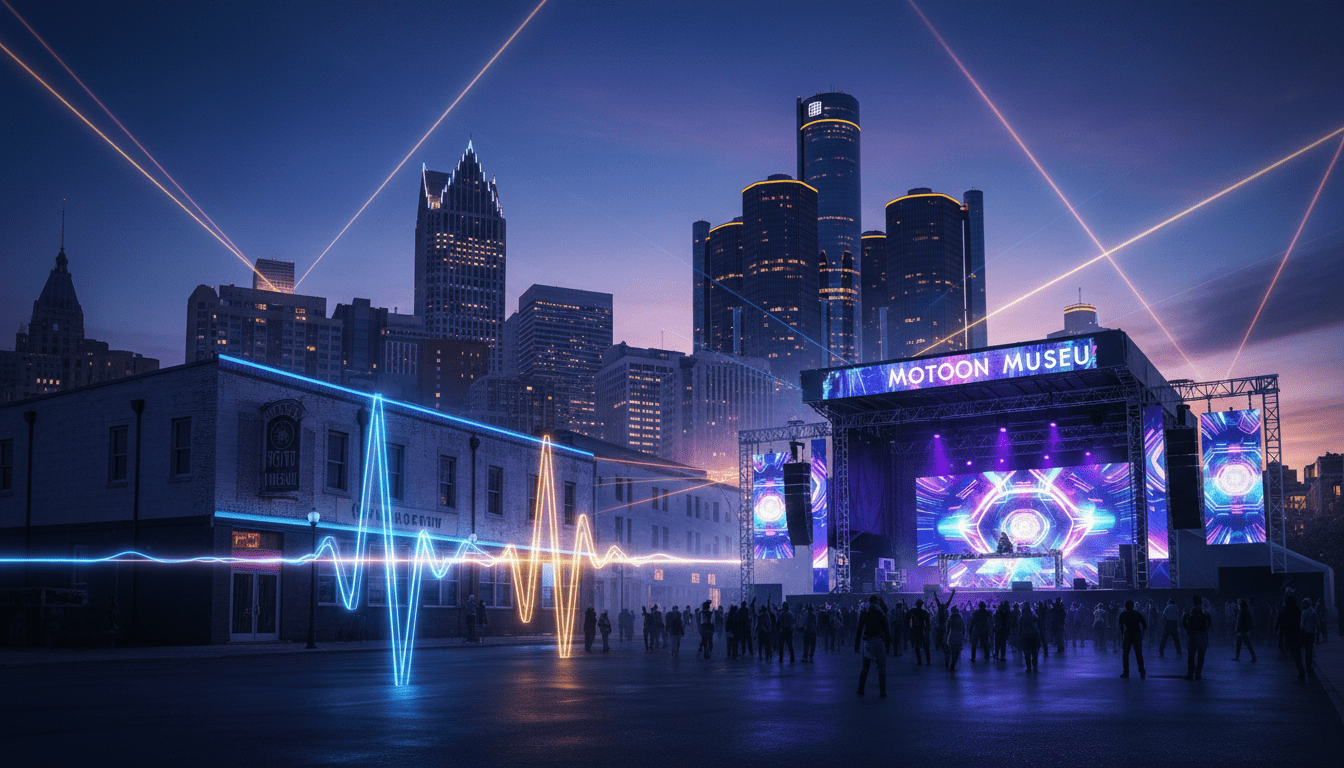
Detroit is often cited globally for its automotive history, but for millions around the world, the city’s identity is defined not by engines, but by rhythm. From the polished soul of Motown to the futuristic pulse of Techno and the raw energy of garage rock, Detroit’s music legacy is a cornerstone of its cultural and economic revival. As the city continues its trajectory of development in 2025, the music industry remains a vital engine for tourism, community identity, and international recognition.
While the history is legendary, recent developments indicate that Detroit is not merely resting on its laurels. Through significant investments in cultural institutions, the designation as a UNESCO City of Design, and a thriving live music ecosystem, the city is actively leveraging its sonic heritage to secure its future. For residents and city planners alike, the preservation and evolution of this culture are critical to Detroit’s ongoing narrative.
The Enduring Power of the Motown Sound
It is impossible to discuss the Detroit music legacy without acknowledging the monumental impact of Berry Gordy’s Motown Records. However, the current news story is not just about the hits of the 1960s, but the physical expansion of that history. The ongoing $55 million expansion of the Motown Museum—Hitsville U.S.A.—represents one of the most significant cultural investments in the city’s recent history.
According to museum officials, the expansion is designed to transform the historic site into a world-class tourist destination, complete with interactive exhibits and performance spaces. This project is expected to significantly boost local tourism numbers, drawing international visitors who view Detroit as a pilgrimage site for music history. Local business owners in the surrounding neighborhood have expressed optimism that the completed campus will drive foot traffic and spark further commercial development along West Grand Boulevard.
Detroit as the Birthplace of Techno
While Motown dominates the historical narrative for some, the global electronic music community looks to Detroit for a different reason. As the birthplace of Techno, crafted by the “Belleville Three” (Juan Atkins, Derrick May, and Kevin Saunderson), Detroit holds a unique position in modern music culture. This legacy is not dormant; it is a massive economic driver.
Data from the organizers of the Movement Electronic Music Festival, held annually at Hart Plaza, indicates that the event draws over 100,000 attendees, a significant portion of whom travel from outside the United States. This influx provides a substantial annual boost to downtown hotels, restaurants, and Detroit tourism attractions.
“The techno scene isn’t just underground parties anymore; it’s a major export of Detroit culture,” said a local promoter involved in city nightlife. “When people in Berlin or Tokyo think of Detroit, they think of the synthesizer just as much as the assembly line.”
Impact on Detroit Residents and Local Economy
For the average Detroiter, the city’s musical prestige offers both cultural pride and economic opportunity. The revitalization of historic venues is creating jobs and restoring neighborhood anchors. The reopening of the Michigan Central Station, celebrated with a star-studded concert executive produced by Eminem, highlighted how integral music is to the city’s image of renewal.
However, the commodification of this legacy brings challenges. Local artists and smaller venue owners often cite rising real estate costs as a threat to the grassroots creativity that put Detroit on the map. Community leaders have emphasized the need to balance high-level tourism projects with support for the working musicians living in the city today.
City officials have recognized this dual need. Initiatives aiming to support the “nighttime economy” are being discussed to ensure that regulations support, rather than hinder, live performance venues. This aligns with broader efforts to enhance Detroit local living standards by creating vibrant, walkable entertainment districts.
Preserving History While Innovating
The Detroit Historical Society and various preservation groups are working to ensure that landmarks associated with the Detroit music legacy are not lost to demolition or neglect. This includes the preservation of the Blue Bird Inn and the Grande Ballroom, sites that fostered jazz and rock revolutions respectively.
Furthermore, Detroit’s status as a UNESCO City of Design recognizes the intersection of the city’s industrial and artistic outputs. This designation helps frame Detroit’s music not just as entertainment, but as a form of cultural innovation that deserves protection and investment.
What Happens Next?
Looking ahead, the synergy between Detroit’s past and present is expected to deepen. With the city attracting new residents and businesses, the demand for cultural amenities is rising. The challenge for policymakers will be ensuring that the benefits of this “music economy” reach the neighborhoods where the music was originally created.
As Detroit prepares for future festivals and the completion of major cultural projects, the world is watching. The city is proving that its export economy is no longer just about cars; it is about exporting a culture of resilience, rhythm, and innovation that continues to resonate globally.