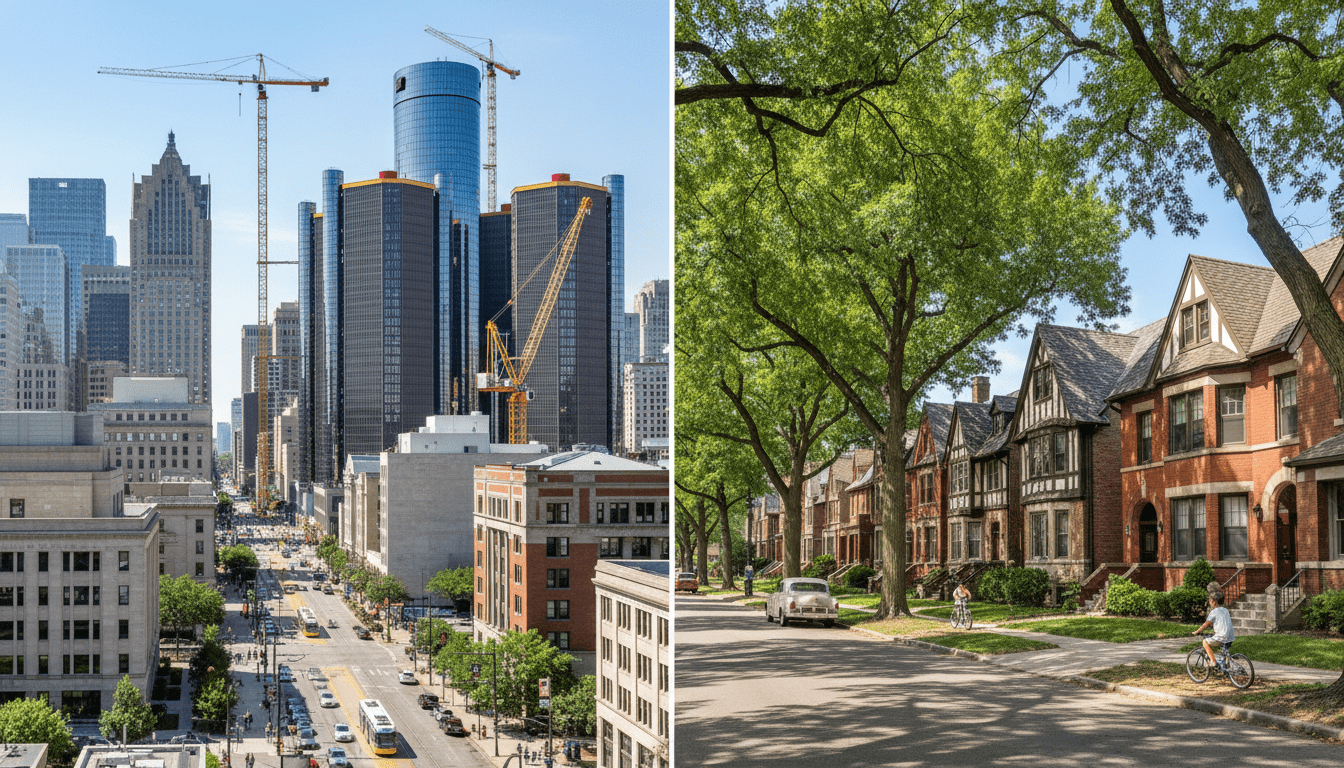
As Detroit continues its decade-long trajectory of revitalization, a distinct shift in market dynamics is emerging across the city’s geography. While the narrative of the last ten years has been dominated by the rapid transformation of the 7.2 square miles comprising Greater Downtown, recent data and development trends suggest a significant pivot. Homebuyers, investors, and city planners are increasingly focusing their attention on Detroit’s historic outer neighborhoods, driven by affordability constraints in the core and targeted municipal investment strategies.
For years, headlines were monopolized by the resurgence of Midtown, Corktown, and Brush Park. However, as 2024 progresses, real estate analytics and City of Detroit development reports indicate that the next phase of the city’s growth is firmly rooted in neighborhoods like Bagley, East English Village, and the University District. This analysis compares the current state of Detroit’s established investment zones against these rising challengers.
The Saturation of Greater Downtown
The stabilization of Downtown, Midtown, and Corktown acts as the economic engine for the region, but entry prices have reached levels comparable to suburbs that were historically more expensive. Following Ford Motor Company’s acquisition and subsequent restoration of Michigan Central Station, Corktown saw property values skyrocket. While this has been a boon for tax revenue, it has altered the accessibility of the neighborhood.
According to recent market assessments, price-per-square-foot metrics in these core areas have stabilized at a high plateau. The frenetic bidding wars of previous years have cooled slightly, not due to a lack of desirability, but due to inventory saturation and price ceilings. For many middle-income Detroiters and new residents, the math of living in the immediate downtown vicinity no longer balances, pushing demand outward.
The Rise of the Middle Neighborhoods
In contrast to the high-density developments of the core, Detroit’s "middle neighborhoods"—areas characterized by strong single-family housing stock and high homeownership rates—are seeing renewed vigor. This is not accidental. The City of Detroit’s Strategic Neighborhood Fund (SNF) has poured millions into streetscapes, commercial corridors, and park improvements in areas outside the downtown bubble.
Bagley and the Live6 Corridor
One of the most striking comparisons to the downtown market is the Bagley neighborhood, situated just west of the University District. Anchored by the commercial resurgence along the Avenue of Fashion (Livernois), Bagley offers historic brick housing stock at a fraction of the cost of a Midtown condo. Data from local real estate listings indicates that days-on-market for turnkey homes in Bagley have dropped significantly, mirroring the tightness of the market seen in Corktown five years ago.
Local business owners along Livernois report that foot traffic has returned to pre-pandemic levels, bolstered by the streetscape overhaul that widened sidewalks and added bike lanes. This infrastructure investment has made the neighborhood a viable alternative for those seeking walkability—a feature previously thought to be exclusive to the downtown core.
East English Village and Morningside
On the east side, East English Village continues to perform strongly, often compared to Grosse Pointe regarding architecture but retaining a distinct Detroit identity. The pricing differential here is stark; buyers can often secure 2,000-square-foot Tudors for significantly less than a one-bedroom unit in Brush Park. The neighborhood association here remains one of the strongest in the city, providing a level of stability that appeals to families.
Impact on Detroit Residents
This geographic shift in investment has profound implications for long-term Detroit residents. As interest bleeds from the core to the neighborhoods, the specter of displacement and tax burdens rises alongside property values. However, the context differs from the downtown displacement narratives.
“The growth in these neighborhoods is often driven by owner-occupants rather than large-scale speculative developers, which creates a different community dynamic,” said a representative from a local housing non-profit during a recent town hall. The primary concern for locals in these areas is property tax assessment. As sales prices rise in Bagley or East English Village, the assessed value of neighboring homes—often owned by seniors on fixed incomes—can increase.
The City has countered this with the HOPE application (Homeowners Property Exemption) and the Pay As You Stay program, aimed at keeping legacy residents in their homes even as neighborhood values climb. Ensuring these programs are accessible is critical as the market heats up in these zip codes.
Comparing the Numbers
To understand the scope of this shift, one must look at the density of renovation permits. While downtown still leads in commercial permits involving large-scale multi-use structures, residential renovation permits filed by individual homeowners are heavily concentrated in the northwest and far east side districts.
According to data from the U.S. Census Bureau and local deed recordings, homeownership rates in these outer neighborhoods remain significantly higher than in the transient, rental-heavy downtown corridors. This suggests that the current wave of Detroit’s recovery is building long-term equity for residents, provided they can weather the initial tax adjustments.
Infrastructure: The Great Connector
A major factor leveling the playing field between Detroit neighborhoods is the ongoing construction of the Joe Louis Greenway. Once complete, this 27.5-mile loop will connect neighborhoods like Midwest, Dexter-Linwood, and Highland Park directly to the riverfront.
Real estate analysts predict that neighborhoods located along the Greenway path will experience value appreciation similar to what was seen near the Atlanta BeltLine. This infrastructure project effectively shrinks the city, making transportation between the outer neighborhoods and downtown employment centers more feasible for those without vehicles, further reducing the premium paid for living downtown.
What Happens Next
The comparison between Detroit neighborhoods in 2024 reveals a city becoming less monocentric. The dominance of the "7.2" is fading in favor of a polycentric model where strong neighborhood anchors—like the Avenue of Fashion, the Villages, and Southwest Detroit’s Vernor Highway—create self-sustaining micro-economies.
For investors and homebuyers, the message is clear: the "easy" appreciation of the downtown core has likely passed. The future growth—and the most vibrant community development—is happening in the neighborhoods that define Detroit’s historic footprint. As the City prepares for its next round of budgeting, keeping an eye on where infrastructure dollars are allocated will likely reveal the next Bagley or Corktown before the prices reflect it.