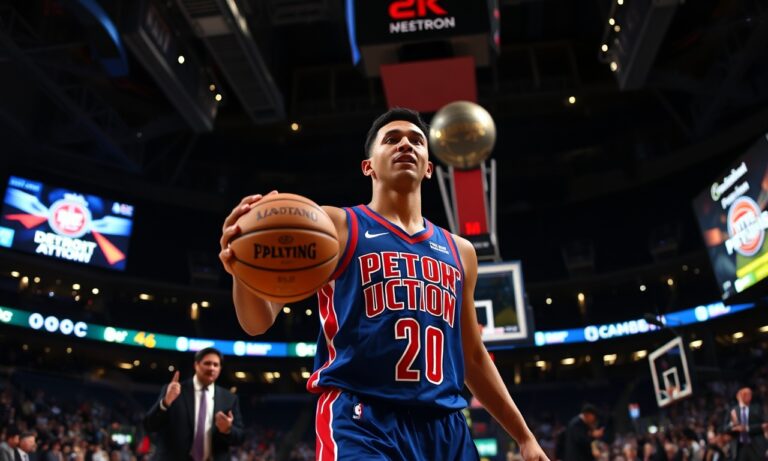
The Detroit Pistons’ offseason has unfolded like a work in progress—part roster reset, part asset management, and part evaluation of how quickly the team can translate changes into wins. With the NBA’s calendar moving toward free agency’s later stages and the Summer League window setting expectations for development, Detroit’s front office decisions so far are shaping the team’s 2026 outlook.
This analysis grades the Pistons offseason moves so far using what Detroit has actually done on the roster—alongside the most credible rumors swirling around players such as Luke Kennard. The goal isn’t to declare a single “winner” in a short offseason, but to measure what the moves mean for minutes, money, and the probability of faster progress for the young core.
Detroit Pistons offseason grades: What the front office changed
At the highest level, this offseason has continued a familiar Pistons theme: build a roster that can develop while preserving flexibility. In practice, that typically shows up through contract decisions, roster composition, and the readiness to swap players or draft assets depending on how negotiations evolve.
According to Spotrac, a widely used database tracking NBA contracts, Detroit’s offseason priorities are constrained by salary rules and the need to remain competitive in the free-agent market while still managing future cap space. While databases like Spotrac don’t tell you what a team “should” do, they help contextualize whether a roster move is a short-term bet or a long-term cap strategy.
Luke Kennard trade rumors: How Detroit’s shooting footprint fits the plan
Luke Kennard has remained central to the offseason conversation, with persistent Luke Kennard trade rumors reflecting how important reliable perimeter shooting is to modern NBA spacing. If Detroit explores a trade centered around Kennard, the key question becomes whether the Pistons can replace his shot volume and shot quality without disrupting spacing enough to slow development for younger players.
Detroit’s coaching staff and player personnel team have historically valued players who can create floor spacing and make defensive rotations easier. In that sense, rumors don’t automatically mean a break from the plan—but they do suggest the Pistons are testing whether the market will reward their priorities with assets rather than only salary commitments.
From a grading perspective, any Kennard-centered trade hinges on exchange value: if Detroit receives draft capital or a young rotation player with realistic offensive upside, the move could rate as a strong asset move. If the return is thin on near-term value, the grade would soften, because spacing gaps tend to show up quickly in the box score and film study.
Pistons offseason moves: Evaluating roster updates and development timelines
Roster turnover isn’t just about who leaves; it’s about who plays. The most consequential Pistons offseason moves are the ones that determine minutes—because minutes are how players develop timing, decision-making, and chemistry. For Detroit, that means roster choices that either (1) maintain a stable rotation for younger players or (2) accelerate opportunities by clearing playing time.
For Detroit NBA fans, the practical takeaway is that Detroit Pistons roster updates should be interpreted through the lens of role clarity. If the team is adding players who fit known offensive actions—catch-and-shoot, off-ball cut reads, ball-screen spacing—or who can survive defensive assignments, then Detroit’s offseason grades tilt positive.
If, however, changes create overlapping skill sets without improving defensive structure, development may slow even if the roster “looks” better on paper.
Impact on Detroit Residents: Why the offseason matters beyond the arena
When Pistons news dominates local headlines, it isn’t only because basketball is entertainment—Detroit’s sports economy supports local jobs, small businesses, and downtown foot traffic. A competitive team also influences sponsorship interest and event scheduling across the city.
Local economic research often shows that major league sports contribute to broader spending through game-day purchases, media activity, and tourism. While the NBA offseason itself doesn’t directly equal ticket sales, changes to roster expectations can shift attendance patterns and media engagement leading into the season.
According to Brand and Sports economic reporting and the annual sports industry lens summarized by the U.S. Bureau of Economic Analysis through broader consumption categories, consumer spending linked to entertainment events is part of a larger local demand cycle. For Detroit residents and workers—vendors, hospitality employees, and nearby retail—what happens once games become more meaningful can be felt in the weeks that follow.
In neighborhoods around downtown, sustained fan interest can help keep seasonal demand steady. Detroit’s offseason story, then, becomes a signal of whether the team is moving toward a more watchable product, rather than a hard indicator of day-one game results.
Background & Data: How to grade a NBA offseason analysis responsibly
It’s tempting to grade an offseason by looking only at the loud moves—big names, headline trades, and star signings. But an NBA offseason analysis that stays grounded in reality has to consider constraints: cap mechanics, player availability, injury risk, and the trade-off between immediate wins and long-term development.
For Detroit, those constraints are magnified because the franchise is also managing the texture of its roster—how players fit together tactically. A roster constructed for short-term spacing might not fit a long-term defensive emphasis. Conversely, a roster that prioritizes defense might need time to regain offensive rhythm.
That’s why the most useful Detroit Pistons offseason grades come from asking a few consistent questions:
- Minutes clarity: Are younger players more likely to play meaningful roles?
- Asset balance: Does Detroit increase its future flexibility or cash in short-term only?
- Scheme fit: Do the roster changes improve offensive actions and defensive rotations?
- Risk management: Are Detroit’s moves creating manageable downside if players don’t develop quickly?
Main offseason storyline: A balancing act between win-now and build-now
Through the early stages of the offseason, Detroit’s decisions appear oriented around maintaining controllable roster elements while exploring ways to upgrade the rotation. That’s a rational posture for an organization trying to accelerate development without making the team so inexperienced that it stalls.
From a reporter’s standpoint, the most important question isn’t what Detroit “wants” to be—it’s what the roster changes make possible. If the team’s offseason ultimately leads to a rotation where shooters are properly spaced, ball handlers can attack without sacrificing help defense, and younger players receive repeat reps, the Pistons can move closer to a sustainable identity.
Meanwhile, if trade rumors persist—especially around players like Luke Kennard—the outcome may represent a choice between keeping a reliable floor-space anchor or packaging talent into future flexibility. Those are fundamentally different strategic bets, and grading them requires attention to the actual return, not the rumor itself.
What Happens Next: Training camp, continuity, and the deadline clock
Detroit’s offseason grades will likely crystallize after a few milestones. First, the Pistons’ Summer League and early preseason preparations tend to reveal whether new roles and rotations are working in real time. Second, roster decisions that affect minutes often become obvious only once games begin, because coaches can’t hide lineup logic.
Third, the market for trades and bench upgrades evolves as teams move toward roster finalization. If Luke Kennard trade rumors intensify into concrete offers, Detroit’s front office will have to weigh immediate rotation value against long-term assets.
For residents following Detroit NBA news, the best way to track progress is to watch rotation patterns, not just names. The offseason may be measured in moves, but it’s graded in how the team performs once it’s on the floor.