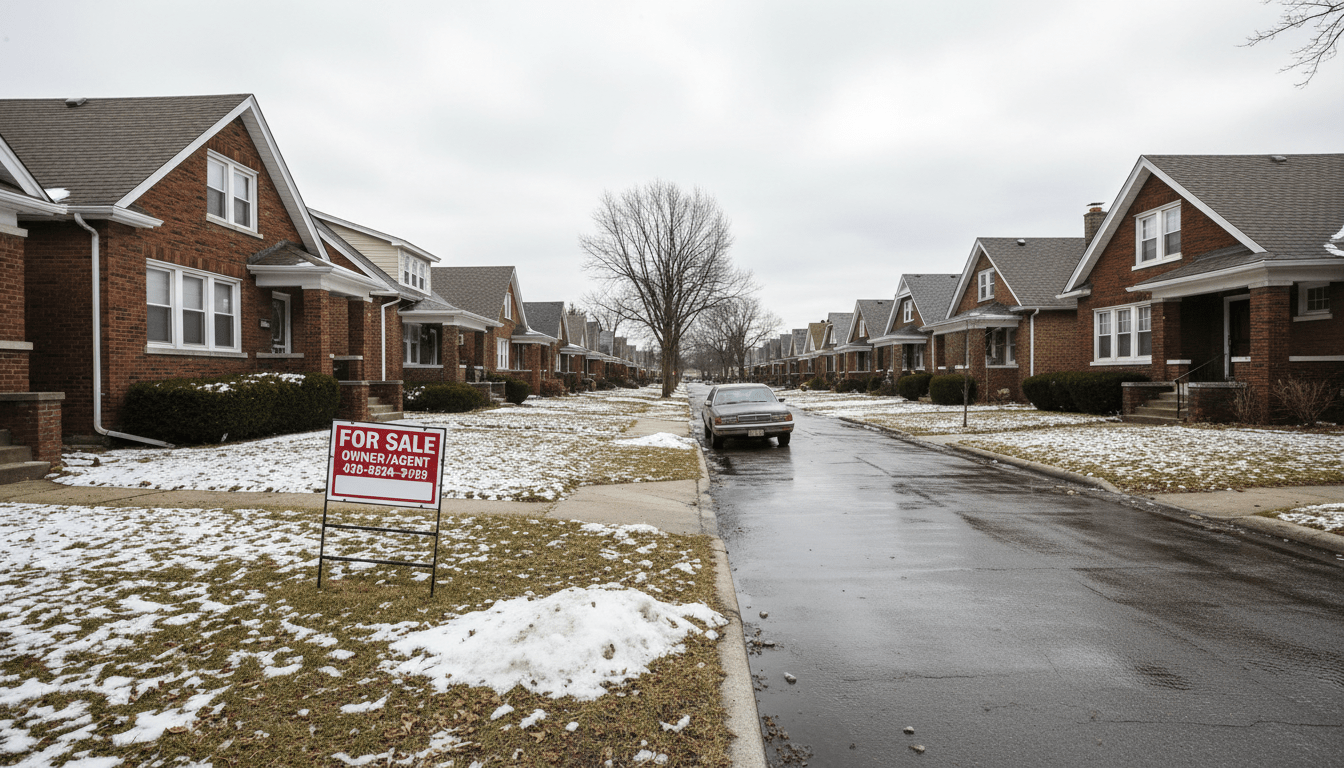
For thousands of residents across the city, the arrival of annual property assessment notices has become a source of growing anxiety. While rising property values are generally a sign of economic recovery and increased neighborhood stability, the corresponding hike in Detroit property taxes is placing new pressure on long-time homeowners and first-time buyers alike.
As market values in Detroit neighborhoods continue to climb—marking several consecutive years of growth—the debate over how the city taxes its land versus its structures has reached a critical juncture. With the proposed Land Value Tax plan facing legislative hurdles in Lansing, many residents are left wondering how they will manage increasing costs in an economy that is still finding its footing.
Assessment Increases Reflect Market Heat
According to data released by the City of Detroit’s Office of the Assessor earlier this year, residential property values have seen double-digit increases across many of the city’s neighborhoods. This trend marks a significant turnaround from the post-bankruptcy era, where depressed values left many homeowners underwater on their mortgages. However, the flip side of this equity growth is the potential for higher tax bills.
Officials state that the rise in assessments is driven by actual sales data, which shows that homes in Detroit are selling for significantly more than they were just five years ago. While a cap on taxable value—limited to the rate of inflation (roughly 5% for the current cycle) or the consumer price index—protects continuous owners from massive overnight spikes, the uncapping of taxes upon a property transfer remains a significant barrier for new ownership.
For prospective buyers, the discrepancy between current tax bills and future estimates can be jarring. Real estate agents report that high Detroit property taxes remain one of the primary deterrents for buyers looking to move into the city from surrounding suburbs, where millage rates are often significantly lower.
The Stalled Land Value Tax Proposal
To address the disparity between high taxes on buildings and low taxes on vacant land, Mayor Mike Duggan’s administration has spent the last year advocating for a Land Value Tax plan. The proposal aims to cut property taxes on homeowners by an estimated 17% to 30% while increasing taxes on vacant land and scrapyards. The logic is to incentivize development and punish speculation, while simultaneously providing relief to residents.
However, the plan has faced delays in the Michigan Legislature. Despite support from various local organizations and coalition groups, the bills required to authorize this tax shift have not yet crossed the finish line. Without this legislative change, the city is bound by current state laws that mandate the traditional ad valorem tax structure.
According to the City of Detroit’s official breakdown of the plan, 97% of homeowners would see a tax reduction under the new system. For now, however, residents must budget based on the existing, higher rates.
Impact on Detroit Residents and Housing Stability
The tension between rising costs and stagnating wages is a reality for many Detroiters. Housing advocates express concern that without tax relief, the gains made in homeownership rates could be at risk. For a city that recently celebrated becoming a majority-homeowner city again—a status confirmed by recent Census data—retention is just as important as acquisition.
Local community development organizations have pointed out that legacy residents, particularly seniors on fixed incomes, are most vulnerable to the indirect costs of rising assessments. Even with the Poverty Tax Exemption (HOPE) program, which eliminates property taxes for qualifying low-income homeowners, those who fall just above the income threshold often struggle to keep up.
“The cost of living is creeping up from every angle,” noted a representative from a local housing non-profit during a recent town hall meeting. “When you combine higher assessments with the cost of utilities and insurance in Detroit, the monthly nut for owning a home becomes heavy.”
This economic pressure also impacts the rental market. Landlords facing higher tax bills often pass those costs down to tenants, contributing to the rising median rent prices seen in areas like Midtown, Corktown, and increasingly, neighborhoods further from the city center. Read more about how these shifts are influencing local neighborhood redevelopment projects.
Background & Data: The Homeownership Shift
Context is vital to understanding why Detroit property taxes are such a volatile political issue. Following the foreclosure crisis of the 2010s, Detroit saw a massive transfer of wealth and property. Thousands of homes were lost to tax foreclosure due to assessments that were, in hindsight, acknowledged by many officials to be unconstitutionally high compared to actual market values at the time.
Today, the landscape is different, but the scars remain. Data from the U.S. Census Bureau indicated that in 2023, Detroit officially returned to being a majority-homeowner city, with ownership rates ticking just above 51%. This was a symbolic and economic victory for the city.
However, maintaining that majority requires that ownership remains affordable. The Lincoln Institute of Land Policy has frequently cited Detroit as an example of a city where the tax burden is disproportionately high relative to property values, largely due to the low value of the land itself compared to the high millage rates levied to fund city services and schools.
What Happens Next?
The immediate focus for homeowners is the appeals process. Residents who believe their assessments do not reflect the true cash value of their homes have a limited window in February to appeal to the Board of Assessors. Historically, participation in this process is low, often due to a lack of awareness or the complexity of the filing requirements.
Looking further ahead, the fate of the Land Value Tax lies in Lansing. If the legislature moves the bills forward in the upcoming session, Detroiters could vote on the measure, potentially altering the city’s tax structure permanently. Until then, the status quo remains: rising values equal higher taxes.
The city is also continuing its efforts to stabilize neighborhoods through blight removal and investment. For a detailed look at where city funds are being allocated this year, review our analysis of Mayor Duggan’s 2024 budget proposal.