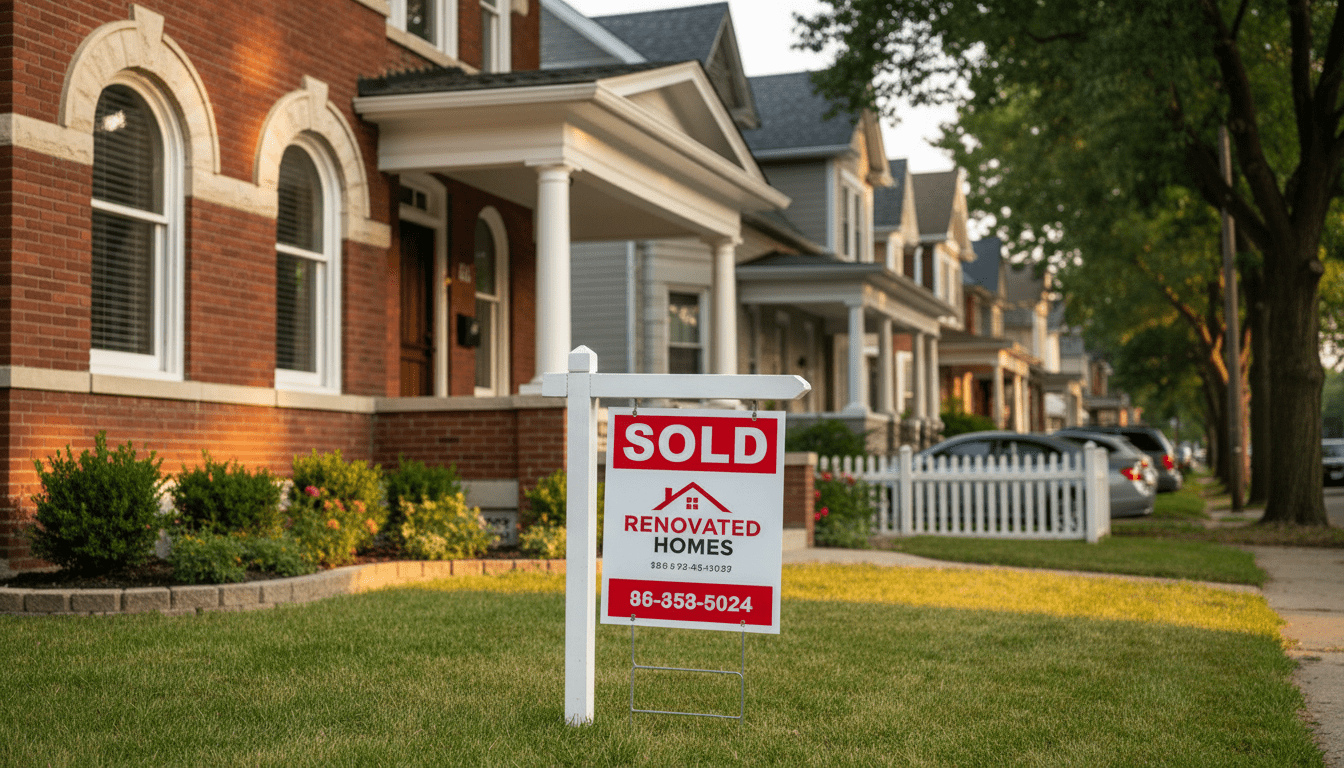
The landscape of the housing market in Michigan’s largest city is undergoing a significant transformation, forcing Detroit real estate agents to recalibrate strategies as they navigate a period defined by historically low inventory and sweeping industry regulatory changes. While national headlines often focus on fluctuating interest rates, the story on the ground in Detroit is one of resilience mixed with fierce competition for move-in ready homes.
According to recent data from the Greater Metropolitan Association of Realtors (GMAR), the region has seen a persistent shortage of housing supply. This scarcity has created a complex environment where well-priced homes in desirable neighborhoods receive multiple offers within days, while properties requiring significant rehabilitation linger longer on the market. For local professionals, the role has shifted from simply facilitating transactions to becoming essential navigators of a highly nuanced economic landscape.
Navigating the Inventory Crunch
The primary challenge facing Detroit real estate agents in the current quarter is the “lock-in effect.” Many homeowners who secured mortgage rates below 4% during the pandemic are reluctant to sell, knowing that moving would mean trading a low monthly payment for a significantly higher borrowing cost. This has stifled the flow of existing homes hitting the market.
“The inventory levels are not matching the buyer demand we are seeing, particularly for first-time homebuyers looking in the $150,000 to $250,000 range,” reports the City of Detroit’s housing analysis divisions. This imbalance puts pressure on agents to find creative solutions, such as identifying off-market properties or guiding clients toward new developments supported by city incentives.
Furthermore, the disparity between renovated properties and distressed assets remains wide. While the Detroit Land Bank Authority continues to offer properties for auction, the cost of labor and materials for renovations has risen, making turnkey homes the premium target. Agents are increasingly tasked with managing client expectations regarding renovation costs versus purchase price.
The Impact of New Commission Rules
Beyond market mechanics, Detroit real estate agents are also adjusting to the recent National Association of Realtors (NAR) settlement, which has altered the way commissions are communicated and negotiated. These changes require buyer’s agents to enter into written agreements with clients before touring homes, a shift that emphasizes transparency regarding professional fees.
Local industry experts note that this change has professionalized the initial consultation phase. Agents must now clearly articulate their value proposition—ranging from negotiation skills to neighborhood-specific regulatory knowledge—before a single door is unlocked. For Detroit residents, this means a clearer understanding of transaction costs upfront, though it also introduces new complexities to the buying process.
Impact on Detroit Residents and Neighborhoods
The tightening market has distinct implications for long-time Detroiters and potential new residents. As competition heats up in stabilized neighborhoods like Palmer Woods, University District, and Corktown, affordability concerns are rising. Agents are seeing a ripple effect where interest is spilling over into adjacent neighborhoods such as Bagley and Fitzgerald, driving up values in areas that had previously seen slower growth.
For local sellers, particularly seniors looking to downsize, the current market offers an opportunity to cash out on equity gains accumulated over the last decade. However, the challenge remains finding a new place to live within the city that fits their budget and needs. Detroit real estate agents are frequently coordinating “sell-to-buy” contingencies, a delicate balancing act that requires precise timing and negotiation.
“The challenge isn’t just selling the home; it is ensuring the seller has a destination,” notes local housing advocacy groups. “Without sufficient retirement-friendly housing or condos, long-time residents risk being displaced not by taxes, but by a lack of suitable downsizing options.”
Investment vs. Homeownership
Another dynamic shaping the workload of Detroit real estate agents is the balance between owner-occupant buyers and investors. While investor activity remains high, city initiatives have increasingly favored owner-occupancy to promote neighborhood stability. Agents are often the intermediaries in these transactions, helping buyers navigate programs like the Detroit Down Payment Assistance Program, which helps level the playing field against all-cash investor offers.
Recent reports suggest that while cash offers are still prevalent, the percentage of homes being sold to individual owners in Detroit is inching upward in specific zip codes. This is largely due to the efforts of agents who specialize in connecting local buyers with lenders knowledgeable about Detroit’s specific appraisal challenges.
What Happens Next?
Looking ahead to the remainder of 2024 and into 2025, the consensus among industry watchers is one of cautious optimism. If interest rates stabilize or decrease slightly, a wave of pent-up demand is expected to flood the market. However, without a corresponding increase in new construction or existing homeowners deciding to sell, this could lead to further price appreciation.
For Detroit real estate agents, the focus remains on education and advocacy. By helping clients understand the realities of property tax assessments and the true cost of homeownership, they play a critical role in the city’s ongoing revitalization. The market is no longer just about the comeback of downtown; it is about the granular, block-by-block stabilization of the city’s diverse neighborhoods.
Residents looking to enter the market are advised to secure financing early and work with agents who have deep, hyper-local experience. In a market this tight, the difference between a successful closing and a missed opportunity often comes down to the speed and structure of the offer presented.