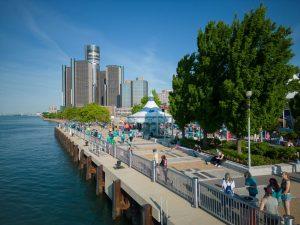


Detroit real estate trends 2025 are revealing a city in transition, as new development, population changes, and shifting housing demand continue to redefine Detroit’s urban landscape.
From record downtown investment to ongoing neighborhood redevelopment, the city’s housing market is reflecting both opportunity and persistent challenges. While some areas experience rising property values and new construction, others are still working through vacancy, affordability, and infrastructure gaps.
This year marks a critical point in Detroit’s real estate recovery, as market forces, government initiatives, and private investment converge.
Overview of Detroit’s Housing Market in 2025
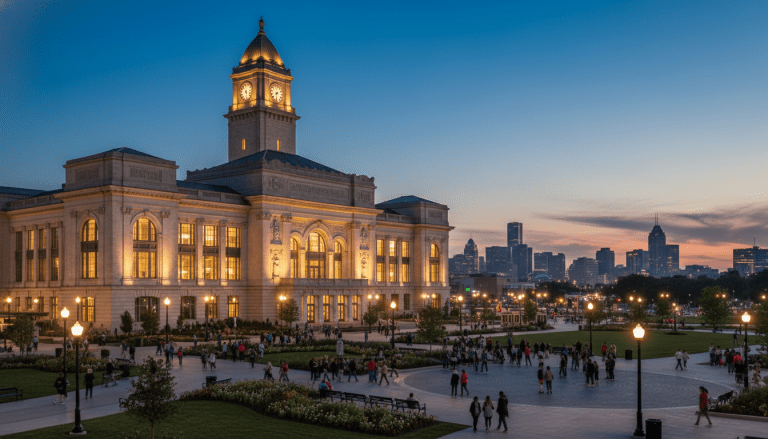
The Detroit real estate trends 2025 reflect a mixed but evolving market. Downtown and Midtown have seen steady demand for rental units and condos, while neighborhoods further from the city center are experiencing more gradual change.
Details
According to regional housing market data from the Michigan Realtors Association, median home prices in Greater Downtown and Midtown have continued to rise, while some east and west side areas are remaining relatively affordable for first-time homebuyers.
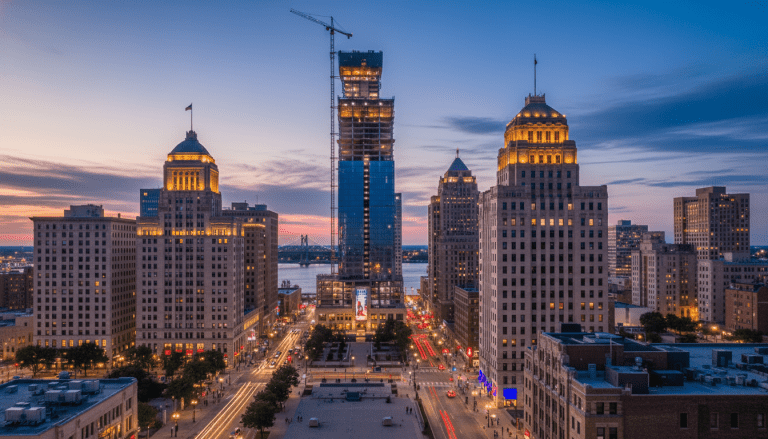
New residential developments, particularly around the Hudson’s site, the Monroe Blocks project, and Michigan Central Station area, are reshaping the city’s skyline and housing supply.
Downtown Development and Skyline Transformation
Large-scale redevelopment projects are becoming a defining feature of Detroit real estate trends 2025.
Details
The Hudson’s Tower development, which is set to house major corporate offices and residential units, is one of the most significant additions to Detroit’s skyline in decades.
Bedrock and other developers have also invested heavily in converting historic office buildings into mixed-use residential and commercial spaces, bringing more residents into the urban core.
Related coverage:
Downtown Detroit Living Explained: Housing, Amenities & Lifestyle
Hot Neighborhoods and Shifting Demand
Several neighborhoods are emerging as focal points in the Detroit real estate trends 2025 narrative.
Details
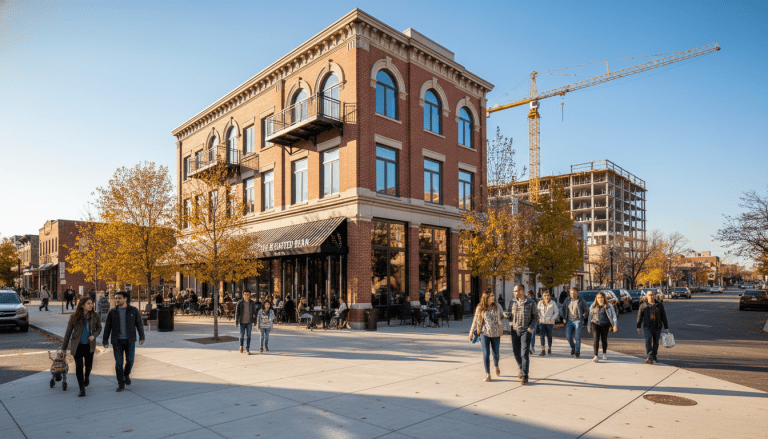
Corktown, Brush Park, Islandview, and West Village continue to attract young professionals, while areas like Jefferson-Chalmers and Bagley are seeing increased interest from both homeowners and small-scale investors.
Demand is being driven by proximity to downtown jobs, new transit improvements, and the growth of neighborhood amenities such as restaurants, retail, and parks.
However, housing advocates warn that rising demand may contribute to affordability pressures if not paired with adequate housing supply and policy support.
Rental Market and Apartment Growth
The rental market is another major indicator within Detroit real estate trends 2025.
Details
High-rise apartments in Downtown and Midtown are attracting new residents seeking walkable lifestyles and proximity to employment hubs.
Meanwhile, rental affordability remains a concern in many neighborhoods, particularly for long-term residents facing rising rents without corresponding income growth.
City officials have stated that affordable housing initiatives, including mixed-income developments and housing stabilization programs, are central to Detroit’s long-term housing policy.
Homeownership, Equity, and Challenges
Detroit real estate trends 2025 also highlight significant challenges in homeownership.
Details
While Detroit remains one of the most affordable major cities for homebuyers, issues such as appraisal gaps, limited access to mortgage credit, and rising property taxes continue to impact residents.
Programs led by the Detroit Land Bank Authority and local housing nonprofits aim to help residents purchase, rehabilitate, and remain in homes across the city.
More about Detroit housing initiatives:
Affordable Housing in Detroit: Initiatives for Inclusive Growth
Infrastructure and Its Role in Real Estate Value
Public infrastructure improvements are also influencing Detroit real estate trends 2025.
Details
Projects such as the I-375 Reconnecting Communities initiative and the Joe Louis Greenway are improving connectivity and increasing the attractiveness of surrounding neighborhoods.
Urban planners note that proximity to greenways, bike paths, and improved transit corridors is increasingly influencing buyer and renter decisions.
Official project updates can be found through the City of Detroit:
City of Detroit Planning & Development Department
Investment Trends and Market Outlook
Both local and national investors are paying close attention to Detroit real estate trends 2025.
Details
Institutional investment in multifamily housing and commercial-to-residential conversions has increased across downtown and surrounding districts.
At the same time, small-scale investors, including Detroit residents, are purchasing properties through Land Bank auctions and private sales, contributing to localized neighborhood revitalization.
Market analysts predict gradual, sustained growth rather than speculative spikes, emphasizing long-term stability over rapid appreciation.
Looking Ahead: What’s Next for Detroit Housing
The next phase of Detroit real estate trends 2025 is expected to focus on balanced growth, affordability, and sustainable development.
Details
City planning officials and housing advocates are calling for more mixed-income housing, zoning reform, and expanded home repair assistance to ensure that Detroit’s real estate recovery benefits a broad range of residents.
How effectively these strategies are implemented will determine whether Detroit’s housing market continues its upward trajectory or risks widening existing inequalities.
Conclusion
Detroit real estate trends 2025 highlight a city navigating transformation across its neighborhoods and skyline.
While the market shows momentum and renewed confidence, the true measure of success will depend on how well Detroit balances growth with affordability, access, and long-term community stability.