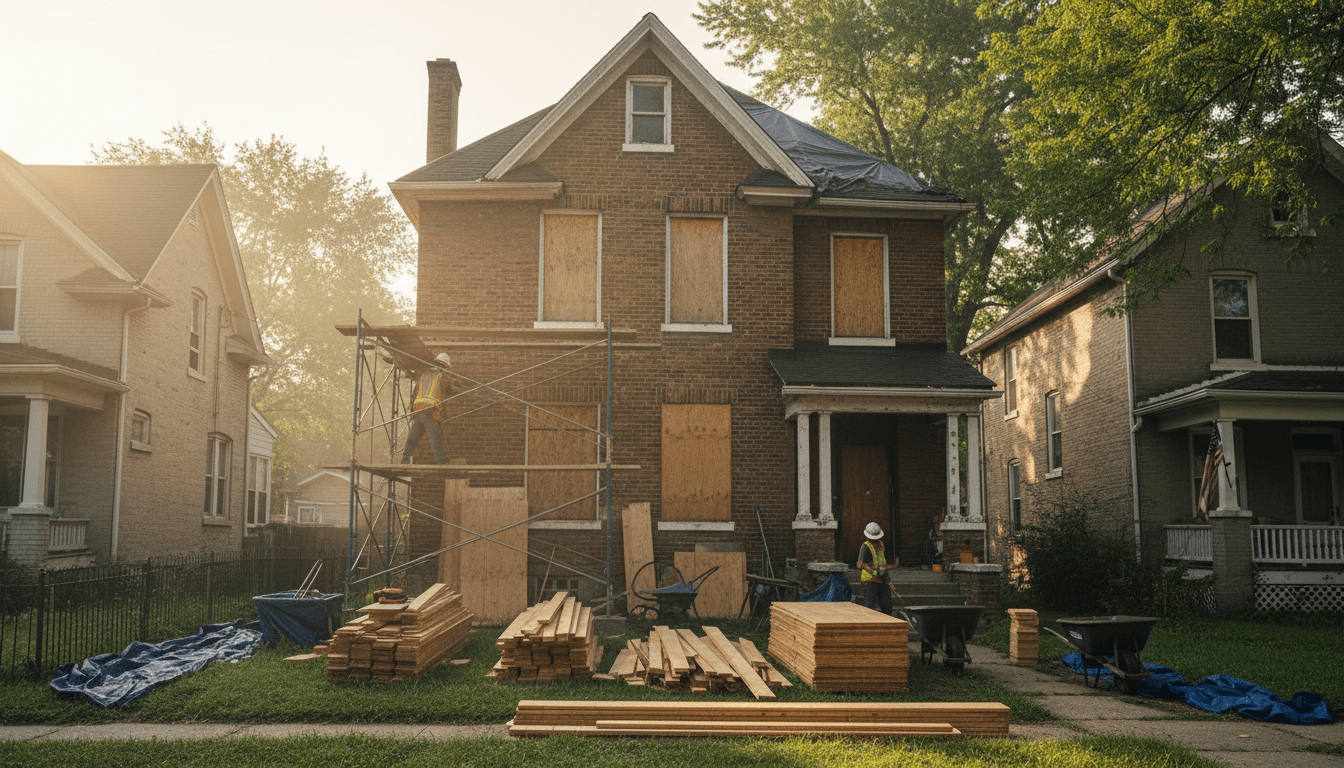
As Detroit continues its ambitious efforts to revitalize neighborhoods and restore historic housing stock, a new economic hurdle is complicating progress: the skyrocketing price of rehabilitation. For longtime residents and prospective homebuyers looking to purchase through the Detroit Land Bank Authority, the sharp increase in Detroit renovation costs is widening the already precarious “appraisal gap,” making it increasingly difficult for traditional financing to cover necessary repairs.
While the city sees increased property values in areas like Bagley, Russell Woods, and the Villages, the cost of labor and materials has outpaced appreciation in many emerging neighborhoods. This economic disconnect poses a significant challenge to the city’s goal of fostering homeownership over investor speculation.
The Economics of Rehabilitation
The surge in construction expenses is not unique to Detroit, but it affects the city disproportionately due to the age and condition of its housing inventory. Many homes available for purchase require not just cosmetic updates, but significant structural overhauls, including roof replacements, electrical rewiring, and lead abatement.
According to data from the U.S. Bureau of Labor Statistics, the Producer Price Index for construction materials has remained elevated following pandemic-era supply chain disruptions. While lumber prices have stabilized somewhat, the costs for concrete, insulation, and skilled labor remain high. For a standard 1,500-square-foot brick bungalow in Detroit, these increases can add tens of thousands of dollars to a project budget.
Local contractors report that the shortage of skilled tradespeople in Southeast Michigan is further driving up Detroit renovation costs. With high demand for electricians and plumbers across the Metro Detroit region, securing affordable labor for single-family home rehabs within the city limits has become a competitive and expensive endeavor.
The Appraisal Gap Challenge
The primary consequence of these rising costs is the exacerbation of the appraisal gap—the difference between the cost to renovate a home and the market value of that home once completed. In many Detroit neighborhoods, a resident might purchase a shell for $15,000, but face renovation costs exceeding $150,000. If the finished home appraises for only $110,000 based on comparable local sales, the homeowner faces a $55,000 deficit.
“The math becomes difficult for a traditional mortgage lender when the renovation costs exceed the post-construction value,” explains housing analysts familiar with the Detroit market. This gap often forces buyers to rely on cash reserves, which favors investors and developers over local families trying to build generational wealth.
The City of Detroit has acknowledged this issue. Officials from the Housing & Revitalization Department have repeatedly emphasized the need for creative financing solutions to bridge this gap, ensuring that blight removal does not stall due to financial unfeasibility.
Impact on Detroit Residents
The impact of escalating Detroit renovation costs is felt most acutely by existing homeowners and first-time buyers. For seniors living in legacy homes, the cost of critical repairs—such as fixing a leaking roof or replacing a failing furnace—can be prohibitive. Without the ability to afford these repairs, deferred maintenance leads to further deterioration, potentially risking the home’s habitability.
For buyers participating in programs like the Detroit Land Bank Authority’s auctions, the budget reality check often comes after the purchase. Compliance policies require homes to be brought up to code within a specific timeframe. When quotes for HVAC installation or window replacement come in 30% higher than anticipated, buyers may struggle to meet compliance deadlines or, in worst-case scenarios, forfeit the property.
Furthermore, this dynamic impacts the rental market. As landlords face higher expenses to maintain or upgrade units, those costs are frequently passed down to tenants in the form of higher rents, contributing to housing affordability issues discussed in our recent coverage of Detroit rental market trends.
City Response and Available Resources
In response to these challenges, local government and non-profit organizations have mobilized resources to assist residents. The Detroit Home Repair Fund, a philanthropic partnership, was launched specifically to help non-profits increase their capacity to provide home repairs for low-income residents. This initiative aims to address the holistic needs of the housing ecosystem rather than just individual cosmetic fixes.
Additionally, the 0% Interest Home Repair Loan Program remains a vital lifeline. This city-sponsored program allows eligible homeowners to borrow up to $25,000 interest-free to address health and safety hazards. While the loan amount may not cover a full gut-rehab given current prices, it provides essential gap funding for critical systems like roofs and foundations.
Community development organizations are also stepping in to aggregate demand, hiring contractors to work on multiple homes on a single block to reduce mobilization costs and secure bulk pricing on materials. These localized efforts are essential for stabilizing neighborhoods where the appraisal gap is widest.
Future Outlook for Construction in Detroit
Looking ahead, industry experts suggest that while material volatility may ease, the labor shortage is likely to persist. This suggests that Detroit renovation costs will remain a significant factor in the city’s redevelopment strategy for the foreseeable future.
To maintain momentum, continued collaboration between the public sector, philanthropic foundations, and private lenders is essential. Expanding grant programs and developing new appraisal products that account for the long-term value of revitalized neighborhoods—rather than just past sales data—could help mitigate the financial risks for homeowners.
As detailed in our previous report on Detroit neighborhood development, the resilience of the city’s housing market depends on making renovation accessible. Bridging the gap between the cost to build and the value to own remains the critical mission for the next phase of Detroit’s recovery.