For decades, the stretch of land along the Detroit River was defined by its industrial utility—a patchwork of silos, concrete, and restricted access that separated the city’s residents from one of their greatest natural assets. Today, a massive shift is underway. The ongoing Detroit Riverfront development is not merely a beautification project; it represents a fundamental restructuring of the city’s social fabric, designed to bridge disconnected neighborhoods and foster communal growth.
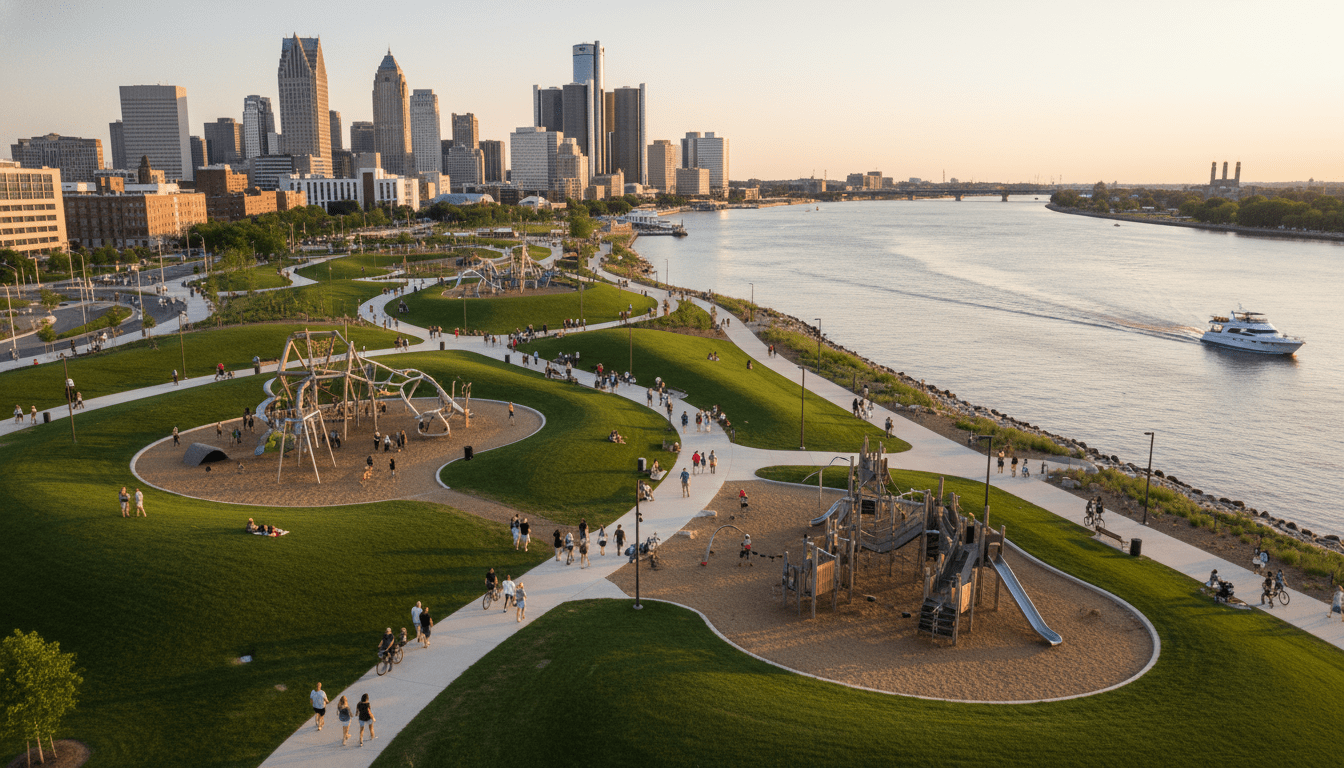
Spearheaded by the Detroit Riverfront Conservancy (DRFC) in partnership with the City of Detroit and major philanthropic organizations, the transformation of the West Riverfront into the Ralph C. Wilson Jr. Centennial Park stands as the crown jewel of this initiative. Scheduled for completion in 2025, this 22-acre park is projected to draw millions of visitors annually, serving as a catalyst for cultural exchange and social cohesion across the region.
The Evolution of the Detroit Riverfront Development
The journey to reclaim the riverfront began over twenty years ago, but the current phase marks a distinct evolution in urban planning strategy. While earlier phases focused on the RiverWalk’s immediate aesthetic and commercial appeal, the current Detroit Riverfront development prioritizes accessibility and social equity.
According to the Detroit Riverfront Conservancy, the goal has always been to create a gathering place for all Detroiters. However, the scope has expanded significantly. The new developments are not isolated islands of green; they are hubs designed to connect with the broader city infrastructure. This is evident in the strategic integration with the Joe Louis Greenway, a 27.5-mile loop that will eventually connect the riverfront to neighborhoods like Mexicantown, Corktown, and the North End.
“This is about more than just a park; it is about creating a contiguous public realm where residents from every zip code feel a sense of ownership,” officials from the City of Detroit planning department have noted in recent public briefings. The shift moves away from viewing the river as a tourist destination and towards viewing it as a “town square” for the metropolitan area.
Impact on Detroit Residents and Social Equity
The most significant aspect of the project is its potential to address historical inequities in access to green space. For generations, residents in neighborhoods adjacent to the riverfront were cut off by highways and industrial zones. The current infrastructure improvements are designed to dismantle these physical barriers.
Local community leaders have emphasized that the success of the Detroit Riverfront development will be measured by who uses it. The design of the Ralph C. Wilson Jr. Centennial Park reflects extensive community input, featuring amenities that cater to diverse age groups and interests, including a massive sport house, diverse play gardens, and expansive lawns for public festivals.
For families living in Southwest Detroit and the near-west side, these developments provide safe, walkable access to recreational facilities that were previously out of reach. By linking these spaces via the Joe Louis Greenway, the project facilitates non-motorized transit, allowing residents to commute or recreate safely without reliance on automobiles. This connectivity is vital for fostering social interaction between diverse communities that have historically been segregated by the city’s built environment.
Furthermore, the development acts as a venue for cultural programming. From the Detroit Reading Corps festivals to local music showcases, the programming curated by the Conservancy ensures that the space reflects the cultural identity of the city. Read more about Detroit’s evolving music and culture scene to understand how these spaces are utilized by local artists.
Background & Data: The Economics of Green Space
The financial scale of the project underscores its importance. The Ralph C. Wilson Jr. Foundation provided a historic $50 million grant to kickstart the West Riverfront transformation, part of a larger $100 million commitment to parks and trails in Southeast Michigan. This philanthropic injection has been matched by public funding and other private donations, creating a sustainability model that other post-industrial cities are watching closely.
Data from the Trust for Public Land indicates that high-quality park systems are correlated with improved public health outcomes and increased social capital. In Detroit, where health disparities are a documented concern, the availability of active recreational space is a public health intervention. The U.S. Census Bureau data highlights that the neighborhoods surrounding the new park developments are among the most densely populated in the city, ensuring high utilization rates.
Real estate analysts also point to the economic ripple effect. Property values within walking distance of the RiverWalk have seen steady appreciation, and local businesses report increased foot traffic during Conservancy events. However, city planners remain vigilant about gentrification pressures, implementing housing strategies to ensure long-term residents can remain in their neighborhoods to enjoy the new amenities. For insights into the housing market, see our report on Detroit real estate trends.
The Role of Environmental Stewardship
Beyond social interaction, the Detroit Riverfront development plays a crucial role in environmental sustainability. The remediation of former industrial sites prevents contaminants from leaching into the Great Lakes system. The landscape architecture incorporates native plantings and stormwater management systems that mitigate flooding—a critical issue for Detroit’s infrastructure.
By restoring the shoreline to a more natural state, the project improves the ecological health of the river, bringing back bird species and aquatic life. This connection to nature provides an educational platform for Detroit students, many of whom participate in field trips organized by the Conservancy to learn about ecology and biology in their own backyard.
What Happens Next
As construction crews work towards the 2025 completion of the Ralph C. Wilson Jr. Centennial Park, the focus is shifting to programming and long-term maintenance. The Conservancy has launched an endowment campaign to ensure the park remains pristine for decades to come, independent of fluctuating city budgets.
Looking further ahead, the vision includes extending the RiverWalk even further west, eventually connecting to Riverside Park and beyond. This continuous chain of parks will solidify Detroit’s reputation not just as the Motor City, but as a leader in adaptive reuse and urban social development.
The transformation of the waterfront is a testament to Detroit’s resilience. By turning its back on the industrial past and facing the river, the city is opening a new chapter defined by connection, recreation, and inclusivity. For the residents of Detroit, the river is no longer a border; it is becoming the center of community life.