
By Sarah Jenkins
Published: October 24, 2023
Location: Detroit, Michigan
Detroit Smart Transportation Initiatives Propel City into New Mobility Era
Detroit, long hailed as the Motor City, is actively reinventing itself as a global leader in advanced mobility. Through a series of groundbreaking Detroit smart transportation initiatives, the city is transitioning from the birthplace of the automotive assembly line to a testbed for the future of connected and autonomous infrastructure.
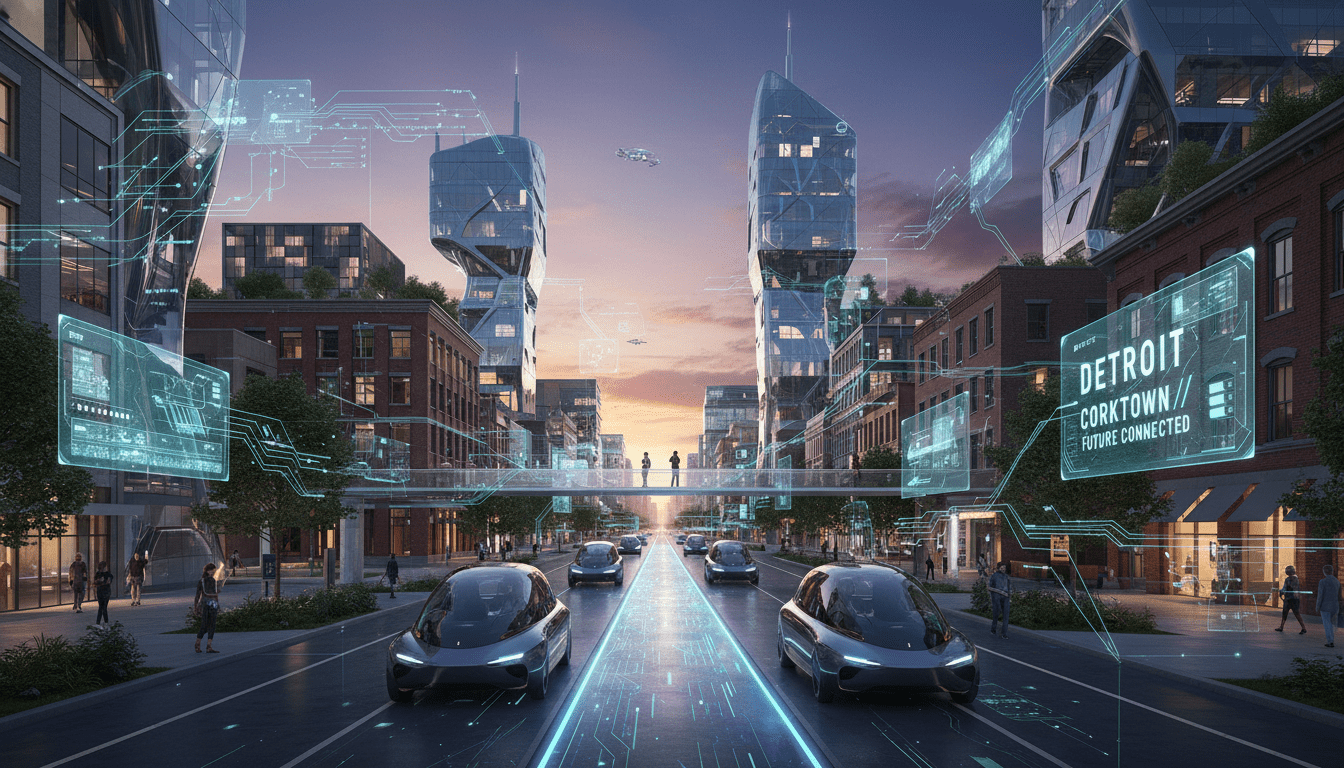
Led by partnerships between the Michigan Department of Transportation (MDOT), the City of Detroit, and private tech firms, these developments are transforming how vehicles interact with the road—and each other. From wireless charging pavements in Corktown to connected corridors along major thoroughfares, Detroit is laying the digital groundwork for the next century of transit.
Wireless Charging and Connected Corridors
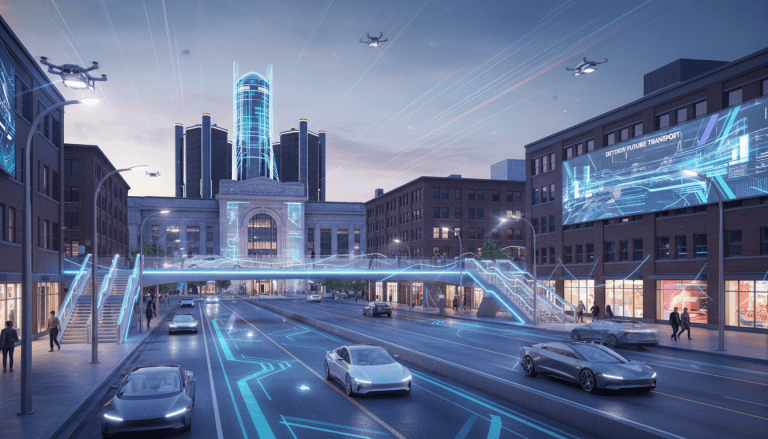
At the heart of the current Detroit smart transportation push is the deployment of the nation’s first wireless charging public roadway. Located on 14th Street within the Michigan Central innovation district, this pilot project utilizes inductive charging technology provided by Electreon. The system allows electric vehicles (EVs) equipped with compatible receivers to charge while driving or idling, potentially revolutionizing range anxiety for commercial fleets and transit buses.
“This is about more than just electric vehicles; it is about rethinking the infrastructure that supports them,” said an MDOT spokesperson regarding the project launch. “By embedding technology directly into the pavement, we are creating a seamless ecosystem for future mobility.”
In addition to electrification, connectivity is a major focus. The city has been upgrading traffic signals along key corridors like the Jefferson Avenue and Woodward Avenue lines. These “smart signals” utilize Vehicle-to-Everything (V2X) technology, allowing infrastructure to communicate real-time data to vehicles. This includes traffic light timing, pedestrian presence alerts, and road hazard warnings, all designed to reduce accidents and improve traffic flow.
Impact on Detroit Residents
While high-tech pilots often garner headlines for their novelty, city officials emphasize that the primary goal of these Detroit smart transportation projects is to improve the quality of life for locals. For residents, the integration of smart technology into public transit is expected to result in more reliable bus schedules and safer street crossings.
The implementation of smart traffic management systems aims to reduce congestion, which cuts down on commute times and lowers idling emissions in neighborhoods. Furthermore, the focus on electrification—supported by initiatives like the wireless charging road—is a step toward cleaner air in a city that has historically struggled with industrial pollution.
“The technology we are testing today is intended to make streets safer for pedestrians and cyclists, not just drivers,” noted a representative from the City of Detroit’s Office of Mobility Innovation. “If a traffic light can sense a pedestrian and hold the red light longer for a vehicle approaching too fast, that saves lives.”
For more on local infrastructure updates, read our coverage on Detroit city planning developments.
Background and Data
Michigan has consistently ranked as a top state for automotive research and development, but the shift toward Detroit smart transportation represents a significant allocation of public and private resources. According to data from the Governor’s Office of Future Mobility and Electrification, the state has facilitated over $16 billion in EV and battery investments recently, much of which centers on the Detroit Metro area.
The Michigan Central station restoration by Ford Motor Company serves as the anchor for this mobility district. It acts as a magnet for startups and tech companies focused on automation and drones. The collaboration involves major stakeholders, including DTE Energy and the City of Detroit, ensuring that the power grid can support the increased demand of a digitized transportation network.
For broader context on how these business moves affect the local economy, see our analysis on Detroit business and startups.
What Happens Next
Looking ahead, the scope of Detroit smart transportation is set to expand. Officials are analyzing data from the 14th Street pilot to determine the feasibility of scaling wireless charging lanes to highways and bus rapid transit routes. If successful, this could reduce the battery size needed for public transit vehicles, lowering costs for the transportation department.
Simultaneously, the expansion of the “Detroit Smart Parking Lab” continues to test automated valet parking and EV charging solutions in real-world scenarios. As these technologies mature, residents can expect to see a gradual integration of autonomous shuttles and more responsive traffic networks throughout the city.
For further reading on state-wide transportation goals, visit the Michigan Department of Transportation (MDOT) official website.