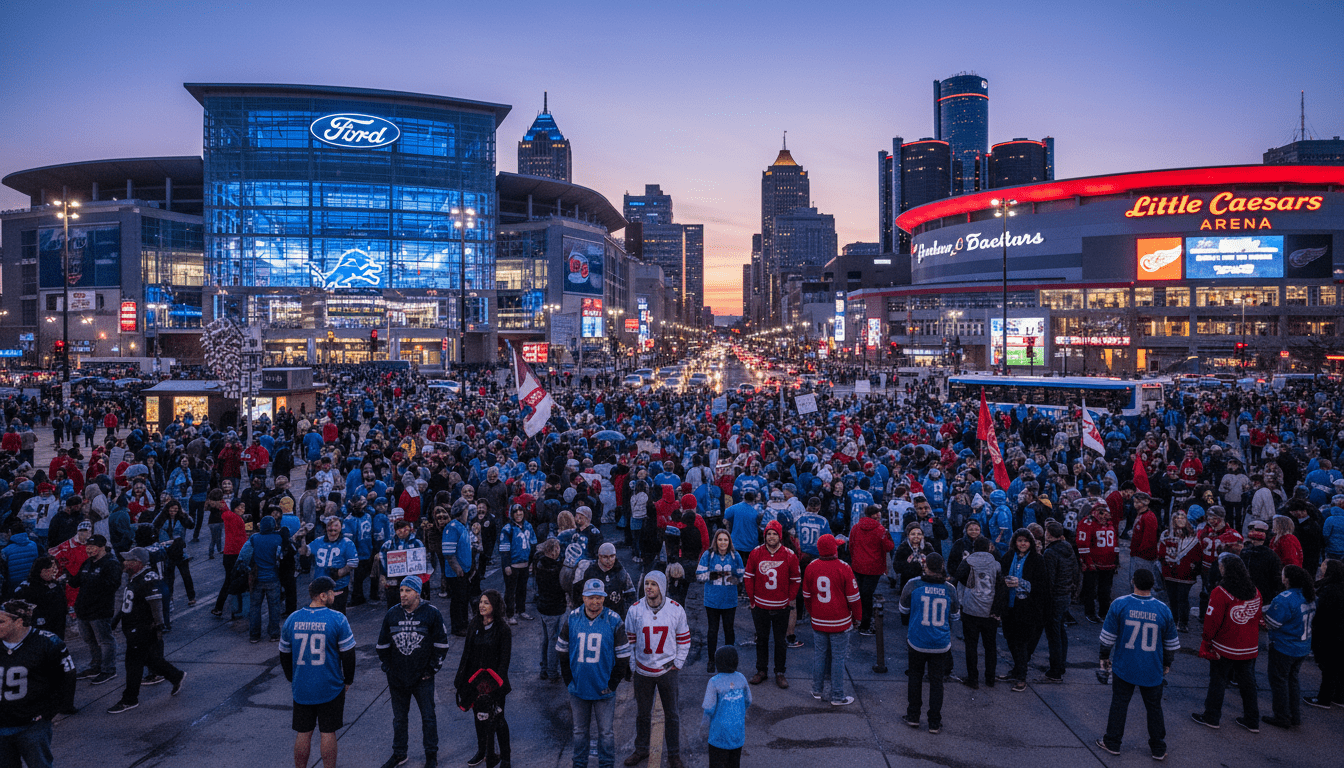
As the leaves turn in Michigan, a familiar electric energy returns to the Woodward Avenue corridor. However, this year brings a unique intensity to the city center. The alignment of Detroit sports schedules for the 2024-2025 season has created a “perfect storm” of activity in The District Detroit, promising a massive economic windfall for local businesses while presenting logistical tests for city infrastructure and residents.
With the Detroit Lions entering the season with Super Bowl aspirations, the Red Wings pushing for a playoff return, and the Pistons and Tigers rounding out the calendar, the density of home games in downtown Detroit is reaching levels not seen in years. According to projections from the Detroit Metro Convention & Visitors Bureau, the overlap of these major league schedules is expected to bring millions of visitors to the downtown core over the next six months.
A Collision of Calendars at The District Detroit
The layout of Detroit’s sports venues—with Ford Field, Comerica Park, and Little Caesars Arena all located within a short walking distance—is a rarity in North American sports. While this proximity creates a vibrant atmosphere, it also means that the convergence of Detroit sports schedules requires intricate planning.
Data from the respective leagues indicates several “super weekends” throughout the fall and winter where at least three of the four major teams will host home games within a 48-hour window. This phenomenon turns the district into a continuous festival of Honolulu Blue and Red Wings Red, but it also demands coordination between the teams and the city.
“When you look at the schedule density, particularly in November and December, we are looking at sustained foot traffic that rivals major national events,” said a spokesperson for the Ilitch Companies, which manages operations for the Red Wings and Tigers. “The goal is to ensure the fan experience is seamless, whether they are attending a matinee at LCA or a primetime game at Ford Field.”
Economic Ripple Effect for Local Business
The density of the Detroit sports schedules is not just a matter of wins and losses; it is a critical driver for the local hospitality industry. Restaurants, bars, and hotels in the Central Business District and Midtown rely heavily on the influx of fans.
According to a report by the Detroit Regional Chamber, game days can increase revenue for nearby dining establishments by as much as 300% compared to non-event days. For business owners recovering from years of fluctuating foot traffic, the consistent schedule of home games provides a necessary financial anchor.
“It’s not just about the two or three hours the game is being played,” explains Marcus Hall, a manager at a popular sports bar near Grand Circus Park. “It’s the pre-game rush, the post-game celebrations, and the people staying in hotels who come in for breakfast the next morning. When the schedules align like this, it stabilizes our staffing and inventory planning for the entire quarter.”
For more on how local commerce is adapting to these surges, readers can view our report on downtown development trends.
Impact on Detroit Residents: Traffic and Infrastructure
While the economic benefits are clear, the saturation of Detroit sports schedules has a tangible impact on residents living in the Brush Park, Midtown, and Downtown neighborhoods. The influx of tens of thousands of vehicles simultaneously can lead to congestion and parking shortages.
The City of Detroit’s Department of Public Works has been proactive in issuing traffic advisories ahead of multi-game days. Officials are urging fans to utilize the QLINE and the People Mover to alleviate pressure on surface streets. Additionally, the city has adjusted signal timing on major arteries like Woodward and Gratiot to facilitate the flow of traffic leaving the venues.
“We love the energy the teams bring, but getting home on a Sunday when the Lions play at 1:00 PM and the Red Wings play at 5:00 PM requires patience,” says Sarah Jenkins, a resident of the Brush Park neighborhood. “You learn to plan your grocery runs around the kickoff times.”
To help residents navigate these changes, check our guide on neighborhood transportation updates.
Analyzing the Team Outlooks
The excitement surrounding the schedule is amplified by the competitive status of the teams involved. The demand for tickets is directly correlated to on-field performance.
The Detroit Lions
Coming off a historic season, the Lions are the primary draw. Their home schedule includes several primetime matchups that will spotlight the city on a national stage. Ticket resale values have reached record highs, indicating that Ford Field will be at capacity for every home game.
The Detroit Red Wings
The Red Wings are entering a pivotal phase in their rebuilding process. With a schedule heavy on weekend home games, Little Caesars Arena is expected to maintain high attendance figures, further feeding the local economy.
What Happens Next?
As the season progresses, the City of Detroit and venue operators will continue to monitor traffic patterns and crowd control measures. There is also a growing push to enhance the “between-game” experience, with more pop-up retail and entertainment options emerging in The District Detroit to keep fans engaged during double-header days.
For the most accurate and up-to-date information on game times, fans and residents are encouraged to consult the official District Detroit events calendar.
The convergence of these schedules signifies more than just a busy winter; it represents a Detroit that is active, engaged, and economically vibrant. As the teams take the field and the ice, the city itself is primed for a winning season.