
For decades, Detroit has served as the heartbeat of global manufacturing, relying on complex logistics networks to keep assembly lines moving. However, the post-pandemic era has forced a radical rethinking of how goods move in and out of Southeast Michigan. In 2025, the region is undergoing a massive Detroit supply chain modernization effort, pivoting from traditional freight management to high-tech, data-driven logistics hubs.
Local industry leaders and economic experts report that the shift is being driven by the transition to electric vehicles (EVs), the impending opening of the Gordie Howe International Bridge, and the integration of artificial intelligence into warehouse management. This evolution is not just about efficiency for corporations; it represents a fundamental change in the local economy that affects jobs, infrastructure, and the city’s global competitiveness.
The Shift to Smart Logistics
The concept of “just-in-time” delivery, which defined automotive manufacturing for forty years, is evolving into “just-in-case” resilience strategies. Manufacturers in the Metro Detroit area are increasingly investing in digital twin technology and blockchain tracking to prevent the shortages that crippled production lines in recent years.
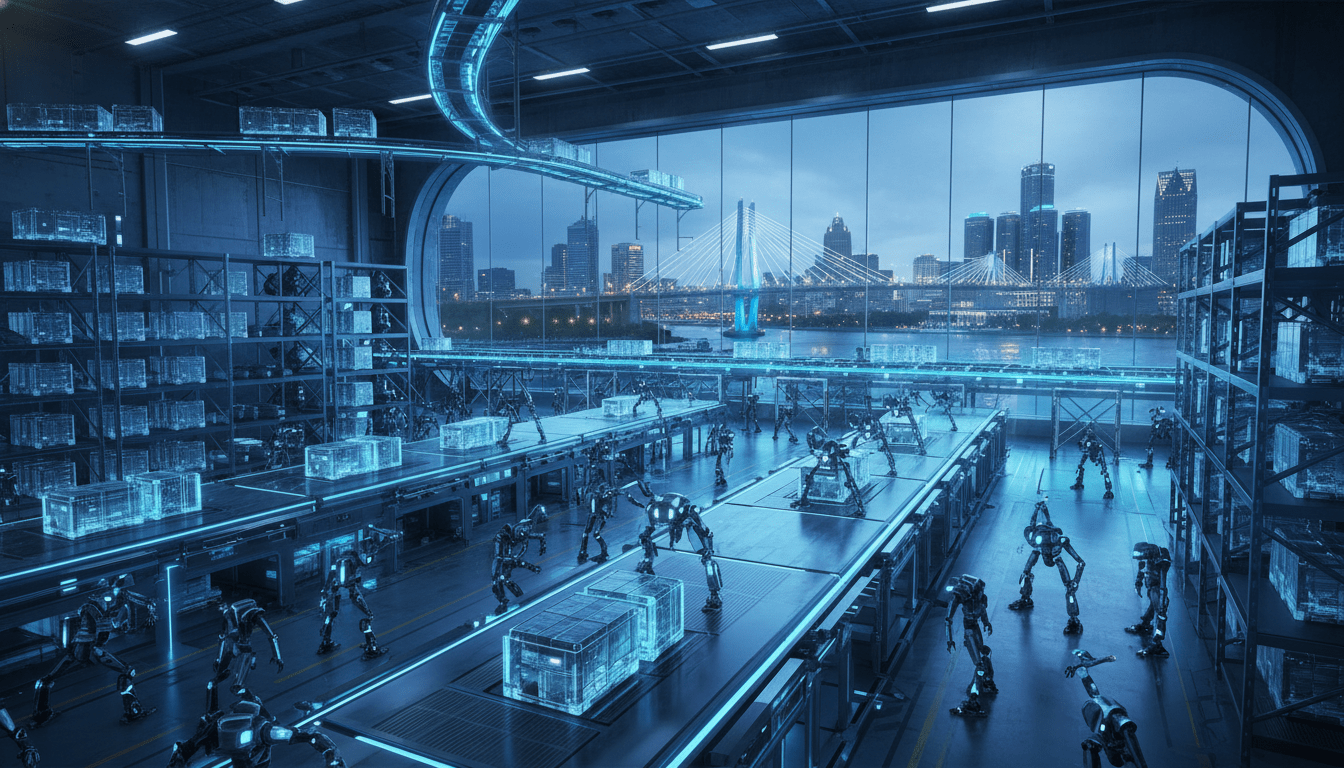
According to recent reports from the Detroit Regional Chamber, the region’s logistics sector is seeing a surge in technology adoption. Companies are deploying autonomous mobile robots (AMRs) in warehouses in Livonia and Romulus, while freight forwarders are utilizing AI predictive analytics to route trucks around border congestion before it happens.
“We are seeing a convergence of manufacturing and technology unlike anything in the city’s history,” said a representative from MICHauto during a recent industry panel. “It is no longer enough to have a truck and a driver. You need real-time data visibility to compete. Detroit is positioning itself to be the Silicon Valley of supply chain tech.”
Impact on Detroit Residents and the Workforce
For the average Detroit resident, this modernization brings both opportunities and challenges. The most immediate impact is on the job market. As automation handles more repetitive tasks, the demand for traditional manual labor in warehousing is shifting toward roles that require digital literacy.
Data from local workforce development agencies suggests a growing need for supply chain analysts, robotics maintenance technicians, and logistics coordinators. This shift is prompting local educational institutions, including Wayne State University—which boasts a top-tier supply chain management program—to ramp up certifications for digital logistics skills.
Furthermore, residents may notice changes in traffic patterns and infrastructure. With the modernization of the Detroit supply chain, there is a renewed focus on reducing semi-truck idling times and optimizing routes to lower emissions in neighborhoods near industrial zones, particularly in Southwest Detroit.
The EV Effect on Local Supply Chains
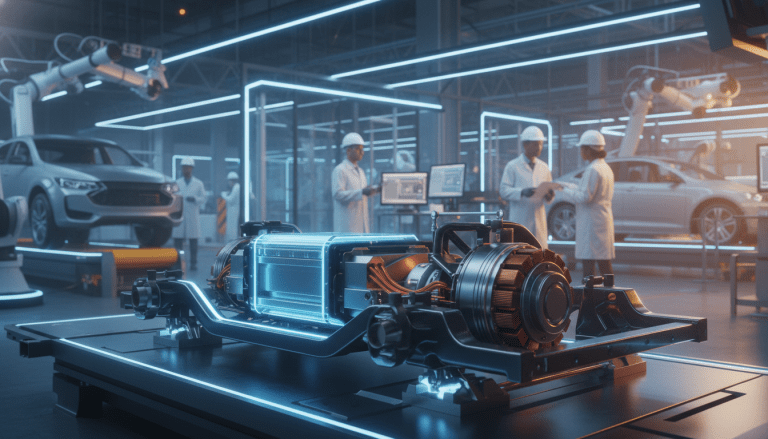
The automotive industry’s pivot to electric vehicles is perhaps the single largest driver of supply chain modernization in the region. Unlike internal combustion engines, which rely on thousands of mechanical parts often sourced locally or regionally, EVs depend heavily on batteries and software.
This transition requires a completely different logistical approach. Batteries are heavy, hazardous to transport, and require strict temperature controls. Consequently, logistics providers are upgrading their fleets and facilities to handle these sensitive components. This aligns with broader trends in the local tech sector, where innovation is increasingly focused on mobility solutions.
Infrastructure: The Gordie Howe Bridge Factor
Physical infrastructure remains the backbone of any supply chain. The highly anticipated completion of the Gordie Howe International Bridge is set to redefine cross-border trade between Detroit and Windsor. This new artery is being designed with modern logistics in mind, featuring dedicated lanes for autonomous trucks and smart border processing systems aimed at reducing wait times.
Local urban planners anticipate that the bridge will spur development of new logistics parks in the Delray area, turning underutilized land into modern distribution centers. This development is expected to bolster the Detroit economy by attracting international logistics firms looking for a North American hub that sits directly on the Canada-U.S. border.
Future Outlook
As Detroit moves further into 2025, the integration of 5G networks and the Internet of Things (IoT) will continue to accelerate. The vision is a fully connected ecosystem where a component leaving a supplier in Mexico can be tracked in real-time until it is installed in a vehicle at a Detroit assembly plant.
For the city, the stakes are high. Successfully modernizing the Detroit supply chain infrastructure means securing the region’s status as a global manufacturing leader for the next century. Failure to adapt could see logistics volume divert to other Midwest hubs. However, with current investments flowing into both technology and infrastructure, the Motor City appears ready to drive the future of logistics.