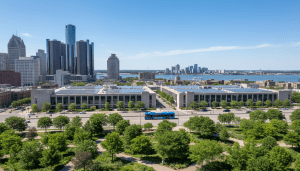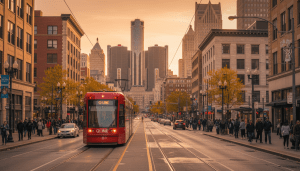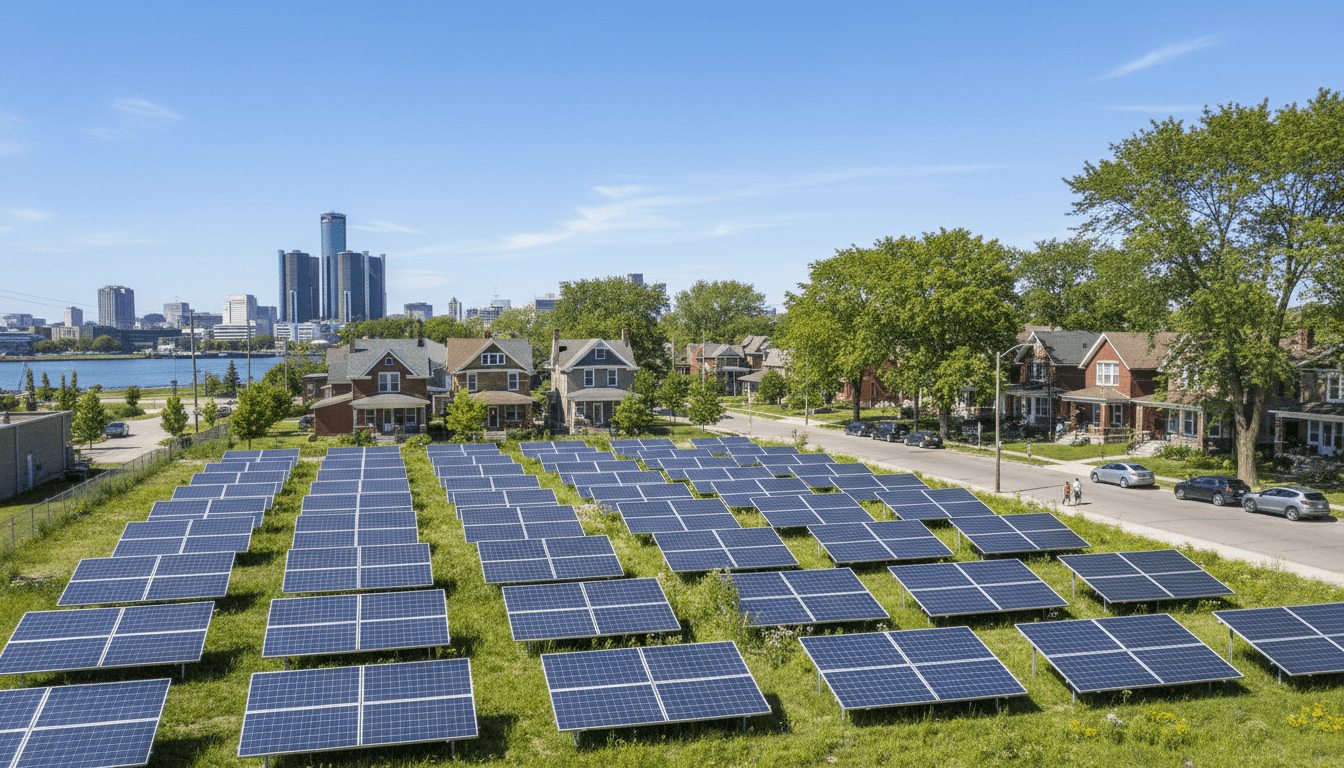
Detroit is undergoing a significant transformation as municipal leaders and community organizations collaborate to implement a sweeping array of Detroit sustainability initiatives. Once known globally as the Motor City and the heart of American industrialism, Detroit is now positioning itself at the forefront of the green energy transition. From converting vacant land into solar parks to expanding the urban tree canopy, these efforts aim to combat climate change while addressing long-standing economic and public health disparities.
The shift comes as the city grapples with the increasing realities of climate change, specifically the risk of severe flooding and heat waves. In response, the City of Detroit’s Office of Sustainability has ramped up efforts to operationalize the Detroit Climate Strategy, a comprehensive roadmap designed to reduce municipal greenhouse gas emissions and enhance neighborhood resilience.
The Push for Solar Neighborhoods
One of the most ambitious components of the current Detroit sustainability initiatives is the “Solar Neighborhoods” proposal. This program seeks to utilize the city’s abundance of vacant land—a lingering challenge from decades of population loss—by converting selected parcels into solar energy fields. According to plans outlined by Mayor Mike Duggan’s administration, these solar arrays would not only generate clean energy for municipal buildings but also provide direct benefits to the surrounding communities.
The proposal involves installing solar panels on approximately 200 acres of vacant, city-owned land. In exchange for hosting these sites, residents in the designated neighborhoods would receive credits to significantly lower their energy bills. Additionally, the city has committed to upgrading community centers and parks in these areas, ensuring that the transition to green energy translates into tangible quality-of-life improvements.
Local energy advocates have noted that this approach addresses two problems simultaneously: blight reduction and energy poverty. By turning unmaintained lots into productive energy infrastructure, the city reduces the maintenance burden while contributing to the regional power grid.
Expanding the Urban Canopy
Beyond energy production, a critical pillar of Detroit sustainability initiatives is the Detroit Tree Equity Partnership. This collaborative effort, involving the city, DTE Energy, and nonprofit partners like American Forests, aims to plant tens of thousands of trees across the city. The initiative focuses specifically on neighborhoods with low canopy coverage, which often suffer from the “urban heat island” effect.
Data from the U.S. Census Bureau and environmental studies indicate that areas with fewer trees experience significantly higher summer temperatures and poorer air quality. This disparity disproportionately affects lower-income neighborhoods.
“Trees are critical infrastructure,” stated representatives from the Detroit Tree Equity Partnership during the program’s expansion announcement. “They reduce stormwater runoff, lower cooling costs for residents, and filter air pollution, which is vital for a city with high asthma rates.”
The program creates a workforce development pipeline as well. Local residents are being trained and hired to plant and maintain these trees, connecting environmental stewardship with economic opportunity. This aligns with the broader goal of growing Detroit’s green economy, ensuring that the jobs created by these initiatives are accessible to Detroiters.
Impact on Detroit Residents
For the average resident, these sustainability efforts promise practical financial and health benefits. The frequent flooding events of recent years, particularly the catastrophic floods of summer 2021, highlighted the inadequacy of aging infrastructure in the face of changing weather patterns. Green stormwater infrastructure—such as bioswales and rain gardens being installed in parks and parking lots—helps manage excess water, protecting basements and property.
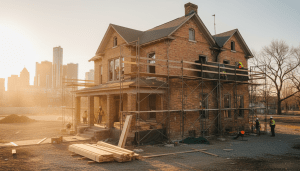
Furthermore, energy efficiency programs available through local partnerships help homeowners retrofitting older housing stock. Improving insulation and installing energy-efficient windows lowers utility costs, which is crucial in a city where a significant percentage of income often goes toward heating and cooling.
Community feedback has been cautiously optimistic. While residents welcome the promise of lower bills and cleaner air, there is a strong desire for transparency. Neighborhood groups have emphasized the need for community consent regarding the placement of solar fields and assurances that green gentrification will not displace long-term residents.
Background & Data
The urgency behind these initiatives is supported by data from the City of Detroit Office of Sustainability. The Detroit Sustainability Action Agenda, originally launched in 2019, identified that buildings account for the majority of the city’s greenhouse gas emissions. Consequently, retrofitting municipal buildings and encouraging private energy efficiency are top priorities.
Federal funding has provided a significant tailwind for these projects. Resources from the Inflation Reduction Act (IRA) are beginning to flow into cities like Detroit, subsidizing everything from electric vehicle (EV) charging stations to heat pump installations. The city has also moved to electrify its municipal fleet, slowly replacing combustion-engine vehicles with electric alternatives to reduce smog and carbon output.
According to recent reports, Detroit’s goal is to reduce municipal greenhouse gas emissions by 75% by 2034 and 100% by 2050. Achieving these targets requires a rapid scaling of current pilot programs.
What Happens Next
Looking ahead, the success of these Detroit sustainability initiatives will depend on execution and community engagement. The City Council continues to review proposals for land use related to solar parks, debating the balance between green space, housing development, and energy infrastructure.
Residents can expect to see more construction related to green stormwater infrastructure in 2025, particularly in flood-prone zones. Additionally, the expansion of the EV charging network is expected to accelerate, making electric vehicle ownership more feasible for residents who rely on street parking.
As Detroit evolves, the integration of environmental health with economic development remains the central theme. By leveraging federal funds and local innovation, the city hopes to prove that an industrial legacy can successfully transition into a sustainable future. For more on how these changes affect local housing, visit our Detroit Real Estate section for ongoing coverage.