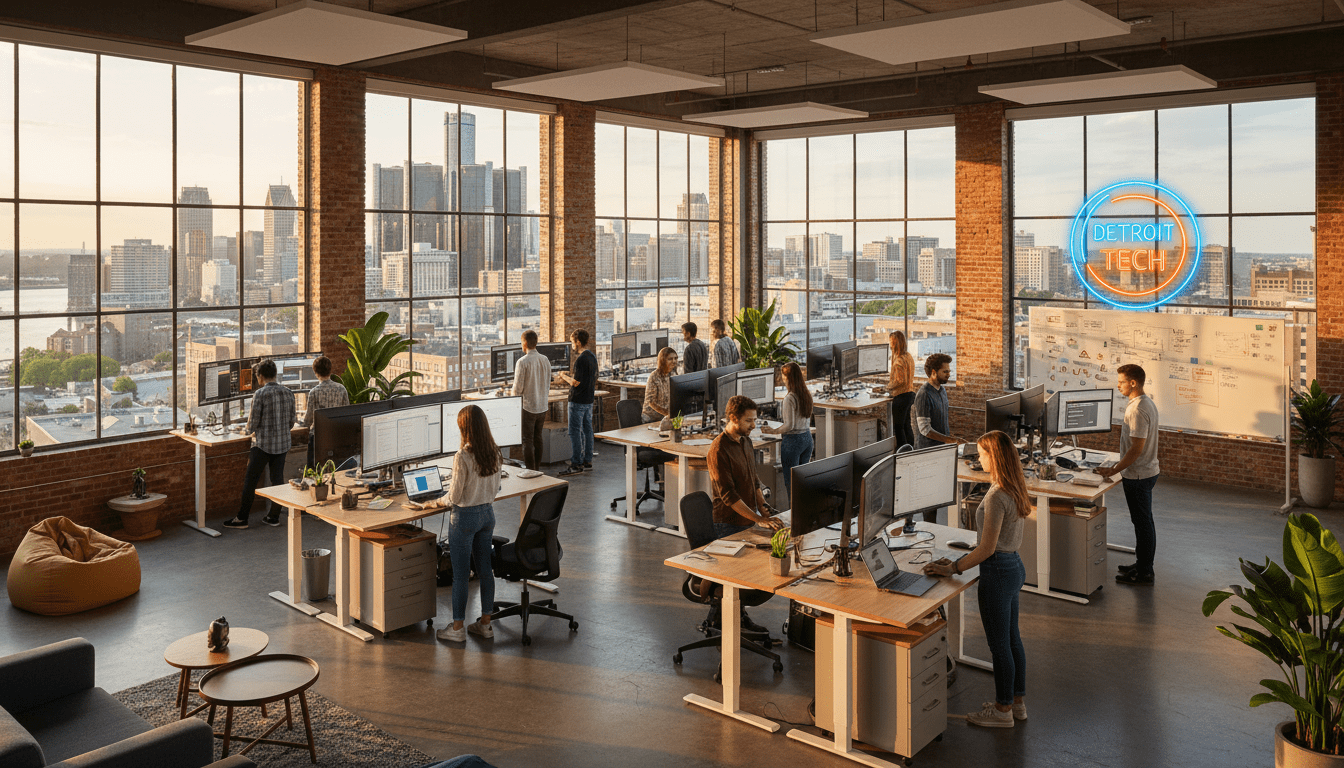
Detroit, long hailed as the world’s automotive capital, is undergoing a significant transformation. While the “Big Three” automakers remain pillars of the regional economy, a surging wave of Detroit tech startups is redefining the city’s identity. From the revitalization of Michigan Central Station to the incubators of Midtown, Detroit is rapidly emerging as a competitive hub for innovation in the Midwest.
According to recent reports from the Michigan Venture Capital Association (MVCA), the flow of capital into Detroit-based technology firms has shown resilience despite national economic headwinds. The city is no longer just building engines; it is building software, fintech solutions, and green energy technologies that are attracting attention from coastal investors.
The Shift From Motor City to Mobility City
The transition from traditional manufacturing to high-tech innovation is perhaps most visible in the mobility sector. While Detroit has always been synonymous with movement, the focus has shifted from internal combustion engines to autonomous driving, electric vehicle (EV) infrastructure, and logistics software.
Hubs like Newlab at Michigan Central in Corktown have become central to this shift. This district, anchored by Ford’s massive restoration project, serves as a testing ground where startups can pilot real-world solutions. Local industry experts note that the proximity to legacy automakers gives Detroit tech startups a unique advantage over Silicon Valley competitors: direct access to the supply chain and manufacturing expertise.
“The collaborative spirit in Detroit is unlike anywhere else,” said a spokesperson for a local mobility accelerator. “You have century-old manufacturing giants working alongside three-person coding teams to solve complex logistics problems.”
Beyond Mobility: Diversifying the Ecosystem
While mobility remains the crown jewel, the ecosystem is diversifying. Fintech, cybersecurity, and health tech are gaining traction. Companies like StockX paved the way, proving that Detroit could produce “unicorn” status companies (startups valued at over $1 billion). Following in those footsteps, a new generation of founders is utilizing resources from organizations like TechTown Detroit to scale their operations.
Data from the Detroit Regional Chamber suggests that diversification is crucial for the city’s long-term economic stability. By broadening the tech base, the local economy becomes less susceptible to the cyclical nature of the automotive manufacturing industry.
Impact on Detroit Residents
For many Detroiters, the headline success of tech companies raises a critical question: How does this impact the local community? The growth of Detroit tech startups is slowly translating into workforce development opportunities, though challenges remain in bridging the skills gap.
Initiatives like the Apple Developer Academy, a partnership with Michigan State University located in downtown Detroit, are designed to equip residents with the coding skills necessary to participate in this new economy. These programs aim to ensure that the wealth generated by the tech boom circulates within the city rather than being exported to commuter suburbs.
However, the influx of high-paying tech jobs also brings concerns regarding housing affordability. As reported in our coverage of Detroit real estate trends, neighborhoods near tech hubs like Corktown and Midtown have seen rising property values. Community leaders continue to advocate for equitable development policies to ensure longtime residents are not displaced by the city’s modernization.
Background & Data: The Investment Landscape
The state of Michigan has actively supported this ecosystem through public-private partnerships. The Michigan Economic Development Corporation (MEDC) has rolled out various grant programs aimed at early-stage companies. According to data from the MEDC, the state’s high-tech startup ecosystem is one of the fastest-growing in the Great Lakes region.
Venture capital activity in Detroit has evolved from primarily local angel investors to institutional funds. The presence of firms like Detroit Venture Partners and Fontinalis Partners highlights a maturing market where funding is increasingly available for scalable ideas. Statistics indicate that while the volume of deals may fluctuate, the quality and valuation of Detroit-based startups are on an upward trajectory.
Challenges Remaining
Despite the optimism, hurdles exist. Talent retention remains a primary concern. While Detroit’s cost of living is significantly lower than San Francisco or New York, attracting senior technical talent to the Midwest requires consistent effort. Furthermore, regional transit remains a sticking point for younger workers who prefer urban environments with robust public transportation options.
What Happens Next
Looking toward 2025 and beyond, the trajectory for Detroit tech startups appears robust. The continued development of the Detroit innovation district and the deepening integration of AI into manufacturing processes position the city well for the future.
Observers expect to see a rise in “Climate Tech” startups in the region, leveraging Michigan’s engineering talent to address climate change through industrial decarbonization. As the definition of what it means to be a “car city” evolves, Detroit is proving that its spirit of innovation is not a relic of the past, but the engine of its future.