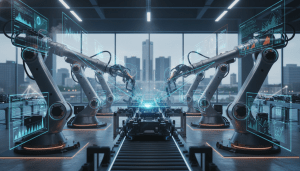
Detroit’s economic narrative has long been dominated by the automotive assembly line, but a quiet revolution in the labor market is reshaping the Motor City into a formidable technology hub. New data suggests that Detroit’s tech workforce is not only growing but is becoming one of the most resilient sectors in the region’s economy, driven by a convergence of automotive innovation, fintech expansion, and a burgeoning startup ecosystem.
While coastal tech hubs face saturation and high operational costs, Detroit has emerged as a high-value alternative for both talent and employers. According to recent analysis from the Detroit Regional Chamber, the demand for software developers, cybersecurity analysts, and data scientists in Southeast Michigan has remained steady, even amidst broader national economic fluctuations.
A Shift from Mechanics to Microchips
The definition of a “tech job” in Detroit is evolving. Historically tied to mechanical engineering, the region’s current demand is heavily skewed toward software and digital infrastructure. This shift is largely propelled by the automotive industry’s transition to electric and autonomous vehicles.
“We are seeing a fundamental restructuring of the local talent pool,” said a spokesperson for the Detroit Regional Chamber. “The skills required to build a car today are vastly different from twenty years ago. The modern assembly line is digital, and that requires a workforce proficient in coding, AI, and systems architecture.”
Data from the U.S. Bureau of Labor Statistics supports this observation, showing consistent year-over-year growth in computer and mathematical occupations within the Detroit-Warren-Dearborn metropolitan statistical area. Unlike traditional manufacturing roles, these positions offer higher median wages and greater remote work flexibility, attracting a demographic of workers that might have previously flocked to Austin or Seattle.
Impact on Detroit Residents and Local Economy
For local residents, the expansion of the Detroit tech workforce presents both opportunities and challenges. On one hand, the influx of high-paying technical roles is boosting the local tax base and driving demand for services in downtown and Midtown. On the other, it highlights the urgent need for accessible technical education to ensure long-time Detroiters are not left behind.
Local organizations are stepping up to bridge this gap. Initiatives like Grand Circus and NPower Michigan are working actively to upskill residents, focusing on communities that have been historically underrepresented in the technology sector.
“The goal is to ensure that the growth in our tech sector benefits Detroiters first,” said a program director at a local workforce development non-profit. “We cannot import all our talent. We need to cultivate it here in our neighborhoods.”
This focus on local development is crucial. As reported in our coverage of Detroit neighborhood development, rising wages in the tech sector can influence housing markets, making equitable access to these high-paying jobs a priority for city planners and community leaders.
The Role of the Michigan Central District
A significant catalyst for this workforce transformation is the Michigan Central innovation district in Corktown. Anchored by Ford Motor Company, the campus is designed to be a magnet for mobility tech talent. It serves as a physical center of gravity for the region’s tech ambitions, drawing in startups and venture capital.
According to Michigan Central officials, the district is already hosting a diverse array of companies working on aerial mobility, energy solutions, and logistics software. This concentration of companies creates a “cluster effect,” where the density of talent attracts even more employers to the area.
The ripple effects are being felt across the city’s commercial real estate sector as well. As noted in recent Detroit real estate news, tech companies are increasingly seeking modern, collaborative office spaces, prompting renovations of historic buildings and new construction projects.
By the Numbers: Detroit’s Competitive Edge
Reports from CBRE’s annual “Scoring Tech Talent” survey have consistently ranked Detroit as an up-and-coming market. Key factors contributing to this ranking include:
- Cost of Living: Significantly lower than coastal hubs, allowing tech workers to enjoy a higher quality of life.
- Talent Output: Proximity to top-tier research universities like the University of Michigan and Michigan State University provides a steady pipeline of engineering graduates.
- Diversity: Detroit has been recognized as a growing hub for Black founders and technologists, supported by focused venture capital funds like Detroit Venture Partners.
However, retention remains a hurdle. While Detroit produces a high volume of engineering graduates, retaining them against aggressive recruiting from Silicon Valley and New York remains a fierce battle. The difference now, compared to a decade ago, is that Detroit has a compelling counter-offer: affordable homeownership, a vibrant culture, and the chance to be part of a city’s renaissance.
What Happens Next?
Looking ahead to the remainder of 2025, the trajectory for the Detroit tech workforce appears positive. The integration of AI into manufacturing and the continued push for green energy solutions will likely sustain demand for technical skills.
City officials and business leaders are expected to double down on retention strategies, including incentives for startups and continued investment in downtown amenities. As the line between “automotive” and “technology” continues to blur, Detroit is uniquely positioned to define the future of the industrial metaverse, provided it can continue to attract, train, and keep the necessary talent.