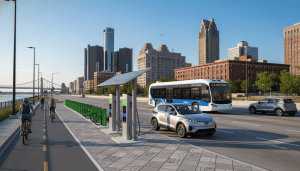

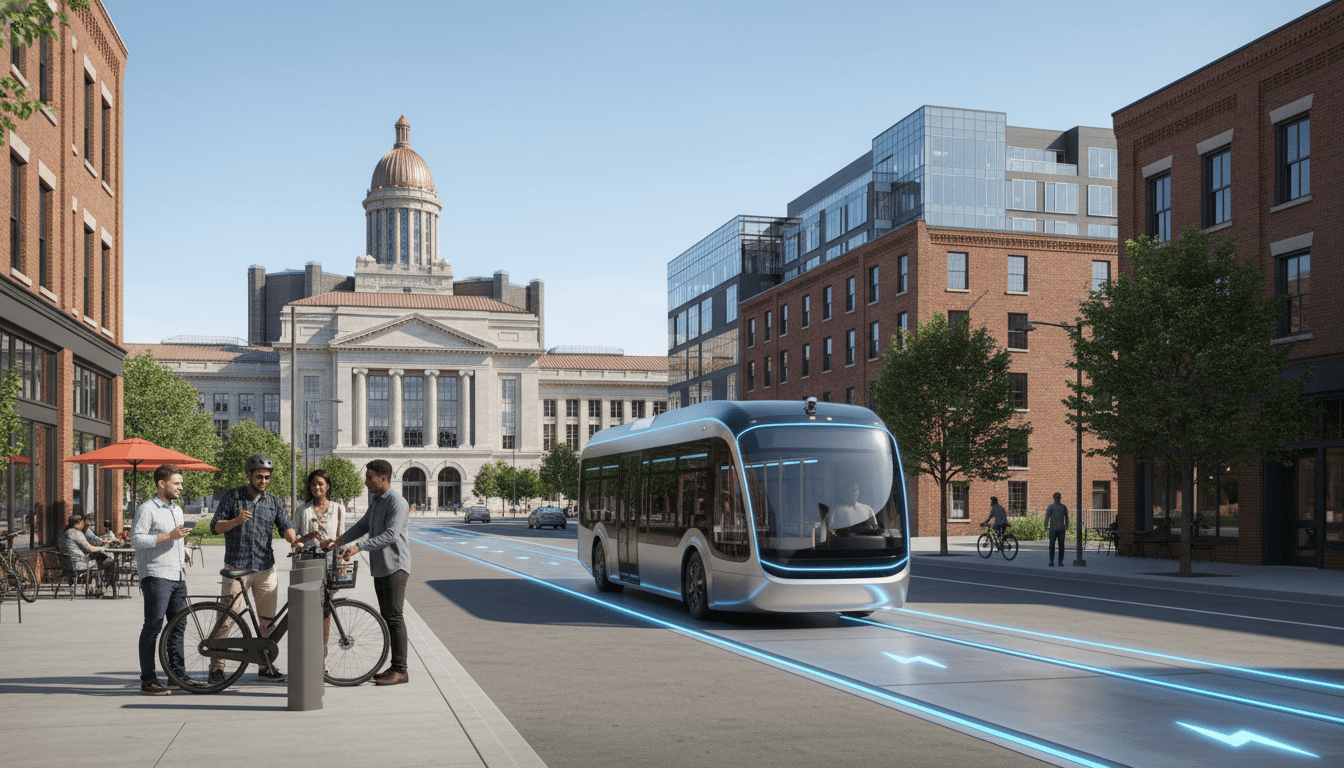
Detroit, long known globally as the Motor City, is currently undergoing a significant transformation. The city that put the world on wheels is now attempting to reinvent how those wheels spin, steering toward a future defined by high-tech urban mobility solutions rather than just private car ownership. Driven by partnerships between the City of Detroit, the State of Michigan, and major automotive players, new infrastructure projects are emerging to address long-standing transit gaps.
The shift comes as city officials and private developers look to solve a critical issue: connecting Detroit’s sprawling neighborhoods with economic hubs. With the reopening of Michigan Central in Corktown as a dedicated mobility innovation district, Detroit is positioning itself as a testing ground for technologies that could define the next century of transportation.
The Rise of Detroit Urban Mobility Innovation
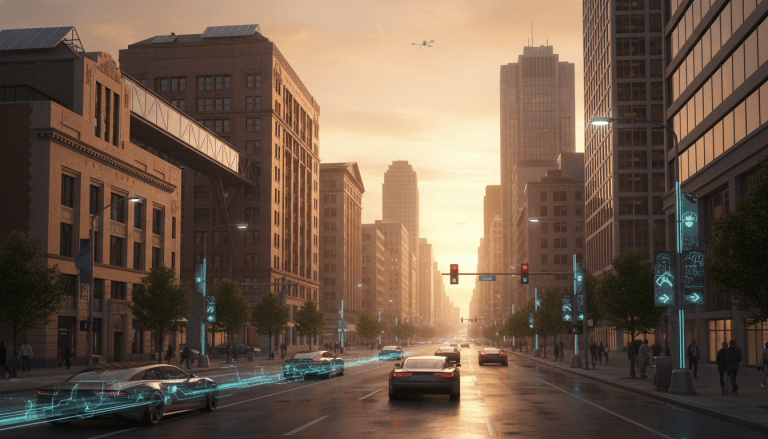
The conversation around Detroit urban mobility has moved beyond simple bus routes. It now encompasses autonomous vehicles, inductive charging roads, and multimodal transit networks. One of the most visible examples of this shift is the inductive charging pilot program in Corktown. This technology, developed in partnership with Electreon, allows electric vehicles to charge wirelessly while driving over specialized pavement.
According to the Michigan Department of Transportation (MDOT), this pilot is the first of its kind in the United States on a public road. The initiative aims to reduce range anxiety for EV drivers and potentially electrify public transit fleets without the need for lengthy downtime at charging stations.
“We are not just talking about cars anymore; we are talking about the movement of people and goods in a way that is equitable and sustainable,” said a spokesperson for the City of Detroit’s Office of Mobility Innovation in a recent press briefing. “The integration of technology into our infrastructure is essential for the future of the local economy.”
Impact on Detroit Residents
While high-tech pilots grab headlines, the primary goal of these Detroit City initiatives is to improve the daily lives of residents. For decades, Detroit has struggled with a fragmented public transportation system. Data from the University of Michigan’s Poverty Solutions initiative has previously highlighted that approximately one in four Detroit households does not own a vehicle. In a city spread across 139 square miles, this lack of mobility restricts access to jobs, healthcare, and fresh food.
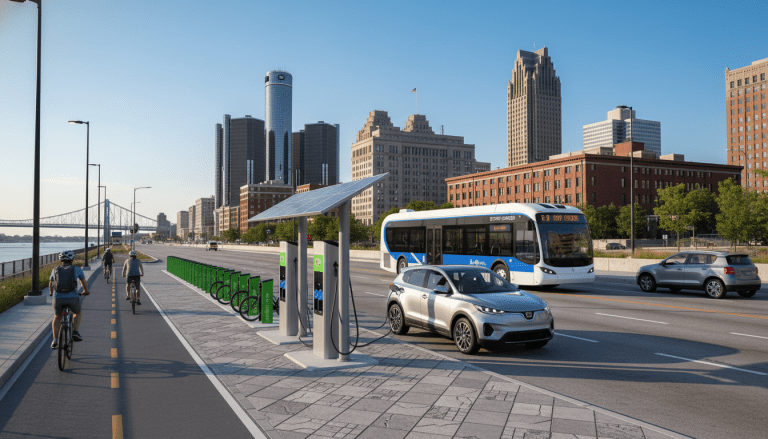
New mobility hubs are designed to bridge the “first-mile, last-mile” gap. These hubs integrate the Detroit Department of Transportation (DDOT) bus stops with MoGo bike-share stations, scooter rentals, and ride-share pickup zones. The objective is to create a seamless transition between different modes of transport.
Local advocacy groups, such as the Detroit Greenways Coalition, have emphasized that infrastructure must prioritize safety for non-motorized travelers. As the city expands its network of bike lanes, including the continued development of the Joe Louis Greenway, residents are seeing more viable options for commuting without a car.
Testing Ground: The Michigan Central District
The revitalization of Michigan Central Station by Ford Motor Company serves as the anchor for these developments. The 30-acre campus is not merely an office space but a dedicated zone for testing aerial mobility (drones) and autonomous ground transport. This concentration of resources is attracting startups from around the globe to Detroit.
For the local workforce, this translates to new opportunities in the tech and engineering sectors. However, it also raises questions about gentrification and whether the benefits of these high-tech zones will bleed out into the surrounding neighborhoods. Developers have stated their commitment to community engagement, ensuring that the “mobility district” remains accessible to long-time residents of Corktown and Southwest Detroit.
Background & Data: The Economics of Mobility
The economic stakes of Detroit urban mobility are high. The global market for smart mobility is projected to reach hundreds of billions of dollars over the next decade. By securing its place as a leader now, Detroit aims to protect its economic future against the decline of traditional manufacturing.
According to the Michigan Economic Development Corporation (MEDC), the state has invested significantly in the Michigan Mobility Funding Platform to provide grants for companies deploying mobility solutions in local communities. These grants have funded projects ranging from autonomous shuttle services for seniors to app-based on-demand transit systems.
Furthermore, federal funding from the Bipartisan Infrastructure Law is beginning to flow into the state, targeted at updating aging roads and bridges to support next-generation vehicles. This influx of capital is critical for Detroit, where road quality has historically been a point of contention for drivers and transit operators alike.
What Happens Next?
Looking ahead to 2025 and beyond, residents can expect to see more autonomous shuttles on fixed routes, particularly connecting the riverfront to Midtown and the New Center area. The success of the autonomous shuttle pilot, the Connect, which transports riders from Corktown to the riverfront, will likely determine the speed of future deployments.
Challenges remain, particularly regarding the coordination between DDOT and the suburban SMART bus system. However, the momentum is undeniable. As Detroit continues to integrate smart technology with traditional infrastructure, the definition of what it means to travel in the Motor City is fundamentally changing.