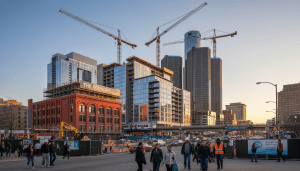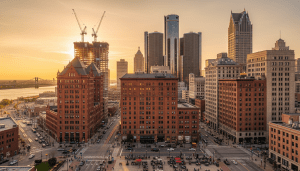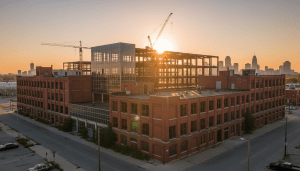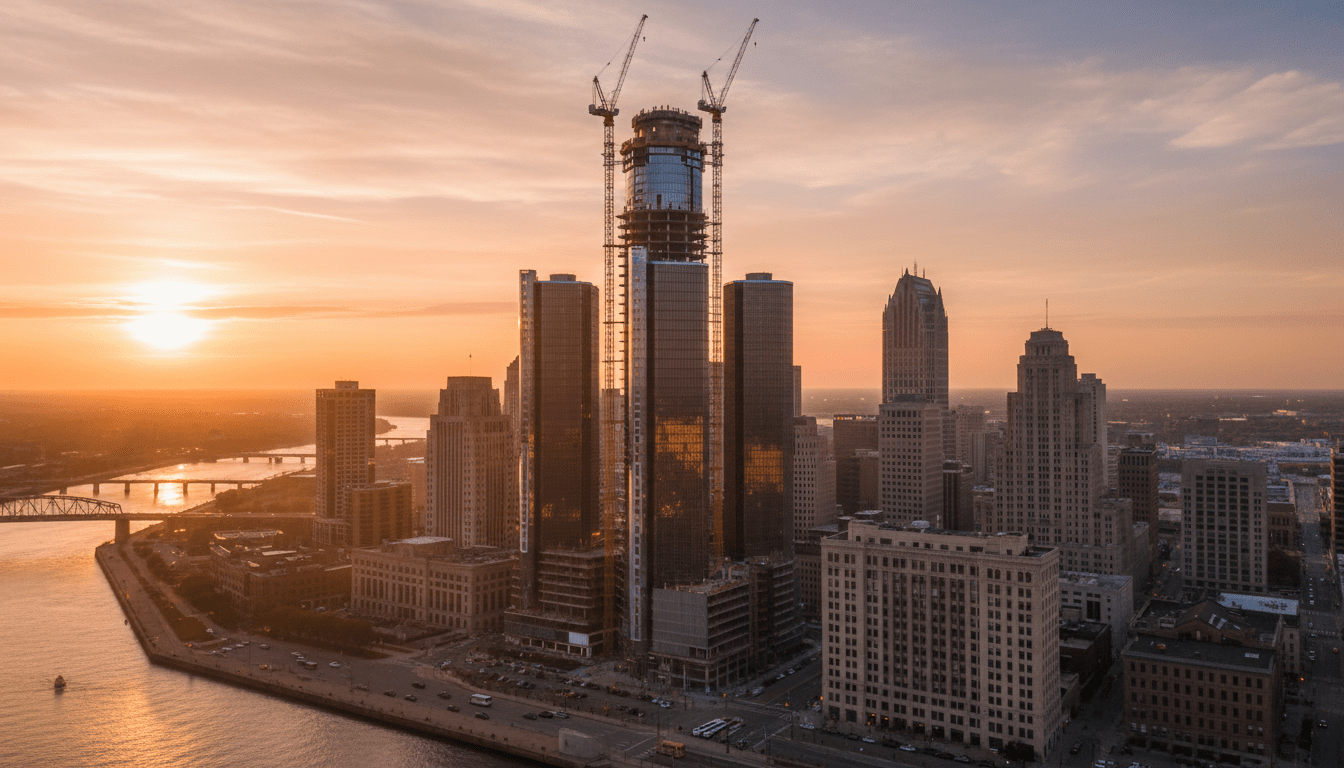
Detroit is currently undergoing one of the most significant physical and economic transformations in its history. Across the city, from the riverfront to the neighborhoods, massive construction initiatives are altering the landscape. Detroit urban renewal projects have moved beyond theoretical renderings to become concrete realities, signaling a new era for the Motor City’s economy and its residents.
For decades, the narrative surrounding Detroit focused on blight and abandonment. However, reports from 2024 indicate a distinct shift. Driven by billions in investment from major stakeholders like Bedrock, Ford Motor Company, and the City of Detroit itself, the focus has turned to adaptive reuse and vertical expansion. These developments are not merely cosmetic; they represent a fundamental restructuring of how space is utilized for housing, commerce, and public interaction.
According to the City of Detroit’s Planning and Development Department, the current wave of development is designed to create density and walkability, factors often cited as critical for modern urban sustainability. While downtown mega-projects grab the headlines, significant resources are also flowing into neighborhood corridors, attempting to bridge the gap between the central business district and residential areas.
Major Developments Anchoring the Renewal
Two specific initiatives currently define the scale of Detroit urban renewal projects: the Hudson’s site development and the revitalization of Michigan Central Station.
The development on the site of the former J.L. Hudson Department Store is perhaps the most visible symbol of this renewal. Managed by Bedrock, the project includes a skyscraper that has now topped out, altering the city’s skyline for the first time in a generation. Upon completion, this mixed-use development will offer luxury hotel space, residential units, and office space, aiming to attract high-yield tenants back to Woodward Avenue.
Meanwhile, in Corktown, Ford Motor Company’s restoration of Michigan Central Station stands as a testament to adaptive reuse. Once a symbol of Detroit’s decline, the station reopened in mid-2024 as an innovation hub. This project goes beyond historical preservation; it is positioned as an anchor for the future of mobility technology. Ford reports that the campus creates a density of tech talent that the city has struggled to attract in previous decades.
“The restoration of Michigan Central is more than just fixing a building; it is about signaling to the world that Detroit is open for the business of the future,” said a spokesperson for the local economic development corporation during a recent press tour.
Neighborhood Revitalization Beyond Downtown
Critically, the scope of urban renewal has expanded beyond the 7.2 square miles of the greater downtown area. The Strategic Neighborhood Fund (SNF), a partnership between the City of Detroit and Invest Detroit, has been instrumental in directing capital to commercial corridors in neighborhoods such as Livernois-McNichols, Southwest Detroit, and the Jefferson Chalmers area.
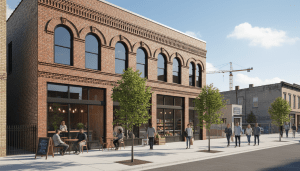
These projects often focus on streetscape improvements, park renovations, and the stabilization of commercial storefronts. For more information on local business growth, readers can follow our coverage on Detroit business developments.
For example, the revitalization of the Avenue of Fashion on Livernois has returned the strip to a walkable destination for dining and retail, populated primarily by local, black-owned businesses. This strategy aims to ensure that long-term residents see the benefits of investment in their immediate surroundings, rather than only in the city center.
Impact on Detroit Residents
The rapid pace of development brings both opportunities and challenges for locals. On one hand, the influx of construction jobs and the subsequent permanent positions in hospitality and tech are vital for the local economy. The demand for skilled tradespeople has surged, leading to increased enrollment in local training programs.
However, concerns regarding housing affordability remain central to the conversation about Detroit urban renewal projects. As property values rise adjacent to these major developments, long-time residents fear displacement. In response, the City of Detroit has implemented strict requirements for affordable housing units within new developments receiving tax incentives.
Data from the U.S. Census Bureau suggests that while the population decline has leveled off, the demographic makeup of certain neighborhoods is shifting. To combat gentrification-led displacement, city officials have touted the “Detroit Home for the Future” fund and other preservation strategies meant to keep existing housing stock affordable.
“We have to balance the excitement of cranes in the sky with the reality of the rent check on the kitchen table,” noted a community organizer from the Jefferson Chalmers neighborhood during a recent town hall meeting.
Background & Data: The Economics of Renewal
The economics driving these projects rely heavily on public-private partnerships. Tax increment financing (TIF) and brownfield tax credits are standard tools used to make these massive undertakings financially viable. Critics often argue that these incentives divert money from schools and libraries, while proponents assert that without them, the sites would remain fallow and tax-negative.
A 2023 economic impact study by the University of Michigan suggested that for every dollar invested in downtown rehabilitation, there is a multiplier effect on the surrounding service economy. Restaurants, dry cleaners, and grocery stores see increased foot traffic, creating a secondary layer of economic stability.
For deep dives into property values and market trends, check our Detroit Real Estate section, where we track weekly market shifts.
What Happens Next
Looking toward 2025, the pipeline for Detroit urban renewal projects shows no sign of slowing. The focus is expected to shift slightly toward residential infill—building new housing on the many vacant lots that dot the city’s residential streets—and the continued development of the Detroit Riverfront.
The Ralph C. Wilson Jr. Centennial Park on the West Riverfront is slated to become a major regional attraction, further cementing the riverfront as one of the best in the nation. As these projects come online, the true test will be their integration into the fabric of the city—connecting new residents with old, and ensuring the economic lift is felt across all zip codes.