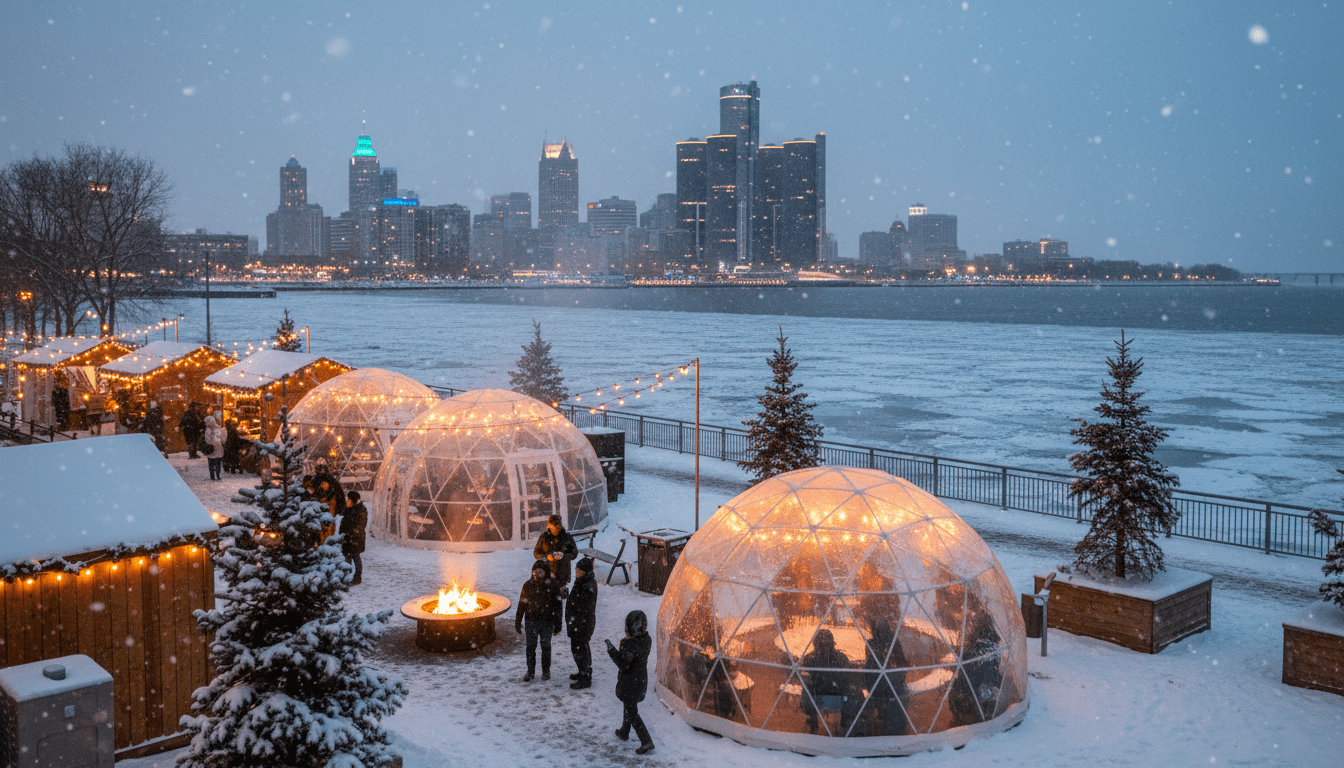
As temperatures plummet across Southeast Michigan, the traditional lull in the hospitality industry is being met with aggressive innovation. Rather than succumbing to the post-holiday slump, Detroit’s restaurant and bar scene is leveraging a strategy known as “Winter City” activation, transforming the coldest months into a viable season for outdoor engagement and economic stability.
For decades, January and February served as a hibernation period for the local economy. However, recent initiatives led by the Downtown Detroit Partnership (DDP) and the Detroit Riverfront Conservancy have shifted this narrative. By investing in winter-specific infrastructure—such as heated igloos, outdoor fire pits, and seasonal markets—Detroit is redefining what it means to dine out during the winter downtime.
The Shift to Year-Round Activation
The concept of the “winter slump” is a well-documented economic challenge for northern cities. According to data regarding seasonal hospitality trends, restaurant revenue in cold-weather climates can drop by as much as 30% in the first quarter of the year. To combat this, Detroit stakeholders are prioritizing immersive experiences that compel residents to leave their homes despite the freeze.
“It is about creating a destination that exists independent of the weather,” stated a representative from the Detroit Riverfront Conservancy during a recent press briefing on winter programming. The Conservancy’s Winter at Valade series has become a cornerstone of this effort, turning the riverfront into a hub of activity with massive outdoor fires, marshmallow roasting, and rotating food trucks that offer residents a reason to visit the riverfront even when temperatures drop below freezing.
This shift is not merely aesthetic; it is a vital economic survival tactic. By extending patio season through the use of heated structures and weatherproof enclosures, restaurants are able to maintain seating capacity that would otherwise be lost. This allows businesses to retain staff year-round, stabilizing the local Detroit economy and reducing the seasonal layoffs that have historically plagued the service industry.
Impact on Detroit Residents
For locals, the expansion of Detroit winter dining options offers a respite from the isolation often associated with Michigan winters. The availability of warm, social spaces encourages community interaction and supports mental well-being during the darker months. The pedestrian-friendly layouts of areas like Parker’s Alley and the Belt allow residents to navigate the city’s culinary scene without needing to rely heavily on vehicle transport between venues.
Local business owners note that the clientele has shifted from strictly tourists to a heavy concentration of residents from Corktown, Midtown, and Downtown. “The locals are the ones keeping these fires burning,” said a manager at a popular venue near Cadillac Square. “They are looking for a ‘third place’ to exist outside of work and home, even in February. Providing a warm, heated outdoor space gives them that option.”
Infrastructure and Adaptation
The proliferation of dining igloos and greenhouses, which began as a pandemic-era necessity, has evolved into a permanent fixture of Detroit’s winter landscape. Establishments across the city, from the intricate rooftops of the Monarch Club to the street-level bustle of Lumen at Beacon Park, have invested heavily in winterizing their operations.
According to the Downtown Detroit Partnership, these activations are critical for maintaining foot traffic. The Lodge at Cadillac Square, for example, offers a ski-lodge atmosphere in the heart of the city, serving as a communal gathering point. These semi-permanent structures require significant investment and compliance with safety regulations, yet the return on investment appears clear as foot traffic numbers in downtown corridors remain steady compared to pre-2020 winter figures.
Furthermore, the integration of food and beverage options into broader winter festivals is increasing. The upcoming Winter Blast in Royal Oak and the Fire & Ice Festival at Valade Park rely heavily on local food vendors to anchor the events. This symbiosis between event organizers and local restaurateurs creates a micro-economy that sustains the sector until the spring thaw.
Neighborhood Development Beyond Downtown
While Downtown and the Riverfront grab headlines, the trend of winterproofing is spreading to other Detroit neighborhoods. In Southwest Detroit and the Avenue of Fashion, smaller independent operators are utilizing grant funding and community support to erect wind barriers and heaters. This decentralization of winter amenities ensures that the economic benefits of seasonal dining are distributed more equitably across the city, rather than being concentrated solely in the central business district.
A recent report on urban planning in cold climates suggests that cities embracing their winter identity—rather than apologizing for it—see higher rates of resident satisfaction. Detroit’s move toward embracing the chill aligns with this data, positioning the city alongside other winter-positive hubs like Montreal and Minneapolis.
Future Outlook
As the season progresses, the success of these winter dining initiatives will likely influence future urban planning and development decisions. The demand for year-round walkable spaces is pushing developers to consider winter usability in their designs for new mixed-use projects. With the Detroit Riverfront Conservancy continuing to expand its programming and local businesses refining their cold-weather operations, Detroit is effectively closing the gap between the summer boom and the winter lull.
For the residents of Detroit, the message is clear: the city is open, the heaters are on, and the community is gathering, regardless of the thermometer reading.