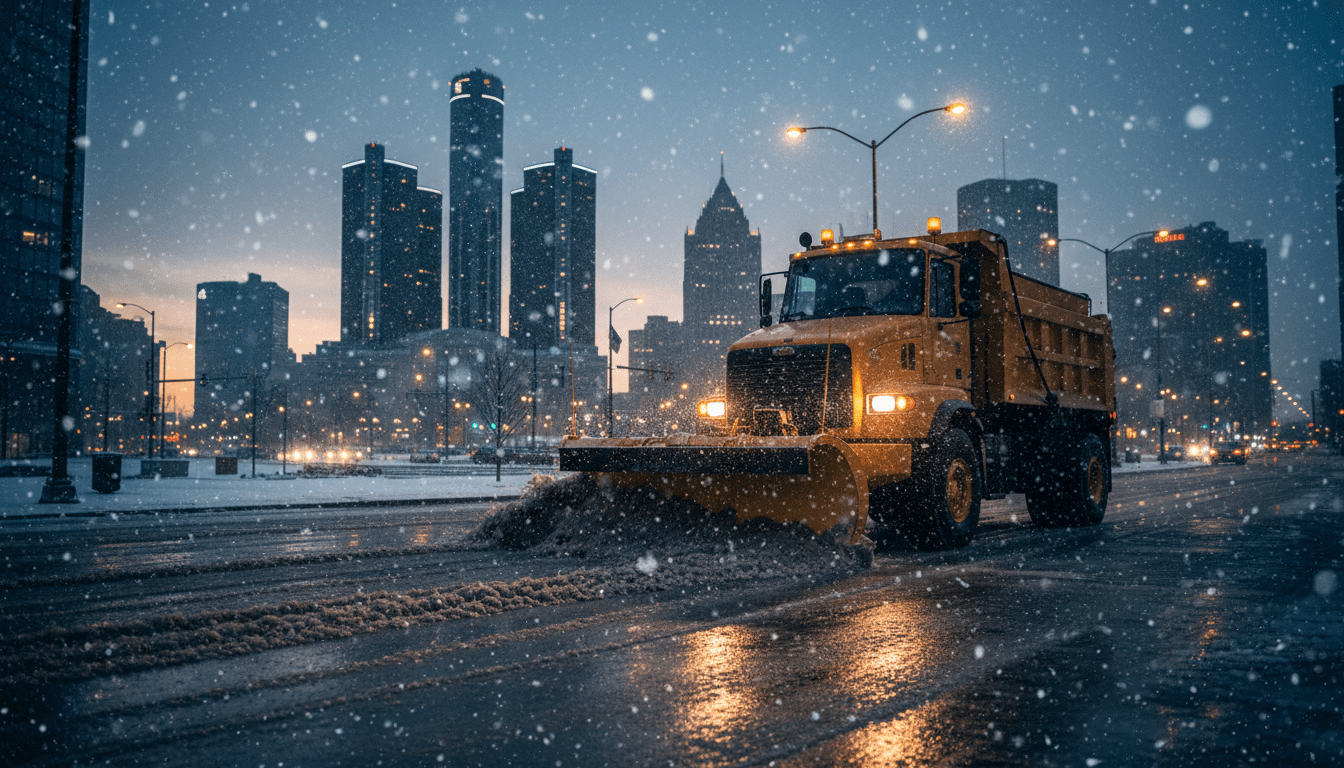
As temperatures across Southeast Michigan continue to fluctuate, Detroit winter driving conditions have once again become a primary concern for commuters, public officials, and safety experts alike. The familiar mix of snow, sleet, and the dreaded freeze-thaw cycle is creating a complex environment on Metro Detroit roadways, prompting warnings from the Michigan Department of Transportation (MDOT) and local law enforcement.
While Detroiters are accustomed to harsh winters, recent meteorological patterns have led to unpredictable road surfaces. From the Lodge Freeway to surface streets in Corktown and Midtown, drivers are facing a combination of black ice and rapidly deteriorating pavement. This report analyzes the current state of the city’s transportation network, the response from the Department of Public Works, and the implications for local residents.
The Reality of Metro Detroit Roads
According to data from the Michigan Department of Transportation (MDOT), winter weather collisions account for a significant percentage of annual traffic incidents in Wayne County. The primary culprit in recent weeks has not necessarily been heavy snowfall, but rather the treacherous formation of black ice caused by daytime melting and overnight freezing.
“The fluctuation in temperature is what makes Detroit winter driving conditions so deceptive,” stated a representative from the Michigan State Police in a recent public safety advisory. “Drivers see wet pavement and assume it is safe, but below freezing temperatures turn that moisture into a sheet of ice, particularly on bridges and overpasses like the I-75 and I-696 interchange.”
Statistics from the National Highway Traffic Safety Administration (NHTSA) indicate that 17% of all vehicle crashes occur during winter conditions. In Detroit, where infrastructure aging is already a documented challenge, these conditions exacerbate existing hazards. The lack of consistent friction on icy roads, combined with sudden stops common in rush-hour traffic on I-94, creates a high-risk environment for pile-ups.
Department of Public Works Response
The City of Detroit’s Department of Public Works (DPW) has mobilized its fleet to address the ongoing challenges. The city utilizes a tiered system for snow removal and salting, prioritizing major thoroughfares and emergency routes before addressing residential side streets.
In a recent press briefing, city officials emphasized the deployment of salt trucks ahead of projected freezes. However, the effectiveness of road salt diminishes significantly when temperatures drop below 15 degrees Fahrenheit, a common occurrence in January and February. To combat this, the city has been experimenting with pre-wetting salt with calcium chloride to lower its freezing point and improve adhesion to the road surface.
For detailed updates on plow schedules, residents can refer to our coverage on Detroit Public Works initiatives regarding neighborhood clearing protocols.
Impact on Detroit Residents
The severity of Detroit winter driving conditions has a direct economic and social impact on the local population. Beyond the immediate safety risks, the condition of the roads during winter contributes to the high cost of vehicle ownership in the city.
Insurance and Repair Costs
Michigan notoriously has some of the highest auto insurance rates in the country. A contributing factor is the high claim rate associated with winter driving accidents and comprehensive claims for pothole damage. Local auto repair shops in Detroit report a surge in suspension and tire repairs during the winter months.
“Every winter, we see a 30 to 40 percent increase in vehicles coming in with bent rims and blown struts,” said Marcus Davis, an owner of a repair shop on West Seven Mile Road. “It’s not just sliding into ditches; it’s the roads breaking apart under the ice. People hit a pothole filled with snow they couldn’t see, and that’s a $500 repair bill right there.”
Commute Times and Workforce Productivity
Unpredictable road conditions also impact the local economy by delaying the workforce. When MDOT issues advisories for the Metro Detroit area, commute times often double. For shift workers relying on timely arrival—such as those employed at the Detroit Medical Center or local manufacturing plants—these delays can result in lost wages or strict attendance penalties.
The Freeze-Thaw Cycle and Potholes
One cannot discuss Detroit winter driving conditions without addressing the infrastructure degradation caused by the freeze-thaw cycle. Water seeps into cracks in the asphalt during the day when temperatures rise above freezing. When the temperature drops at night, that water expands as it turns to ice, forcing the pavement apart. As vehicles drive over these weakened spots, the asphalt crumbles, creating potholes.
This geological and physical process is accelerated in Detroit due to the age of the underlying road bases. While summer construction projects aim to patch these issues, the winter months expose the vulnerabilities of temporary fixes. We explored the city’s long-term infrastructure plans in our article on Detroit’s infrastructure investment strategy, noting that permanent solutions require funding that extends beyond standard maintenance budgets.
Safety Recommendations and Future Outlook
Looking ahead, meteorologists warn that the volatility of the jet stream could bring more frequent polar vortex disruptions, meaning Detroit drivers must remain vigilant. The City of Detroit continues to urge residents to utilize the “Detroit Improve Detroit” app to report dangerous road conditions or unplowed streets.
Experts recommend the following for navigating current conditions:
- Increase Following Distance: The standard three-second rule should be increased to eight to ten seconds on icy roads.
- Avoid Cruise Control: Using cruise control on slippery surfaces can cause a loss of control if the wheels spin.
- Check Tires: Ensure tread depth is sufficient for snow traction; all-season tires lose effectiveness in severe cold compared to dedicated winter tires.
As the season progresses, the collaboration between state agencies and city services will be tested. For Detroiters, patience and preparation remain the most effective tools against the elements.