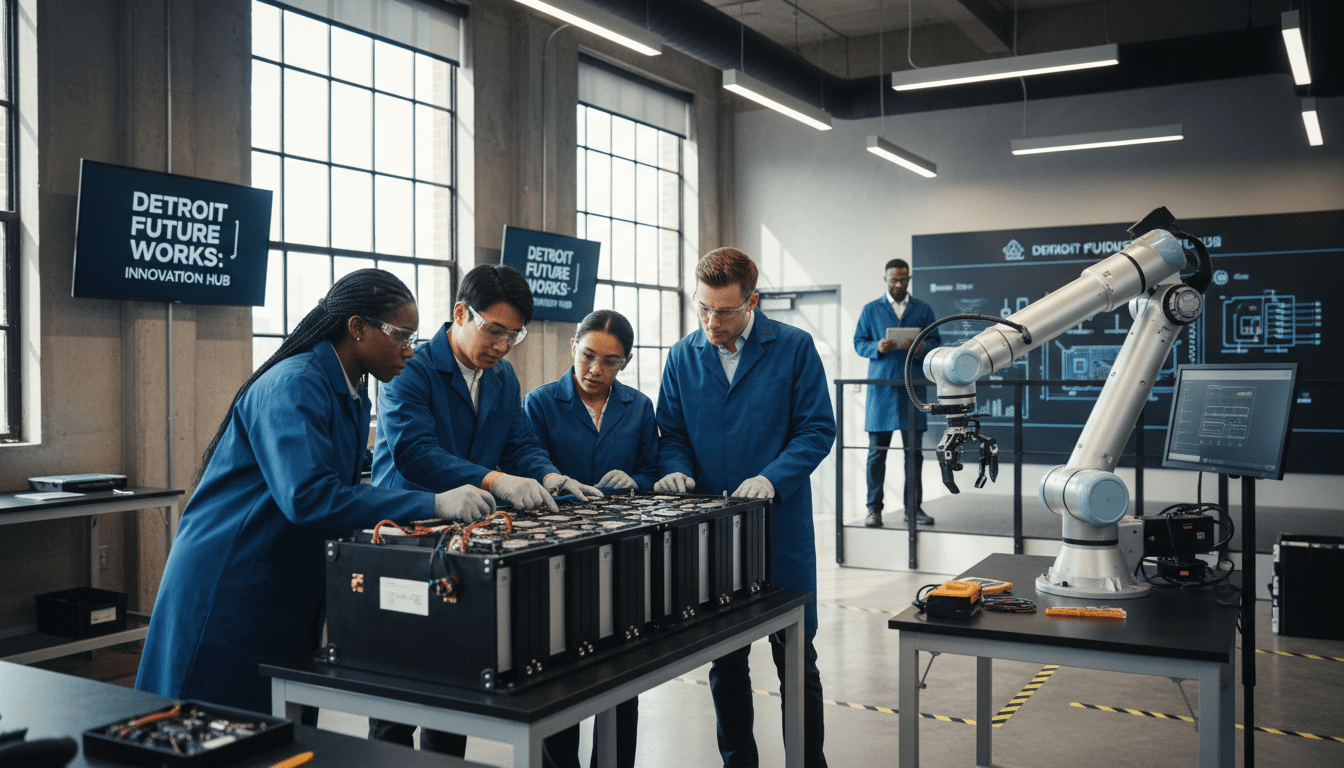
In the heart of the Motor City, a quiet revolution is taking place—not on the assembly lines of the past, but in the classrooms and training centers of the present. As the automotive industry accelerates its transition to electric vehicles (EVs) and the regional economy diversifies into healthcare and information technology, Detroit workforce development programs are undergoing a massive overhaul to ensure local residents are not left behind.
For decades, Detroit’s economic narrative was tied strictly to traditional manufacturing. Today, however, city officials and private sector leaders are collaborating on a comprehensive strategy to upskill the labor force. The goal is clear: to bridge the persistent gap between the jobs available and the skills possessed by the current workforce.
According to recent data from the Detroit Regional Chamber, the demand for mid-to-high-skill labor has outpaced supply in Metro Detroit, creating a unique challenge for employers and a significant opportunity for job seekers willing to undergo training.
The Evolution of Detroit Workforce Development
The landscape of employment training in the city has shifted dramatically over the last five years. The centerpiece of this effort remains Detroit at Work, the city’s primary workforce agency. While the program has historically focused on immediate job placement, the strategy has evolved toward long-term career pathway development.
“We are moving past the model of ‘train and pray,'” said a spokesperson for the City of Detroit’s employment services division during a recent press briefing. “The focus now is on employer-led training where a job is waiting at the end of the certification process. We are aligning our curriculum directly with the needs of companies like Ford, Stellantis, and the burgeoning healthcare systems in Midtown.”
One major driver of this shift is the influx of federal American Rescue Plan Act (ARPA) funds. A significant portion of these funds has been allocated to Detroit at Work initiatives designed to remove barriers to employment. These barriers often include lack of transportation, childcare costs, and the need for expungement services—issues that have historically prevented many Detroiters from accessing higher-paying roles.
Addressing the Skills Gap in Manufacturing and Tech
While manufacturing remains a staple of the local economy, the nature of the work has changed. Modern Detroit workforce development programs are now heavily weighted toward robotics, mechatronics, and battery assembly. With Michigan positioning itself as the hub of the North American EV battery belt, the demand for technicians who can operate and maintain sophisticated machinery is skyrocketing.
Organizations like Focus: HOPE have long been pillars in the community, but they too are updating their offerings. Their machinist training programs now include modules on computer numerical control (CNC) programming and digital literacy. Similarly, new partnerships between the Detroit Employment Solutions Corporation (DESC) and local community colleges are offering accelerated credentials in cybersecurity and data analytics.
This tech-forward approach is critical. A report by the Workforce Intelligence Network for Southeast Michigan highlights that IT and engineering roles are among the fastest-growing sectors in the region, yet they remain the hardest positions for local employers to fill with local talent.
Impact on Detroit Residents
For the average resident, these macro-economic shifts translate into tangible opportunities for upward mobility. The narrative is moving from “getting a job” to “building a career.”
Consider the trajectory of the skilled trades. Electricians, plumbers, and HVAC technicians are in critical demand due to a retiring workforce. Local unions, in conjunction with city programs, are aggressively recruiting apprentices. These roles often come with starting wages significantly above the median per capita income in Detroit, along with full benefits.
Residents engaging with these programs are finding that the return on investment for their time is substantial. “I never thought I’d be working with robots,” said Marcus T., a recent graduate of a local advanced manufacturing boot camp, in an interview with DetroitCityNews.com. “I went from working fast food to earning a wage that lets me save for a house. The training was free, and they helped me get my driver’s license reinstated.”
However, challenges remain. Awareness is a significant hurdle. Many residents are unaware that they qualify for free training programs funded by the state or the city. Community outreach has become just as important as the training itself, with canvassers often going door-to-door in neighborhoods to inform residents about available job opportunities and educational grants.
The Role of Corporate Partnerships
The success of Detroit workforce development relies heavily on buy-in from the private sector. Major employers are no longer passive consumers of talent; they are active creators of it.
General Motors and Ford have both launched initiatives to upskill their existing workforce while creating pipelines for new hires. Furthermore, utility giant DTE Energy has partnered with local schools to create energy-sector career academies, ensuring that high school graduates have a direct line to employment in the utility sector.
These corporate partnerships ensure that the training provided is relevant. When the curriculum is co-designed by the employer, the “skills gap” effectively disappears for graduates of those specific programs. This model is being replicated across the healthcare sector as well, with Henry Ford Health and Corewell Health collaborating with training providers to fill shortages in nursing support and medical administration.
Barriers to Success and Solutions
Despite the availability of programs, structural issues persist. Transportation in the Motor City remains a paradox; without a car, accessing training centers in the suburbs or different parts of the city can be difficult. To combat this, some workforce programs have begun including transportation stipends or rideshare credits as part of the enrollment package.
Childcare is another critical factor. Data from the Bureau of Labor Statistics indicates that workforce participation among women dropped significantly during the pandemic and has been slow to recover fully. In response, Michigan officials have introduced the “Tri-Share” child care cost-sharing program, splitting costs between the employee, the employer, and the state, which is slowly being integrated into workforce development packages.
Future Outlook: A Resilient Workforce
As we look toward the remainder of the decade, the trajectory for Metro Detroit is one of cautious optimism. The infrastructure for a robust talent pipeline is being built. The alignment between local government policy, educational institutions, and private industry is stronger than it has been in years.
The ultimate measure of success for these Detroit workforce development initiatives will be the labor participation rate and the growth of median household income within the city limits. If the current momentum continues, Detroit stands to not only staff the factories of the future but to rebuild its middle class through education, training, and strategic economic inclusion.
For residents looking to pivot their careers, the message is clear: the resources are there, the jobs are waiting, and the time to upskill is now.