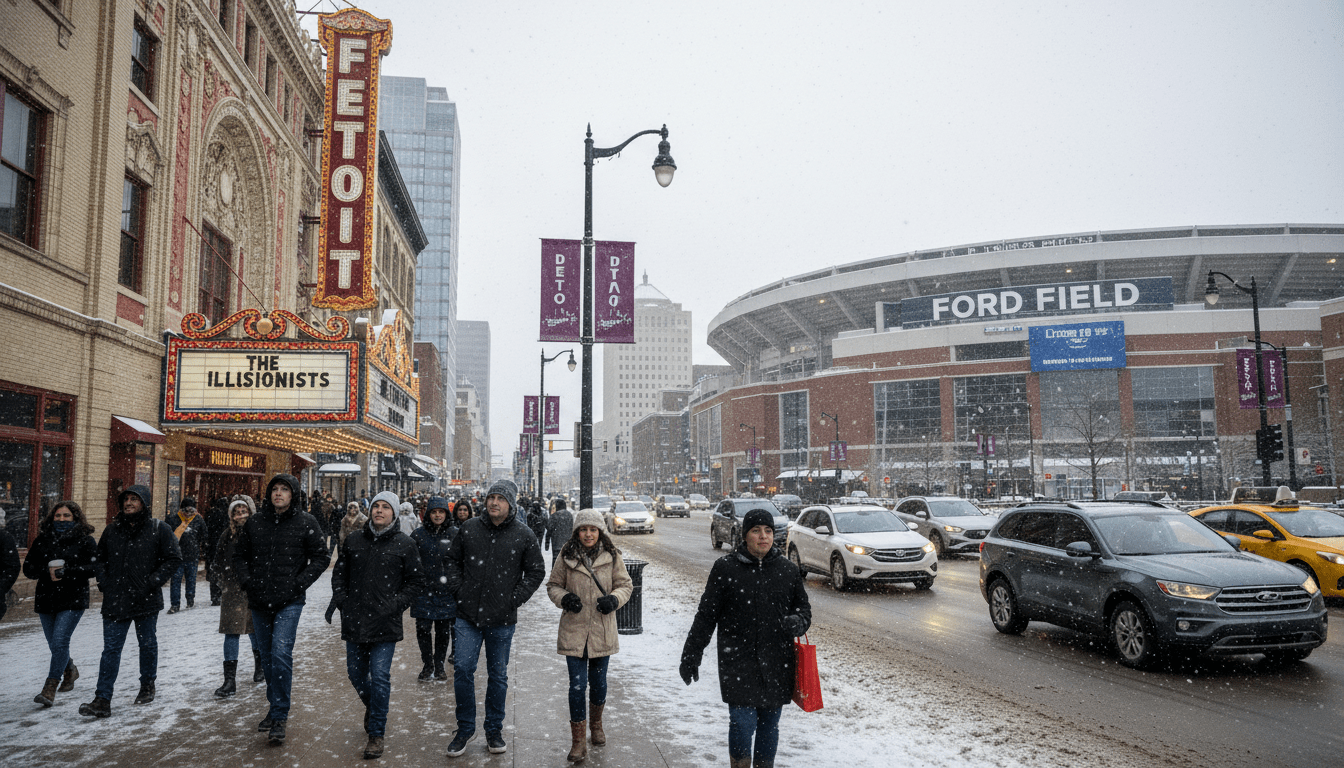
Downtown Detroit is preparing for one of its busiest weekends in recent history as a convergence of professional sports games and the highly anticipated return of the North American International Auto Show (NAIAS) promises to bring tens of thousands of visitors into the city’s core. Local officials and business owners are calling it a potential record-breaking period for foot traffic, signaling a robust post-pandemic recovery for the hospitality and retail sectors.
With the Detroit Lions hosting a critical home game at Ford Field, the Red Wings taking to the ice at Little Caesars Arena, and the doors opening at Huntington Place for the Auto Show, the density of events is creating a unique logistical challenge and economic opportunity. Data from the Downtown Detroit Partnership (DDP) suggests that foot traffic during similar "super weekends" has historically spiked by over 40% compared to average weekends, filling hotels and straining parking infrastructure.
Economic Impact on Local Business
For the city’s hospitality industry, the influx of downtown Detroit visitors represents a significant financial windfall. Restaurants in Corktown, Midtown, and the Central Business District are reporting reservation books that are nearly full days in advance. According to the Detroit Metro Convention & Visitors Bureau (Visit Detroit), major event weekends generate millions in direct spending, rippling out from ticket sales to dining, lodging, and transportation services.
Local business owners are gearing up for the rush. "When the Lions are playing and there is a convention at Huntington Place simultaneously, the energy is undeniable," said a manager at a popular Woodward Avenue restaurant. "We double our staffing levels because we know the turnover will be non-stop from lunch until late evening. It’s not just about the revenue; it’s about the atmosphere returning to the city."
Hotel occupancy is another key indicator of the surge. Reports indicate that downtown hotel inventory is nearing capacity, pushing visitors to book accommodations in surrounding suburbs like Southfield and Dearborn. This compression effect demonstrates the regional economic impact of Detroit’s ability to host multiple large-scale events simultaneously.
Impact on Detroit Residents
While the economic boost is welcome, the sudden rise in downtown Detroit visitors brings immediate challenges for local residents and daily commuters. The City of Detroit’s Department of Public Works has issued advisories regarding street closures and anticipated congestion, particularly along Jefferson Avenue and the I-375 interchange.
Residents living in the immediate downtown area report that parking becomes the primary friction point during these high-volume weekends. "It’s great for the city, but for those of us who live here, it means planning our day around the game schedules," noted a resident of the Brush Park neighborhood. "Surface lots that are usually empty skyrocket in price, and street parking becomes non-existent."
To mitigate these issues, city officials are urging locals and visitors alike to utilize public transit options. Read more about Detroit’s recent transportation infrastructure updates here. The QLINE and the Detroit People Mover are expected to operate at peak frequency to help move crowds between the distinct entertainment districts without adding more vehicles to the gridlock.
Background and Visitor Data
The resurgence of downtown traffic is backed by hard numbers. According to reports from the Downtown Detroit Partnership, the city has seen a steady year-over-year increase in visitors since 2022. The correlation between successful sports seasons—specifically the momentum of the Detroit Lions—and downtown revenue is statistically significant.
Furthermore, the Auto Show’s strategic scheduling plays a vital role. By aligning the show with the broader calendar of city events, organizers optimize the "stay and play" factor, encouraging attendees to extend their trips. Historical data from the U.S. Census Bureau regarding metropolitan mobility trends indicates that urban centers recovering from the pandemic see the fastest revitalization when entertainment districts reactivate fully. Detroit appears to be following this trajectory aggressively.
Parking and Logistics Strategy
The Municipal Parking Department has opened all available garage levels to accommodate the swell of vehicles. However, authorities advise that the most effective strategy for visitors is to arrive early—at least two to three hours before event start times. Rideshare designated zones have also been expanded near Ford Field and Huntington Place to prevent traffic bottlenecks.
What Happens Next
As Detroit continues to cement its reputation as a premier host city for major national events, the infrastructure will be tested. City planners are currently reviewing data from these high-volume weekends to improve traffic signal timing and pedestrian safety measures for future events.
The success of this weekend will likely serve as a case study for the upcoming NFL Draft and other major conventions slated for the coming years. For now, the focus remains on managing the current wave of enthusiasm. Click here to see how downtown business growth is adapting to these trends. With the spotlight firmly on the Motor City, the ability to handle thousands of simultaneous downtown Detroit visitors will prove crucial for the city’s long-term tourism strategy.