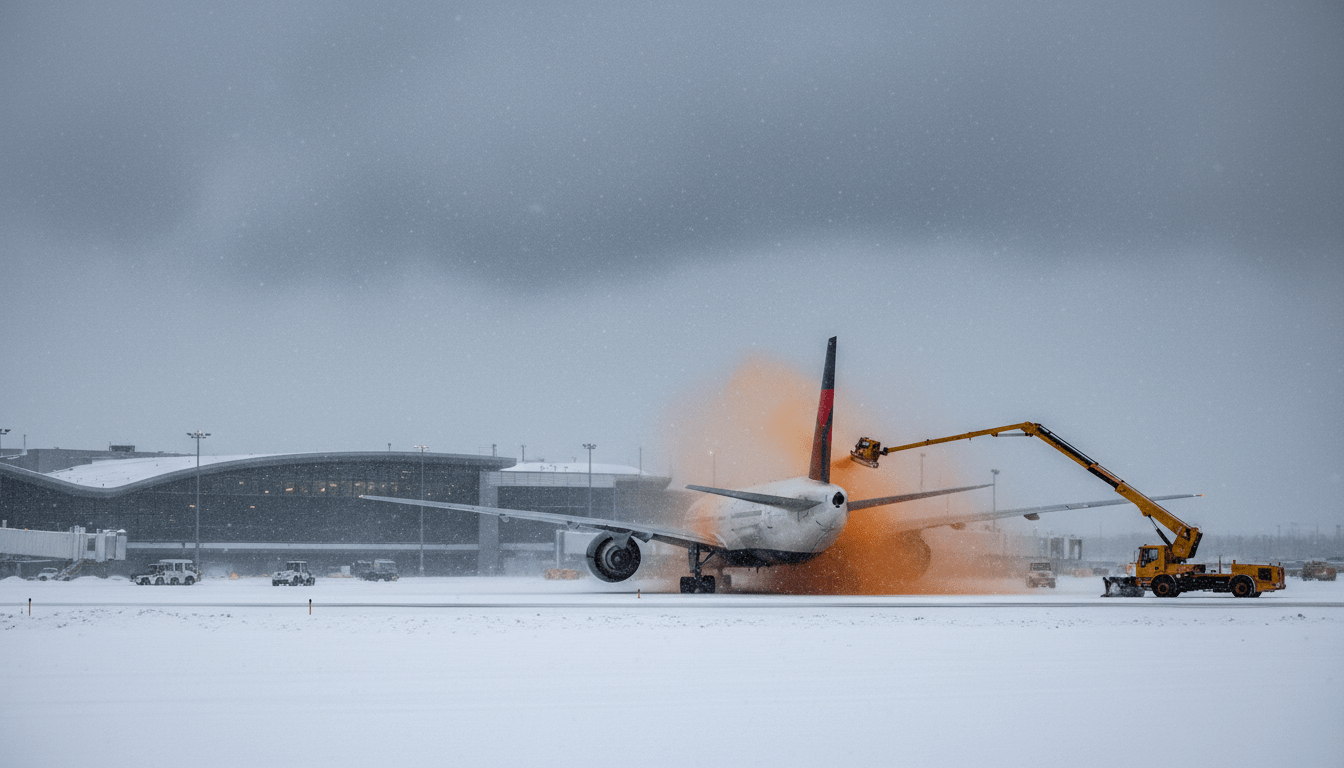
A sweeping winter storm system moving across the Great Lakes region has resulted in widespread disruption to air travel in Southeast Michigan, causing significant DTW airport delays and cancellations. As snow continues to accumulate on runways and visibility decreases, the Wayne County Airport Authority (WCAA) and major carriers are working to manage the logistical challenges at Detroit Metropolitan Wayne County Airport.
The National Weather Service issued a winter storm warning earlier this morning, predicting heavy snowfall rates that have severely impacted transportation infrastructure throughout the city. While road crews are battling conditions on I-94 and I-275, the situation on the tarmac at Metro Airport remains fluid, with safety protocols necessitating ground stops and extended taxi times.
The Current State of Operations at Metro Airport
According to flight tracking data from FlightAware, hundreds of flights originating from or destined for Detroit have been delayed or canceled as of midday. The primary cause for the slowdown is the time-intensive de-icing process required for every aircraft departing in freezing precipitation, combined with the need for constant plowing of runways and taxiways.
Officials from the Wayne County Airport Authority have noted that while the airport technically remains open 24 hours a day, flight schedules are entirely dependent on airline decisions and FAA safety regulations. When visibility drops below certain minimums, the Federal Aviation Administration (FAA) may implement ground delay programs to space out arriving traffic, which inevitably causes a ripple effect on departures.
Delta Air Lines, which operates its second-largest hub at the McNamara Terminal, has reported a significant number of schedule adjustments. Spirit Airlines, operating out of the Evans Terminal, has also seen a cascading effect on its network due to the weather in Detroit.
Impact on Detroit Travelers
For Detroit residents attempting to leave for vacation or business, the storm has created a scene of frustration inside the terminals. Long lines have formed at customer service desks as passengers scramble to rebook connections. The impact extends beyond just missed flights; many locals are facing difficulties simply reaching the airport due to hazardous driving conditions on Metro Detroit freeways.
Local traveler advocacy groups and frequent flyers have taken to social media to share their experiences, with many noting that while staff are working hard, the sheer volume of snow is overwhelming standard operations. Passengers stuck on the tarmac waiting for de-icing or a clear gate have reported wait times exceeding an hour in some instances.
For those interested in how this weather event is affecting ground transportation, you can read our coverage on Detroit road conditions and snow plow tracking to determine the safest routes to the airport.
Managing DTW Airport Delays: Waivers and Tips
In response to the severity of the storm, major airlines operating out of DTW have issued travel waivers. These waivers typically allow passengers scheduled to fly during the storm window to change their flight dates without paying a change fee or fare difference, provided the travel remains in the same cabin class and originates/departs from the same cities.
Travelers are advised to take the following steps:
- Check Flight Status Remotely: Before leaving for Romulus, passengers should verify their flight status via the airline’s mobile app or the official Detroit Metro Airport website. This prevents unnecessary trips to the airport if a flight is already canceled.
- Arrive Early: For flights that are still scheduled, TSA lines may be unpredictable as passengers from canceled flights crowd security checkpoints. The standard two-hour recommendation should be extended to three hours during severe weather events.
- Monitor Road Closures: The journey to the airport is often as treacherous as the flight delays. Check local traffic reports for accidents on the access roads leading to the Blue Deck and McNamara parking structures.
Background: Infrastructure and Snow Removal
Detroit Metropolitan Airport is well-equipped to handle winter weather compared to southern hubs, but high-intensity snowfall rates can challenge even the most robust infrastructure. The WCAA maintenance teams utilize a fleet of high-speed runway brooms and plows designed to clear the airfield rapidly. However, when snow falls at a rate of one inch per hour or more, crews must make repeated passes to keep pavement friction levels within safe FAA tolerances.
The economics of these delays are also significant for the region. As a major logistics hub, DTW airport delays affect not just passenger travel but also cargo operations. Local businesses relying on just-in-time delivery may experience disruptions in their supply chains as cargo flights are grounded alongside commercial jets.
Historical data from the Bureau of Transportation Statistics indicates that weather is the leading cause of delays in the national airspace system during the winter months, with hub airports like Detroit, Chicago, and Minneapolis often bearing the brunt of these disruptions due to their geographic location in the snow belt.
What Happens Next
Meteorologists predict that the snow system will begin to taper off by late evening, allowing airport operations to gradually return to normal. However, the backlog of passengers from canceled flights will likely take 24 to 48 hours to clear. Airlines will prioritize getting stranded crews and aircraft back into position to resume full schedules.
Travelers holding tickets for the next few days should continue to monitor their email and airline apps for updates. As the weather clears, the focus will shift from snow removal to de-icing aircraft that have been parked overnight, which may continue to cause minor delays in the early morning hours following the storm.