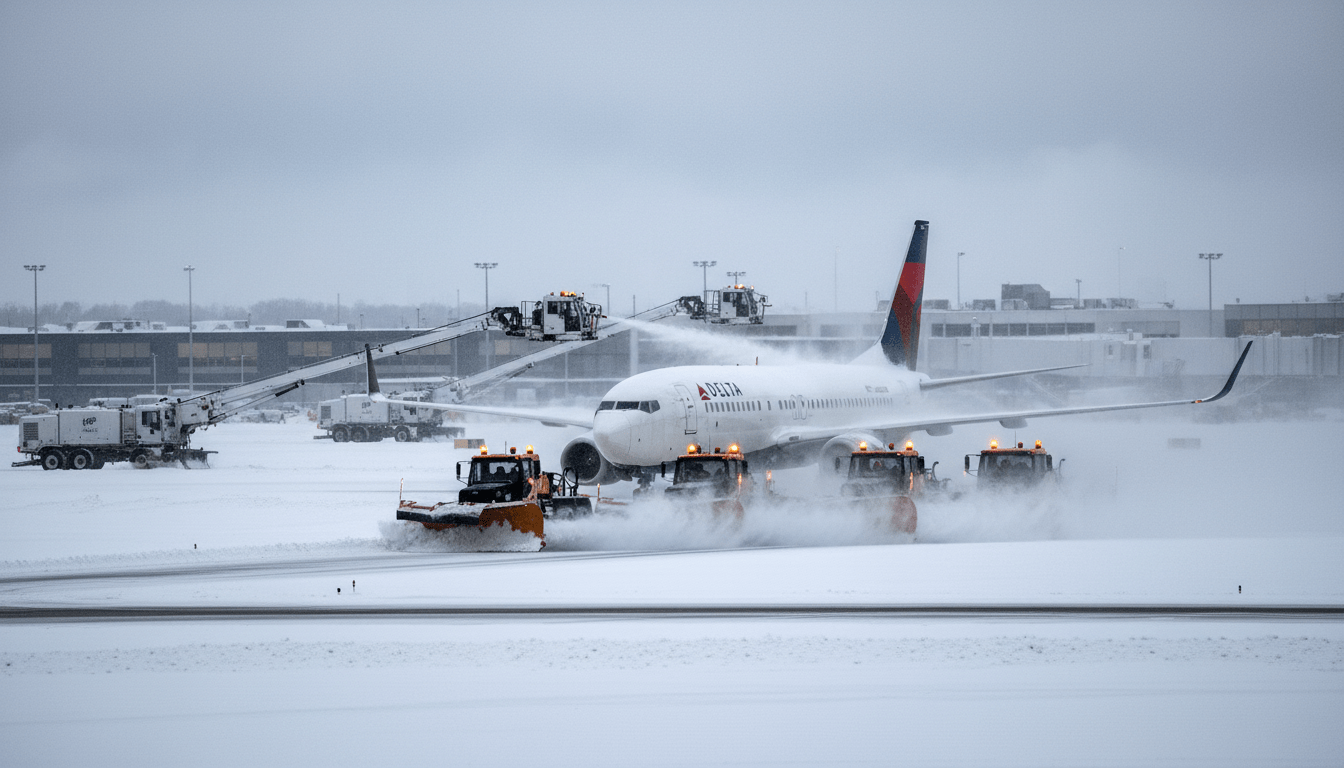
A severe winter weather system sweeping through Southeast Michigan has resulted in widespread logistical challenges, causing significant DTW flight delays and treacherous driving conditions on major arteries including I-94 and I-75. As snow accumulation and freezing temperatures persist, the Wayne County Airport Authority and local transportation officials are urging travelers to exercise extreme caution and verify schedules before leaving home.
The sudden drop in temperature, accompanied by a mix of sleet and heavy snow, began impacting the region early Tuesday morning. By midday, Detroit Metropolitan Wayne County Airport (DTW) reported hundreds of delays and dozens of cancellations as de-icing crews worked continuously to keep runways operational.
DTW Flight Delays and Airport Operations
Travelers moving through the Edward H. McNamara Terminal and the Evans Terminal faced mounting frustration as departure boards turned red. According to data from flight tracking service FlightAware, approximately 20% of flights originating from Detroit were delayed, with inbound traffic facing similar disruptions due to ground stops imposed by the Federal Aviation Administration (FAA) earlier in the day.
A spokesperson for the Wayne County Airport Authority emphasized that safety remains the primary concern. “Our maintenance crews are working around the clock to clear runways and taxiways,” the statement read. “However, visibility issues and the necessary time required for aircraft de-icing procedures are contributing to the current schedule changes. We strongly advise passengers to check with their airlines before heading to the airport.”
The ripple effect of the storm is being felt beyond Detroit. As a major Delta Air Lines hub, disruptions at DTW are causing cascading delays across the national network. Passengers connecting through Detroit are being advised to download their airline’s mobile app for the most real-time rebooking options.
Hazardous Commute on I-94 and Local Freeways
While the skies remain turbulent, conditions on the ground are equally precarious. The Michigan Department of Transportation (MDOT) has deployed its full fleet of salt trucks and plows across Metro Detroit, yet the rate of snowfall has made it difficult to maintain clear pavement on high-volume routes.
I-94, the primary artery connecting the city to the airport, has seen significantly reduced speeds and multiple minor accidents near the Merriman Road exit. Similarly, traffic on I-75 and I-696 has slowed to a crawl during peak commuting hours. According to MDOT’s Mi Drive map, several incidents involving spin-outs were reported, particularly on exit ramps where black ice tends to form quickly.
Local law enforcement agencies have issued advisories asking residents to limit non-essential travel. “The roads are slick, and visibility is low,” a representative from the Michigan State Police stated during a press briefing. “If you do not need to be on the roads, please stay home to allow MDOT crews the space they need to work effectively.”
Impact on Detroit Residents and Economy
The disruption affects more than just vacationers and business travelers. For Detroit residents, the storm creates a logistical bottleneck that impacts daily life and local commerce. Supply chain logistics relying on just-in-time delivery via the region’s trucking corridors face slowdowns, potentially delaying goods reaching local retailers.
Furthermore, the surge in transportation infrastructure challenges leads to increased costs for commuters. Ride-share prices from downtown Detroit to Romulus surged nearly 40% during the peak of the storm due to high demand and difficult driving conditions. For hourly workers relying on timely transit, delays can result in lost wages or disciplinary issues.
“It took me two hours to get from Southfield to the airport to pick up my sister,” said Mark Davison, a resident of Ferndale waiting in the cell phone lot. “The roads haven’t been this bad in years. You see the plows, but the snow is just coming down too fast.”
Background & Data: Understanding Winter Operations
Managing winter operations in a northern aviation hub is a complex, data-driven undertaking. According to the FAA, weather is responsible for nearly 70% of all flight delays in the National Airspace System. In Detroit, this involves a massive coordination of resources.
DTW’s winter operations team typically utilizes thousands of gallons of biodegradable glycol-based fluid for de-icing aircraft and potassium acetate for runways. The process is time-consuming; de-icing a single wide-body aircraft can take between 15 to 30 minutes depending on the severity of the ice accumulation, directly contributing to the queue of DTW flight delays.
Historically, January and February are the most challenging months for Detroit travel. Data from the Bureau of Transportation Statistics indicates that on-time performance at DTW drops by an average of 12% during severe winter weather events compared to the annual average. This statistical trend aligns with the current delays, suggesting that while frustrating, the situation is within the operational norms for a major winter event in the Great Lakes region.
What Happens Next: Outlook and Advice
Meteorologists predict that the system will move out of the region by late Wednesday evening, but freezing temperatures will remain. This creates a risk of “refreezing” on wet roads overnight, potentially making the Wednesday morning commute even more hazardous than Tuesday’s.
For travelers holding tickets for the next 24 hours:
- Check Status Early: Do not rely on the departure time printed on your ticket.
- Allow Extra Time: Plan for double the usual travel time to reach the terminal via I-94.
- Know Your Rights: Many airlines have issued travel waivers allowing passengers to change their flight dates without penalty due to the storm.
DetroitCityNews.com will continue to monitor the situation. For updates on how the city plans to improve winter road resilience in the future, read our report on Detroit’s upcoming budget and municipal planning.