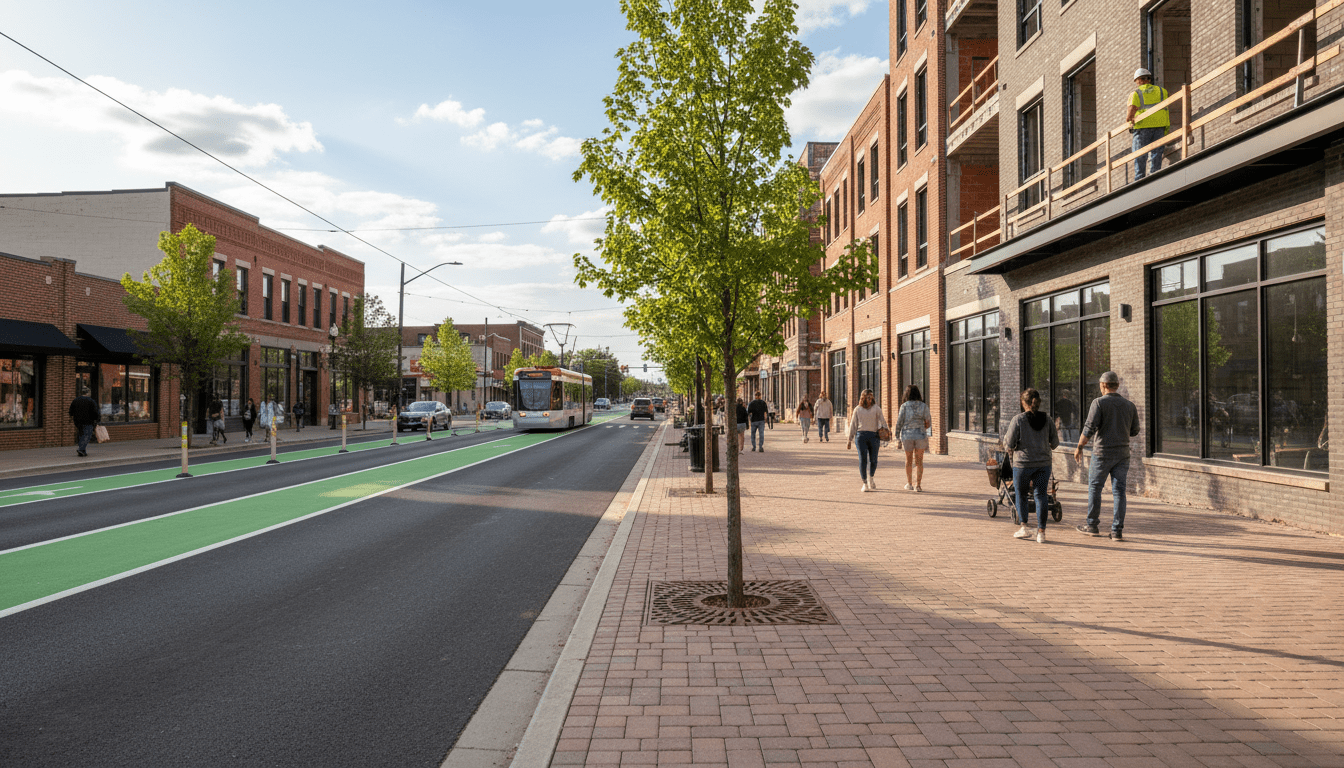
Residents and business owners along Detroit’s East Warren Avenue are beginning to see the tangible results of a multi-year planning effort, as construction crews finalize significant portions of the corridor’s streetscape overhaul. The changes, part of the city’s Strategic Neighborhood Fund (SNF) initiative, mark a pivotal moment for the Morningside, East English Village, and Cornerstone Village neighborhoods. As heavy machinery reshapes the roadway, the long-term economic strategy for this stretch of the Far East Side is coming into sharp focus.
The transformation of East Warren is not merely cosmetic. It represents a coordinated effort by the City of Detroit and Invest Detroit to condense commercial activity, improve pedestrian safety, and stimulate mixed-use development in an area that has historically served as a critical commercial artery. With the streetscape project nearing completion and new real estate developments breaking ground, the corridor is becoming a case study in Detroit’s localized economic recovery model.
Strategic Neighborhood Fund Drives Investment
The driving force behind the changes is the Strategic Neighborhood Fund (SNF), a partnership between the City of Detroit and Invest Detroit, a Community Development Financial Institution (CDFI). The initiative focuses on targeted investments in specific corridors to spur density and walkability. According to planning documents released by the City of Detroit Planning and Development Department, the goal is to create “20-minute neighborhoods” where residents can access essential goods and services within a short walk or bike ride.
The East Warren revitalization plan includes an approximate $8.8 million investment in streetscape improvements. These changes involve a “road diet,” reducing the number of traffic lanes to accommodate protected bike lanes, improved on-street parking, and wider sidewalks for outdoor dining and pedestrian traffic. Officials state that these infrastructure updates are designed to slow traffic speeds, which have long been a complaint of residents in the adjacent residential blocks.
In addition to public infrastructure, the SNF designation has unlocked capital for private development. Most notably, the E. Warren Development Corporation (EWDC) has moved forward with “The Ribbon,” a $6 million mixed-use development. Once completed, this project is slated to bring 18 units of affordable housing and retail space to the corridor, addressing a critical need for high-quality residential options that remain accessible to long-term Detroiters.
Impact on Detroit Residents and Local Business
For the residents of the 48224 zip code, the construction phase has been a double-edged sword, bringing both the promise of renewal and the frustration of disruption. However, as the barrels move and the new street layout emerges, the sentiment is shifting toward cautious optimism regarding accessibility and safety.
Local business owners have noted that the previous configuration of East Warren acted as a thoroughfare that encouraged drivers to speed through the neighborhood rather than stop and shop. By slowing traffic and enhancing lighting, the city aims to increase foot traffic for legacy businesses. According to data from the Detroit economic development sector, corridors that undergo similar streetscape improvements typically see a 15% to 20% increase in small business revenue within two years of completion.
“The walkability factor is huge for us,” said a representative from a local neighborhood association during a recent community meeting. “For years, crossing East Warren was dangerous. Now, with the designated crosswalks and the bike lanes, it feels like a part of the neighborhood again, rather than a highway cutting through it.”
However, concerns regarding property taxes and gentrification remain prevalent. While the development is intended to serve current residents, rising property values in Morningside and East English Village are being monitored closely. The city has emphasized that the inclusion of affordable housing units, specifically those at 80% or below the Area Median Income (AMI), is a safeguard to ensure inclusivity.
Background & Market Data
The East Warren corridor revitalization is occurring against a backdrop of a stabilizing housing market in Detroit’s outer neighborhoods. Data from the Detroit Metro Area Realtors suggests that while the frenetic price jumps of 2021 have cooled, the East English Village and Morningside areas remain among the most stable and desirable markets in the city for middle-income buyers.
The commercial vacancy rate along the corridor, which had spiked over the last decade, is showing signs of reversal. The SNF model relies on a “hub and spoke” approach, concentrating investment in key nodes rather than spreading resources too thin. The node at East Warren and Courville serves as the primary anchor for this strategy.
According to Invest Detroit, the Strategic Neighborhood Fund has leveraged over $100 million in philanthropic and public funding to generate considerably more in private investment across all ten designated SNF zones. The East Warren project follows successful implementations in areas like the Avenue of Fashion and Livernois, suggesting a replicable blueprint for neighborhood stabilization.
Future Outlook for the Far East Side
As the heavy construction wraps up, the focus shifts to programming and tenant acquisition. The E. Warren Development Corporation is actively working to support entrepreneurs looking to occupy the newly renovated storefronts. This includes providing technical assistance and connecting business owners with Detroit business grants like Motor City Match.
Looking ahead, the success of the East Warren revitalization will likely be measured not just by the quality of the pavement, but by the sustainability of the businesses that open in the coming year. If the corridor can attract a diverse mix of retail, dining, and services while maintaining housing affordability, it will validate the city’s strategy of neighborhood-centric economic development. For now, the fresh asphalt and new streetlights serve as a tangible signal that investment in Detroit is extending well beyond the downtown core.