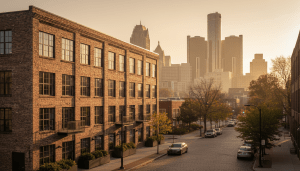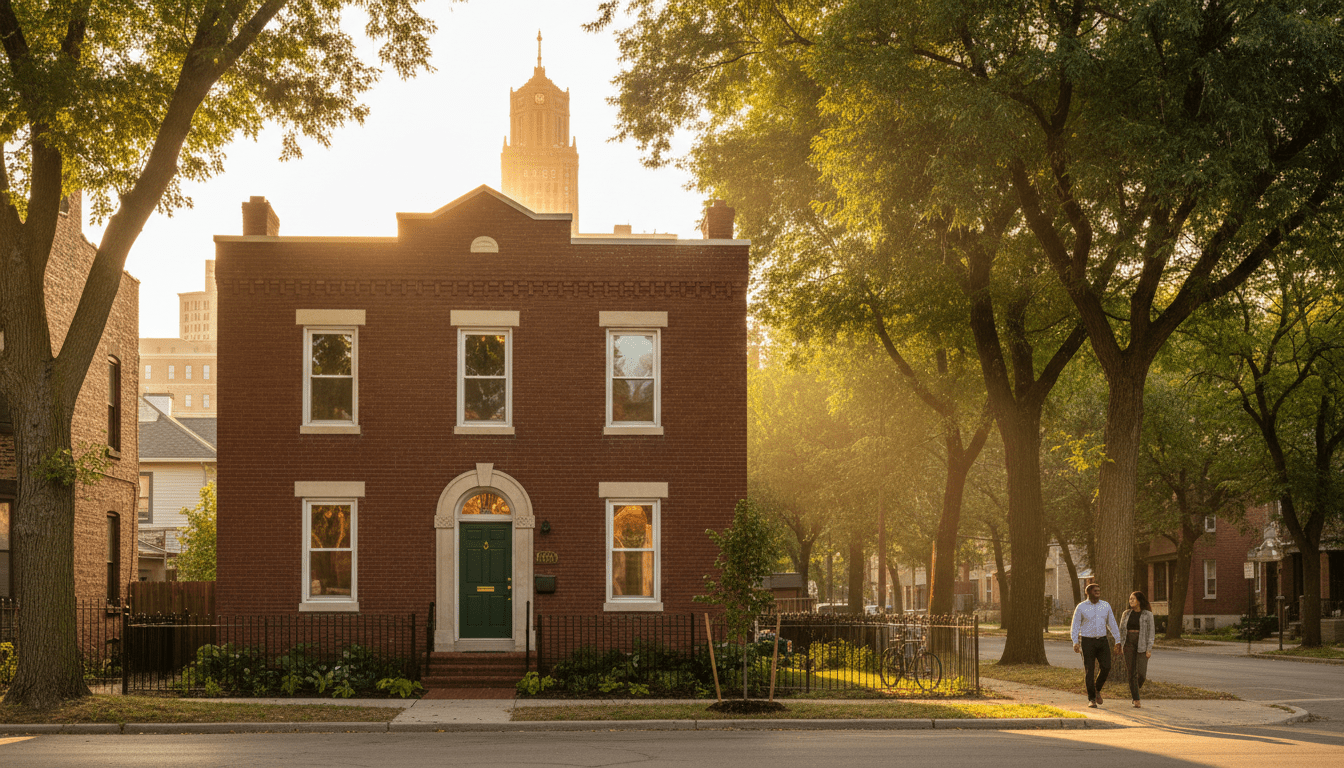
While the resurgence of Downtown and Midtown has dominated headlines for the past decade, a significant shift in capital and development focus is now transforming emerging Detroit neighborhoods outside the central business district. New data from local housing non-profits and city planning documents suggest that the next phase of Detroit’s revitalization is taking root in historic areas like the North End and Jefferson Chalmers, driven by the Strategic Neighborhood Fund and a changing real estate market.
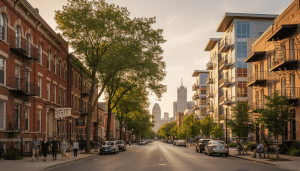
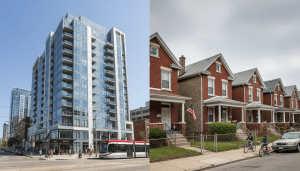
For years, the narrative of Detroit’s comeback was largely confined to the “7.2 square miles” of the city center. However, rising commercial rents downtown and a saturated luxury housing market in Midtown have pushed developers and homebuyers to look outward. This spillover effect, combined with deliberate city initiatives to create “20-minute neighborhoods,” is rapidly altering the landscape of the city’s housing market.
According to the City of Detroit’s Housing and Revitalization Department, the focus has pivoted toward stabilizing middle neighborhoods—areas that have retained population density but suffered from a lack of commercial amenities. The goal is not just to attract new residents, but to restore walkability and services for long-term Detroiters.
The North End: Heritage and Connectivity
Perhaps no area exemplifies this trend better than the North End. Located immediately north of the New Center area and bordering the wealthy enclave of Boston-Edison, the North End is seeing a flurry of renovation permits and commercial interest. Historically known as an entertainment hub and the childhood home of musical legends like Smokey Robinson, the neighborhood is leveraging its proximity to the QLINE and major medical institutions.
“The North End is unique because it offers the density and architectural character that people love about Midtown, but at a price point that still allows for value-add development,” said a representative from a local community development corporation. “We are seeing a mix of single-family rehabilitations and multi-family adaptive reuse projects that were stagnant five years ago.”
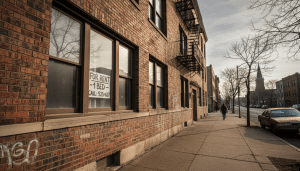
Recent listings indicate that shell properties in the area, once selling for nominal amounts, are now commanding competitive prices, reflecting investor confidence. However, unlike the speculative buying of the early 2010s, current activity appears more focused on actual construction and occupancy, driven in part by the city’s blight remediation efforts.
Jefferson Chalmers: Waterfront Revitalization
On the city’s east side, Jefferson Chalmers is emerging as a critical test case for balancing development with environmental resilience. Known as “Detroit’s Little Venice” due to its canal system feeding into the Detroit River, the neighborhood is attracting attention for its unique waterfront lifestyle and historic commercial corridor along Jefferson Avenue.
The revitalization here is twofold: commercial stabilization and residential renovation. The targeted investment in the commercial corridor aims to bring grocery stores and dining options back to the area. Meanwhile, residential interest has spiked as homebuyers seek waterfront access that is virtually nonexistent elsewhere in the region at comparable price points.
However, development in Jefferson Chalmers faces unique challenges. Rising water levels in the Great Lakes have necessitated significant infrastructure investment. Detroit infrastructure upgrades are currently underway to install tiger dams and improve pumping stations, ensuring that new investments are not washed away. This interplay between climate resilience and real estate development makes Jefferson Chalmers a neighborhood of national interest for urban planners.
Impact on Detroit Residents
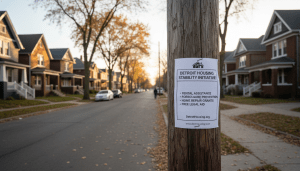
The rapid appreciation of property values in these emerging Detroit neighborhoods raises critical questions for long-time residents. The primary concern among community advocacy groups is the potential for displacement due to rising property taxes, despite the city’s capped assessment increases for existing homeowners.
To mitigate these risks, city officials point to the Homeowners Property Exemption (HOPE) and the Detroit Tax Relief Fund. “The objective is revitalization without relocation,” stated a spokesperson for the Detroit Economic Growth Corporation (DEGC) in a recent press briefing. “We are prioritizing developers who include affordable housing units in their plans, specifically targeting Area Median Income (AMI) levels that reflect the actual population of Detroit, not just the region.”
Local business owners are cautiously optimistic. For many, the influx of new capital means the return of foot traffic and the viability of opening brick-and-mortar shops that were previously unsustainable. “We need the density,” said a business owner on Livernois, another corridor seeing significant activity. “We need neighbors who shop locally to keep the lights on.”
Market Data and Trends
Data supports the anecdotal evidence of this geographic shift. Reports from the local multiple listing service (MLS) show that while inventory remains tight across the city, the days-on-market for move-in ready homes in neighborhoods like the North End, Jefferson Chalmers, and Bagley has decreased significantly over the last 12 months.
Furthermore, the gap between appraisal values and construction costs—the “appraisal gap” that has historically plagued Detroit financing—is beginning to close in these specific pockets. This is a crucial development; when homes appraise for the cost of renovation, it unlocks traditional mortgage lending, reducing the reliance on cash-only buyers and opening the market to owner-occupants.
For a deeper analysis of these financial shifts, readers can review our coverage on the Detroit housing market forecast, which details how interest rates are impacting local lending availability.
What Happens Next?
As 2024 progresses, the trajectory for these neighborhoods seems set on cautious growth. The completion of several flagship projects funded by the Strategic Neighborhood Fund 2.0 is expected to serve as a catalyst for further private investment. However, the sustainability of this growth will depend heavily on the broader economic climate and the continued effectiveness of the city’s anti-displacement measures.
For Detroit, the rise of these neighborhoods represents a normalization of the housing market—a move away from the boom-and-bust cycles of the past toward a more distributed, city-wide recovery. Whether this recovery can remain inclusive for legacy residents remains the most important story to watch.