
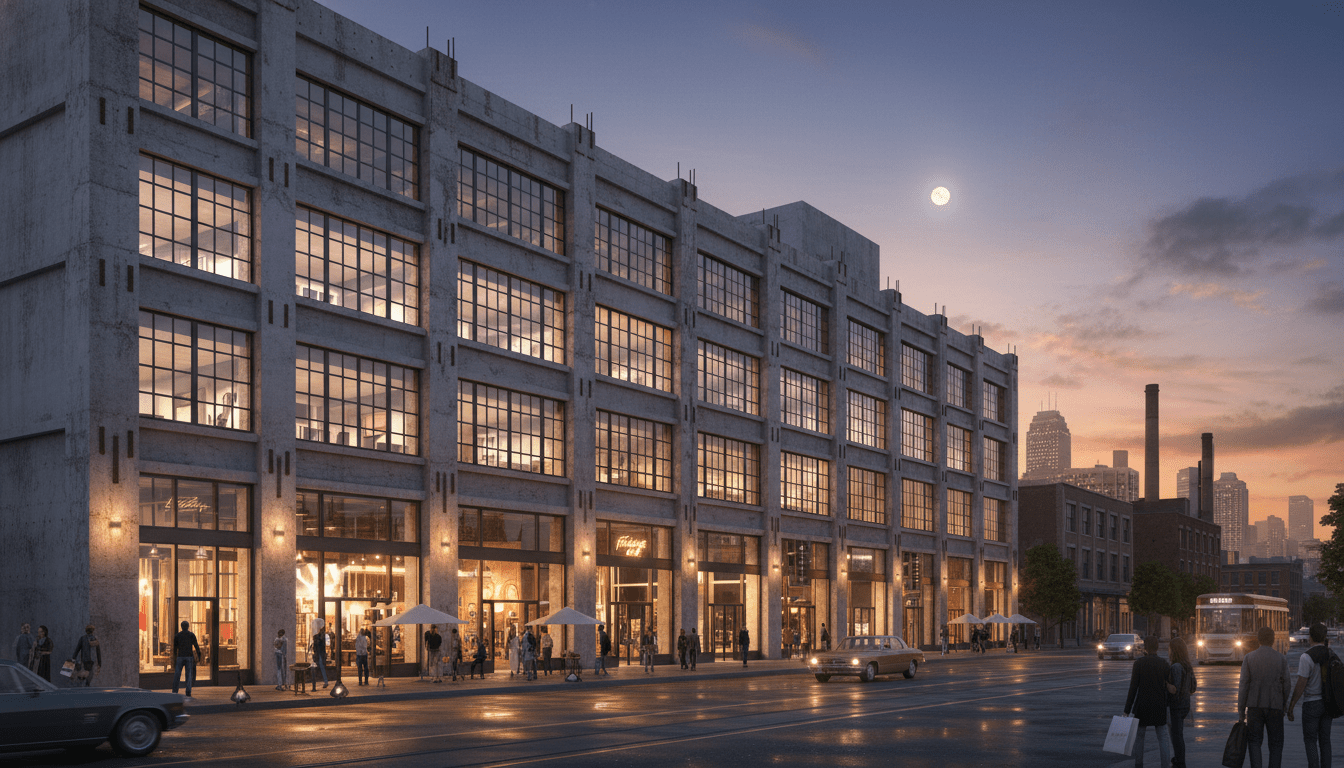
One of Detroit’s most recognizable industrial ruins is inching closer to a new chapter as the Fisher 21 Lofts project advances in the Milwaukee Junction neighborhood. The $134 million redevelopment plan aims to convert the long-vacant Fisher Body No. 21 plant into a mixed-use complex featuring hundreds of residential units and commercial space, marking the largest African American-led development deal in the city’s history.
Revitalizing a Historic Industrial Icon
Standing at Piquette and St. Antoine streets, the Fisher Body No. 21 plant has been a symbol of Detroit’s automotive rise and subsequent rust-belt decline since it ceased operations decades ago. The redevelopment team, a joint venture between developers Gregory Jackson of Jackson Asset Management and Richard Hosey of Hosey Development, plans to rehabilitate the 600,000-square-foot structure rather than demolishing it.
According to the City of Detroit, the project will preserve the historic reinforced concrete frame while installing new windows, mechanical systems, and interior layouts suited for modern living. The renovation is viewed as a critical anchor for Milwaukee Junction, an area that has seen increased interest following similar successes in the nearby New Center district.
Impact on Residents and Affordability
A central component of the Fisher 21 Lofts proposal is the inclusion of mixed-income housing. The development is slated to bring 433 apartments to the market. Of these, at least 20 percent will be reserved as affordable housing for residents earning 80 percent of the Area Median Income (AMI).
“This project is not just about saving a building; it is about creating accessible housing options within a historic framework,” stated a spokesperson for the Planning and Development Department during a recent community update. This alignment with broader city goals mirrors other Detroit affordable housing initiatives currently underway to combat rising rental costs in the greater downtown area.
Economic Implications for Milwaukee Junction
Beyond housing, the project is expected to generate significant economic activity. The site plans include roughly 28,000 square feet of commercial retail space and 15,000 square feet of co-working space. Local economists suggest that the density provided by the new residential units will support existing small businesses and attract new ventures to the corridor.
The development is also expected to create hundreds of temporary construction jobs and dozens of permanent property management and retail positions. This influx of capital complements the city’s wider strategy to boost neighborhood economic development beyond the immediate riverfront.
What Happens Next
With financing layers involving federal historic tax credits and brownfield tax increment financing (TIF) being finalized, remediation work on the site is the immediate priority. The removal of hazardous materials from the former industrial site is a prerequisite before structural renovations can begin in earnest.
If the current timeline holds, the developers anticipate substantial completion of the Fisher 21 Lofts by late 2026, finally turning the lights back on in a building that has been dark for nearly thirty years.