
By Sarah Jenkins
Published: October 24, 2025
Location: Detroit, Michigan
Ford EV Strategy Shifts Focus to Hybrids Amid Market Changes
Ford Motor Company, a cornerstone of Detroit’s economy, is recalibrating its approach to electrification. As the automotive industry faces fluctuating demand and intense competition, the Dearborn-based automaker is adjusting its Ford EV strategy to prioritize profitability and flexibility, a move that has significant implications for manufacturing facilities across Southeast Michigan.
While the transition to electric vehicles (EVs) remains a long-term goal, recent announcements from Ford leadership suggest a tactical pivot toward hybrid vehicles and a more measured rollout of fully electric models. This shift aims to balance the company’s commitment to sustainability with the immediate financial realities of the current automotive market.
The Pivot to Hybrid Technology
For years, the industry narrative focused almost exclusively on a rapid transition to battery-electric vehicles. However, data from recent quarterly reports indicates that consumer adoption has not kept pace with the aggressive production targets initially set by many automakers.
According to statements from Ford CEO Jim Farley during recent earnings calls, the company is seeing robust demand for its hybrid offerings. The automaker plans to lean heavily into this segment, utilizing its “Ford Blue” division—responsible for internal combustion and hybrid vehicles—to fund the future growth of its “Model e” electric unit.
“We are listening to our customers,” a Ford spokesperson noted in a recent press briefing. “The transition to electric is happening, but the path is not a straight line. Hybrids offer a bridge for many consumers who are not yet ready for full electrification due to charging infrastructure concerns or price points.”
This strategic adjustment involves delaying capital spending on certain pure EV platforms while increasing the production capacity for hybrid versions of popular models, such as the F-150 and the Maverick.
Impact of Ford EV Strategy on Detroit Jobs
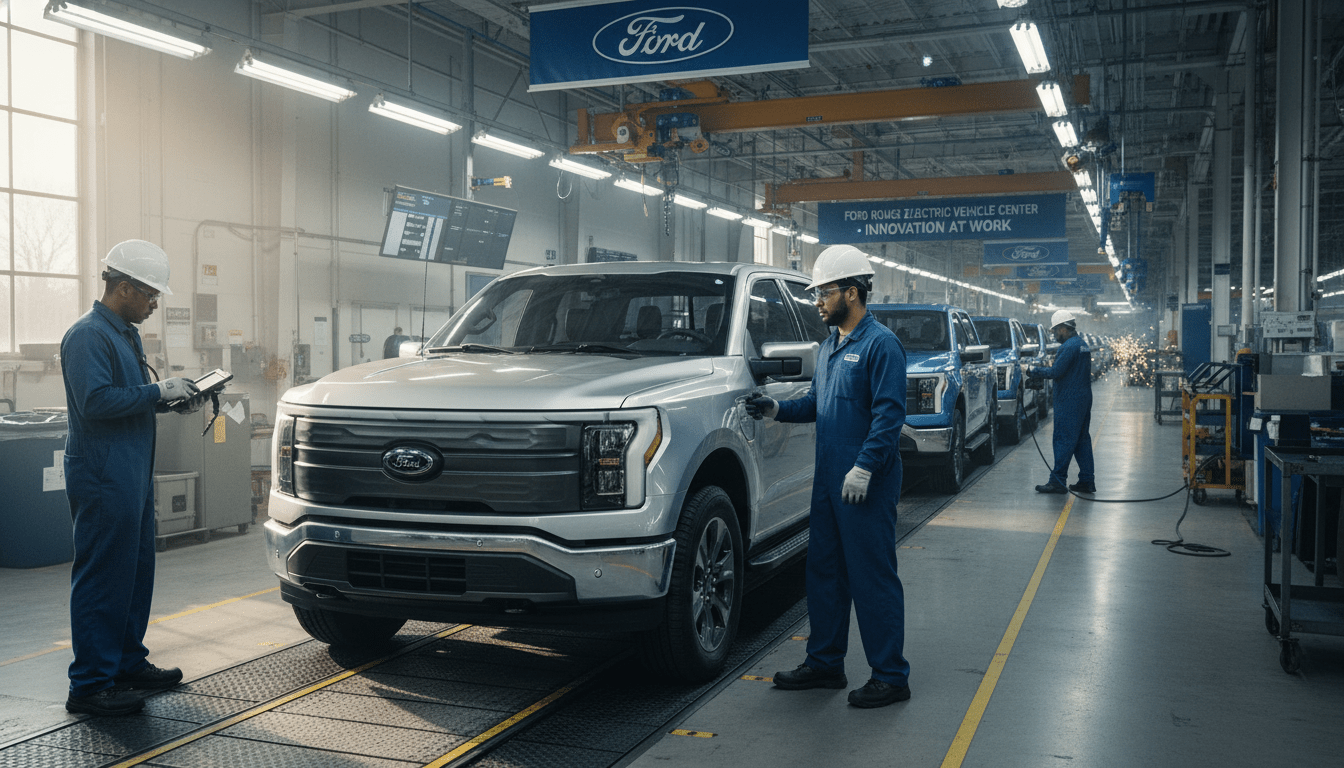
For the workforce in and around Detroit, these strategic shifts translate into tangible changes on the factory floor. The Rouge Electric Vehicle Center in Dearborn, the home of the F-150 Lightning, has already seen adjustments in production shifts to align with current demand levels.
Local reaction has been mixed. While some industry analysts view the pivot as a necessary safeguard for the company’s financial health, labor representatives are closely monitoring how these changes affect job security.
“Our priority remains the stability of our members,” said a representative from a local UAW chapter. “We understand market shifts, but we expect Ford to honor its commitments to Michigan manufacturing jobs, whether those vehicles are electric, hybrid, or gas-powered.”
The impact is also felt in the supply chain. Local suppliers in Detroit who retooled for EV-specific components are now having to remain agile, maintaining production for internal combustion engine parts longer than initially anticipated.
Financial Realities and Market Data
The financial bifurcation of Ford into distinct business units has shed light on the profitability challenges within the EV sector. Financial disclosures show that while the traditional engine business remains highly profitable, the EV division has incurred significant losses attributed to research, development, and tooling costs.
According to data from Ford Media Center reports, the company is aiming to reduce losses in the Model e division by strictly controlling costs and focusing on smaller, more affordable electric vehicles rather than large, expensive electric SUVs that require massive battery packs.
This cost-discipline approach is central to the revised Ford EV strategy. By slowing the ramp-up of certain EV models, Ford aims to avoid the pitfalls of overproduction that have plagued other sectors of the tech and auto industries.
What Happens Next for the Motor City?
Despite the near-term adjustments, Ford insists it is not abandoning its electric future. Construction continues at the BlueOval Battery Park Michigan in Marshall, though the scope of the project has been resized to match the revised demand forecast.
For Detroit residents, the message is one of cautious adaptation. The city remains the hub of American automotive innovation, but the definition of that innovation is broadening to include a diverse mix of powertrains.
As the company navigates this complex transition, DetroitCityNews.com will continue to monitor how developments in the auto sector impact the local economy, housing market, and workforce.