
By Staff Reporter
Published: October 24, 2024
Location: Detroit, Michigan
General Motors to Relocate Detroit Headquarters to Hudson’s Detroit in Historic Shift
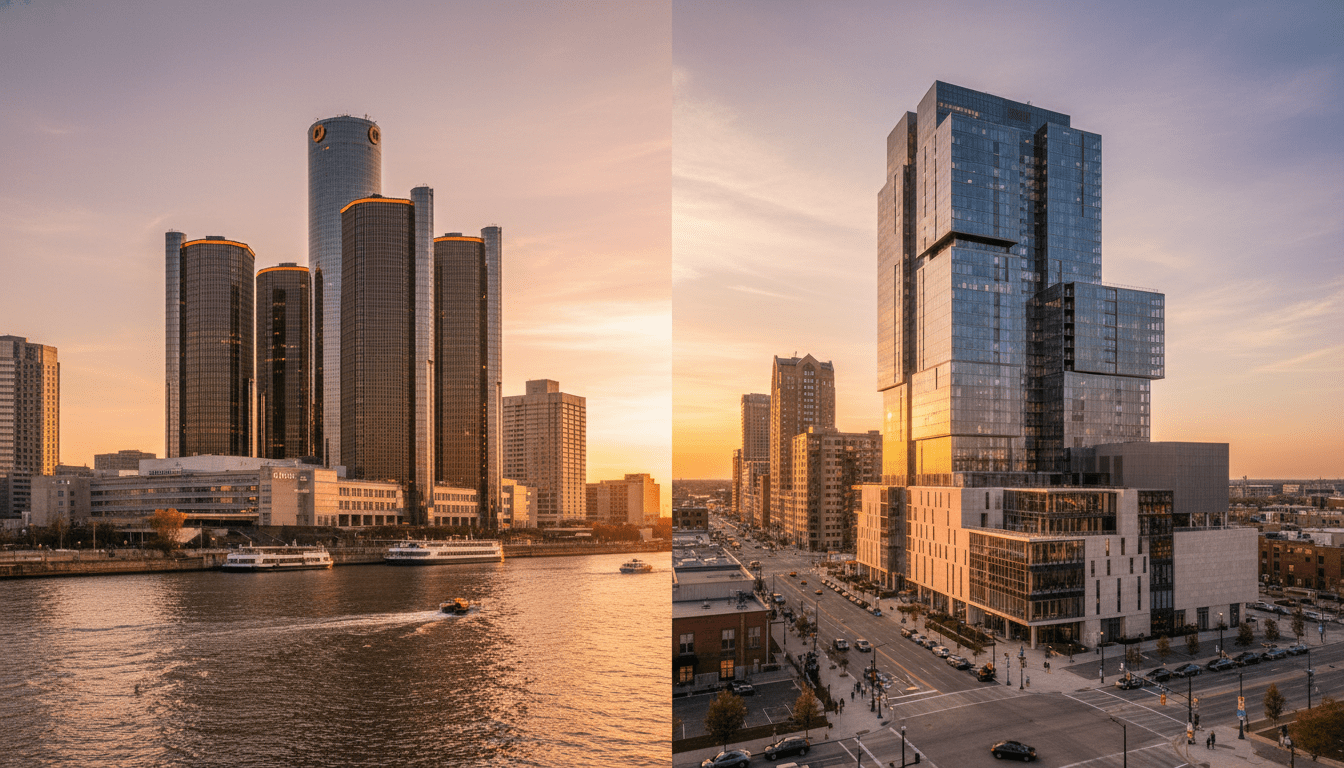
General Motors (GM) has officially confirmed plans to move its global headquarters from the iconic Renaissance Center on the riverfront to the newly constructed Hudson’s Detroit development on Woodward Avenue. The move marks one of the most significant shifts in the Detroit real estate landscape in decades, signaling a new era for the automaker and the city’s downtown core.
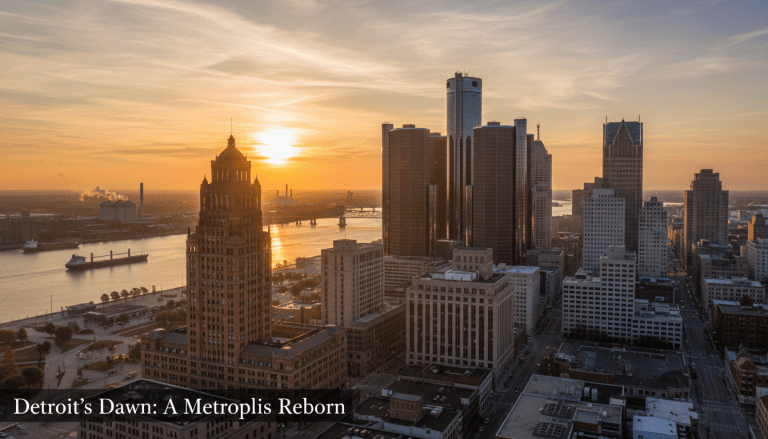
For nearly 30 years, the Renaissance Center has served as the visual and operational heart of the General Motors Detroit headquarters. However, as the company embraces flexible work environments and seeks to integrate more deeply into the walkable fabric of the city, the move to the Hudson’s site—developed by Dan Gilbert’s Bedrock—represents a strategic pivot toward modernization.
A New Home on Woodward Avenue
According to statements released by GM and Bedrock, the automaker will become the anchor tenant at Hudson’s Detroit. The decision places GM directly on the site of the former J.L. Hudson Department Store, a location that holds deep historical significance for Detroiters.
GM Chair and CEO Mary Barra emphasized the company’s continued commitment to the city. By securing a 15-year lease at the state-of-the-art facility, GM aims to foster a more collaborative work environment. The new space is designed to accommodate the evolving needs of the workforce, blending high-tech office amenities with the vibrancy of downtown Detroit.
“We are proud to remain in the city that has been our home for more than a century,” company representatives stated during the announcement. The transition is expected to begin in 2025, bringing thousands of employees closer to the retail, dining, and entertainment options that define the Woodward corridor.
Future of the Renaissance Center
With the departure of the General Motors Detroit headquarters operations from the Renaissance Center, questions regarding the future of the riverfront towers have surged. GM, Bedrock, and the City of Detroit have announced a partnership to study the redevelopment of the Renaissance Center.
The goal is to reimagine the complex for mixed-use purposes, potentially adding more residential units, retail spaces, and hospitality options to the riverfront. This redevelopment strategy aims to ensure the RenCen remains a vital asset to the Detroit auto and business community rather than becoming a vacant monolith.
“The Renaissance Center is an icon of our skyline,” said Detroit Mayor Mike Duggan in a recent press briefing. “This transition allows us to rethink how the riverfront connects with the rest of the city while keeping GM firmly planted in Detroit.”
Impact on Detroit Residents
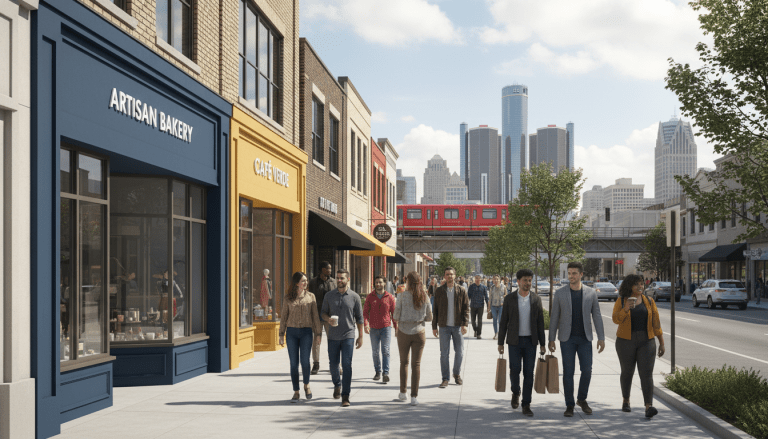
For local residents and business owners, the move is expected to alter the flow of foot traffic in downtown Detroit. By concentrating a major workforce on Woodward Avenue, local restaurants and shops in the central business district anticipate a boost in daytime customers.
Conversely, businesses solely dependent on the current Renaissance Center population may face challenges during the transition period. City planners are emphasizing the importance of the RenCen redevelopment to maintain economic stability along the Riverwalk.
Local urban planners suggest that moving a major corporate headquarters from an isolated complex like the RenCen to a street-level integrated building like Hudson’s helps bridge the gap between corporate Detroit and the public.
Background & Data
The Hudson’s Detroit project is one of the largest construction projects in the city’s history. According to data from Bedrock Detroit, the development features over 1.5 million square feet of office, retail, residential, and hotel space. The tower reaches roughly 685 feet, making it the second-tallest building in Detroit, just behind the central tower of the RenCen.
The shift comes as office vacancy rates nationally remain in flux following the pandemic. GM’s decision to sign a long-term lease is viewed by analysts as a vote of confidence in the physical office model, albeit in a more consolidated, modern format.
What Happens Next
The transition of the General Motors Detroit headquarters will be a multi-phase process. Over the next year, GM will work with Bedrock to customize the new space at Hudson’s Detroit. Meanwhile, the joint study on the Renaissance Center’s future is expected to yield preliminary concepts within the next 12 months.
As the skyline changes, the economic ripple effects will be closely monitored by city officials and the Detroit business community.