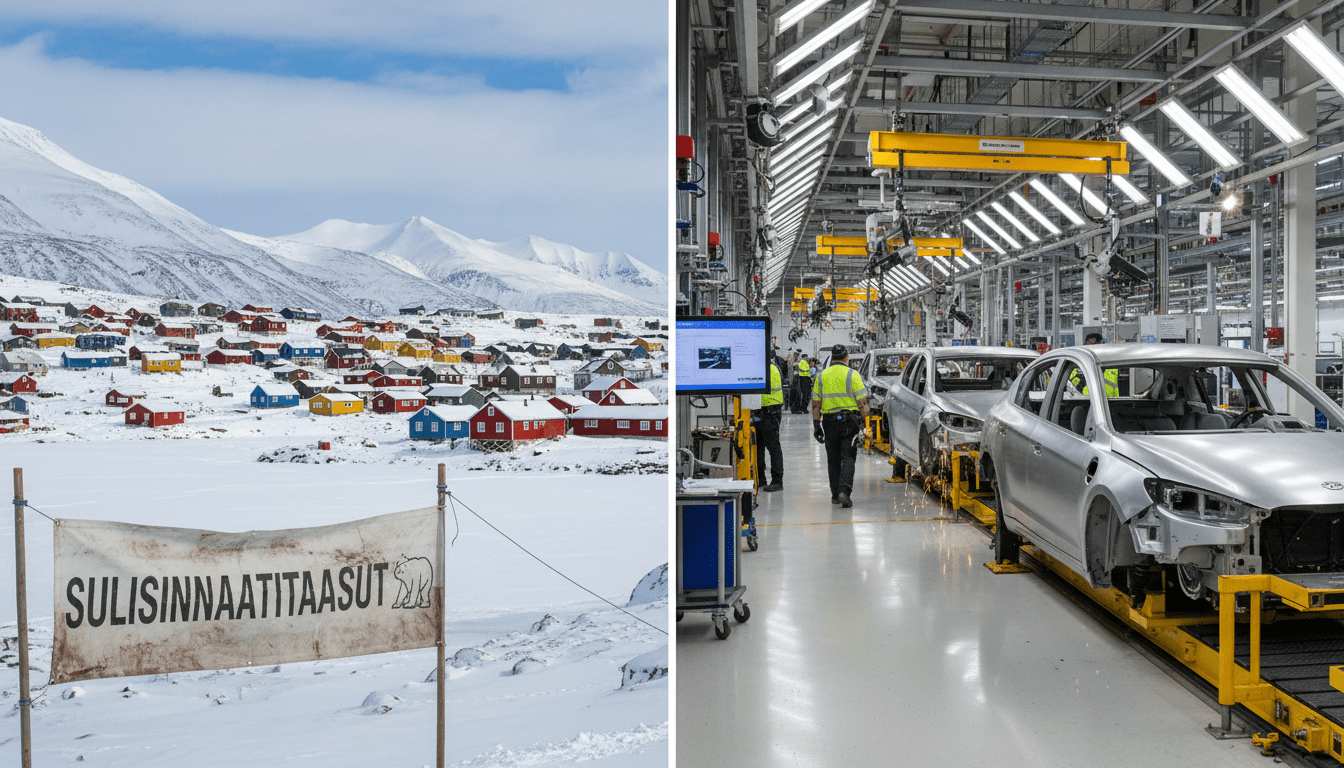
While Nuuk, the capital of Greenland, lies nearly 3,000 miles northeast of the Motor City, the rhetoric currently emerging from Greenland’s political parties is resonating in strategic planning rooms across Detroit. As the race for electric vehicle (EV) dominance heats up, Detroit’s automakers are scouring the globe for rare earth minerals—resources that Greenland possesses in abundance. However, a growing sentiment of independence and resistance to American purchase offers among Greenlandic leaders could complicate the supply chain strategies for companies like Ford and General Motors.
The Pushback: ‘We Don’t Want to be Americans’
Recent geopolitical attention, sparked initially by former President Donald Trump’s 2019 suggestion to purchase the island, has forced Greenland’s political parties to clarify their stance on sovereignty. The sentiment, summarized by local leaders and citizens alike, is clear: Greenland seeks independence from Denmark, but not to become an outpost of the United States.
According to reporting from international outlets and recent parliamentary debates in the Inatsisartut (Greenland’s parliament), the prevailing mood is one of caution regarding US expansionism. While the US has reopened a consulate in Nuuk and pledged aid, local parties like Inuit Ataqatigiit (IA) have campaigned on environmental protection and strict control over mining projects. This political landscape creates a complex environment for American industries hoping to access the island’s vast untapped resources.
The Detroit Connection: Rare Earths and EVs
For Detroit residents, the connection between Arctic politics and local manufacturing might seem distant, but the economic threads are tightly woven. Greenland is home to some of the world’s largest undeveloped deposits of rare earth elements, including neodymium and dysprosium, which are critical components in the permanent magnets used in EV motors.
According to data from the U.S. Geological Survey (USGS), China currently dominates the global processing of these minerals. To secure the future of the American auto industry, Detroit automakers are desperate to diversify their supply chains. If Greenland’s political parties restrict mining access to foreign entities or block US-backed initiatives due to sovereignty concerns, Detroit’s manufacturers may face continued reliance on volatile Chinese markets or higher costs for raw materials.
Impact on Detroit Residents
The geopolitical tug-of-war in the Arctic has direct implications for the local workforce in Southeast Michigan. As the Detroit economy pivots toward electrification, job security in plants like Factory ZERO and the Rouge Electric Vehicle Center depends on a steady, affordable supply of battery materials.
Local manufacturing analysts suggest that supply chain disruptions are the single biggest threat to Detroit’s EV transition. “If we cannot secure friendly sources of rare earth minerals, the cost of producing an EV in Michigan goes up,” explained a supply chain consultant familiar with the auto sector. “Greenland represents a massive opportunity near the North American continent. If that door closes because of political friction, it makes the path to profitability much harder for our local automakers.”
Background & Data: The Kvanefjeld Controversy
The tension came to a head recently over the Kvanefjeld mining project. The left-wing Inuit Ataqatigiit party won recent elections partly on a platform opposing the mine due to uranium concerns. This demonstrates that Greenland’s political parties prioritize environmental safety and indigenous rights over rapid industrialization funded by foreign powers.
This stance contrasts with the needs of the US industrial base. While Washington views Greenland as a strategic asset for both security and resources, the locals view their land as their heritage, not a resource depot for American industry. This disconnect is where the risk lies for Detroit’s long-term planning.
What Happens Next?
The U.S. government continues to engage diplomatically with Greenland, attempting to build soft power without the heavy-handedness of purchase offers. For Detroit, the hope is that trade agreements can eventually be reached that respect Greenland’s sovereignty while allowing for responsible resource extraction.
Until then, Detroit automakers must continue to navigate a fragile global supply chain. The situation serves as a reminder that the future of Detroit transportation is impacted not just by local policy, but by the political will of voters thousands of miles away in the Arctic Circle.