
As Detroit prepares for one of the most significant infrastructure changes in recent history, the transformation of the I-375 freeway into a walkable boulevard is moving closer to reality. The massive undertaking, officially known as the I-375 Reconnecting Communities Project, aims to rectify urban planning decisions from the mid-20th century while modernizing the city’s transportation network. With the timeline for major construction approaching, city officials and the Michigan Department of Transportation (MDOT) are finalizing plans that will reshape the gateway to downtown Detroit.
For decades, the mile-long sunken freeway has served as a concrete barrier, separating the central business district from the residential neighborhoods and entertainment districts to the east. Now, backed by significant federal funding and state support, the I-375 project Detroit initiative is set to fill in the trench and create a street-level boulevard designed to accommodate motorists, cyclists, and pedestrians alike.
The Scope of the Transformation
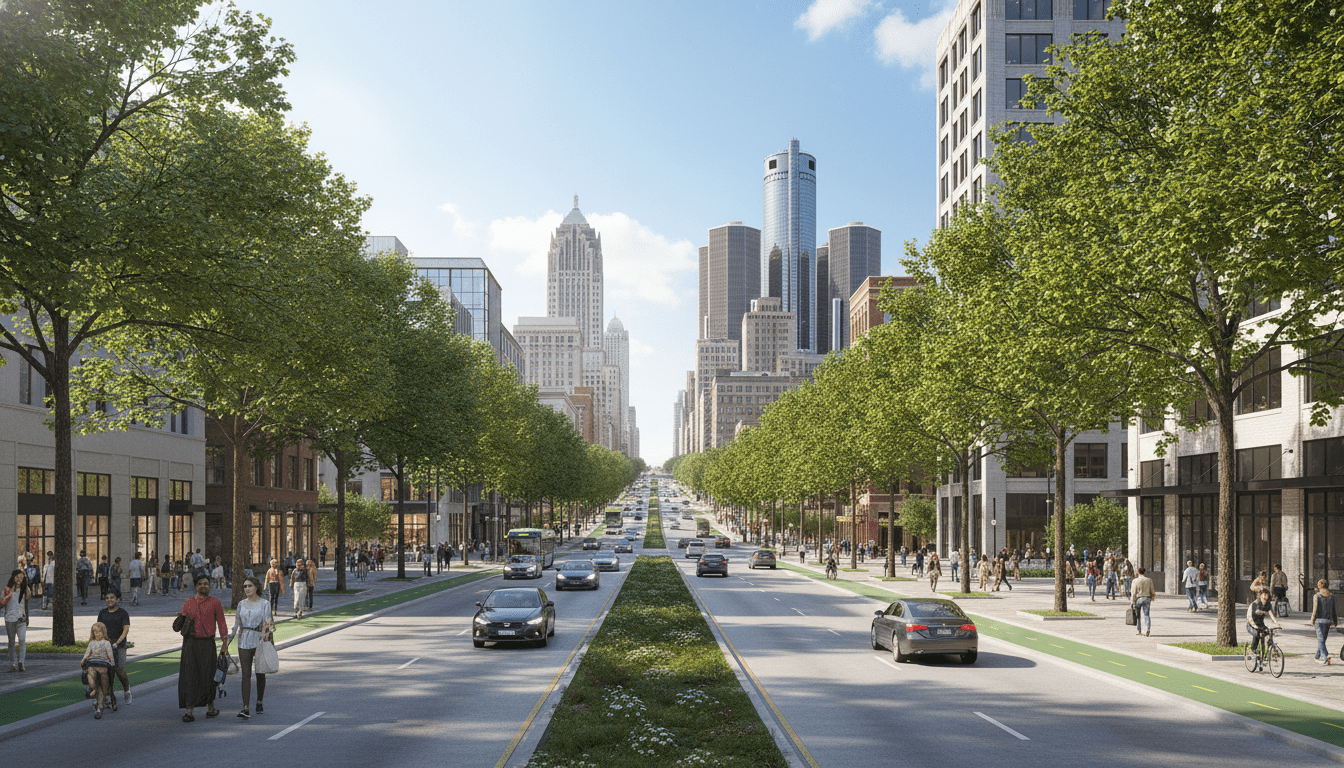
According to the Michigan Department of Transportation (MDOT), the project involves retiring the I-375 freeway and the Gratiot Avenue connector. In its place, a six-lane boulevard will be constructed, narrowing to four lanes in specific residential or commercial zones to promote safety and walkability. The design intends to slow down traffic coming off I-75 and create a more seamless urban fabric.
The project is not merely about paving roads; it is a complex engineering feat involving the replacement of aging bridges, the modernization of drainage systems, and the reconfiguration of multiple interchanges. Data released during recent public engagement sessions indicates that the construction phase is expected to create hundreds of jobs, with a focus on employing local Detroit residents.
“This is about more than just moving cars,” said a representative from the City of Detroit’s planning department during a recent town hall. “It is about healing a scar that cut through the heart of our cultural districts. By bringing the road to grade, we open up acres of land for development and community use.”
Impact on Detroit Residents and Commuters
For daily commuters, the transition will require a shift in habits. The high-speed exit into downtown will be replaced by a signaled boulevard, which traffic engineers argue will actually disperse traffic more efficiently into the city grid rather than funneling it to a single choke point. However, residents should brace for significant disruptions once major construction begins.
The impact extends well beyond traffic patterns. The project is expected to unlock approximately 30 acres of prime real estate. City planners and Detroit real estate experts are closely watching how this land will be utilized. The current framework emphasizes a mix of affordable housing, green spaces, and commercial zones intended to support small businesses.
Local business owners in Eastern Market and Greektown have expressed cautious optimism. While the eventual connectivity could boost foot traffic, the construction phase poses logistical challenges regarding deliveries and customer access. The Detroit Economic Growth Corporation has hinted at programs to support affected businesses during the transition, though specific details remain under discussion.
Restoring a Lost Legacy
A critical component of the I-375 project Detroit narrative is the historical context. The freeway was originally constructed through the heart of Black Bottom and Paradise Valley, historic Black neighborhoods that were centers of business and culture. The construction in the 1950s and 60s displaced thousands of families and shuttered hundreds of Black-owned businesses.
To address this, the project includes a robust “Restorative Justice” framework. MDOT and city officials have committed to ensuring that the descendants of those displaced, as well as current minority entrepreneurs, benefit from the new development opportunities. This includes zoning for local businesses and community spaces that honor the legacy of the destroyed neighborhoods.
Timeline and Funding Data
The project has gained momentum thanks to a $104 million grant from the U.S. Department of Transportation’s Neighborhood Access and Equity Grant Program. This federal injection is part of the broader Bipartisan Infrastructure Law, which prioritizes reconnecting communities divided by transportation infrastructure.
- 2023-2024: Final design phases, environmental re-evaluation, and community engagement.
- Spring 2025: Early utility work and preparation.
- 2025-2027: Major construction and earthwork to fill the freeway trench.
- 2028: Expected completion and opening of the new boulevard.
While the timeline is subject to weather and supply chain variables, MDOT has maintained that the project is a top priority for the state. According to federal guidelines, the funding requires strict adherence to timelines and equity standards.
Connecting Neighborhoods and Infrastructure
One of the primary technical goals is improving safety. The current I-375 interchange is known for confusing merge lanes and sharp curves that have contributed to high accident rates. By converting to a boulevard, traffic speeds will naturally decrease, reducing the severity of collisions.
Furthermore, the new design incorporates protected bike lanes and wide sidewalks, integrating with the city’s expanding non-motorized transit network. This aligns with broader efforts to make Detroit local living more accessible without a vehicle.
The Michigan Department of Transportation (MDOT) has released renderings showing lush landscaping and pedestrian bridges that aim to make the area a destination rather than just a thoroughfare. These green infrastructure elements are also designed to manage stormwater, a crucial consideration given the city’s recent struggles with flooding.
What Happens Next
As the project moves from the drawing board to the bidding phase, Detroit residents can expect a series of public workshops aimed at finalizing the aesthetic details of the boulevard. Key decisions regarding the naming of the new roadway and the specific allocation of the reclaimed land are expected to be made in late 2025.
For now, the I-375 project Detroit stands as a test case for urban renewal in America. It represents a shift away from the car-centric planning of the past toward a model that prioritizes community cohesion and economic equity. As shovels hit the ground, the eyes of the nation—and certainly all of Detroit—will be watching to see if the execution can live up to the promise.