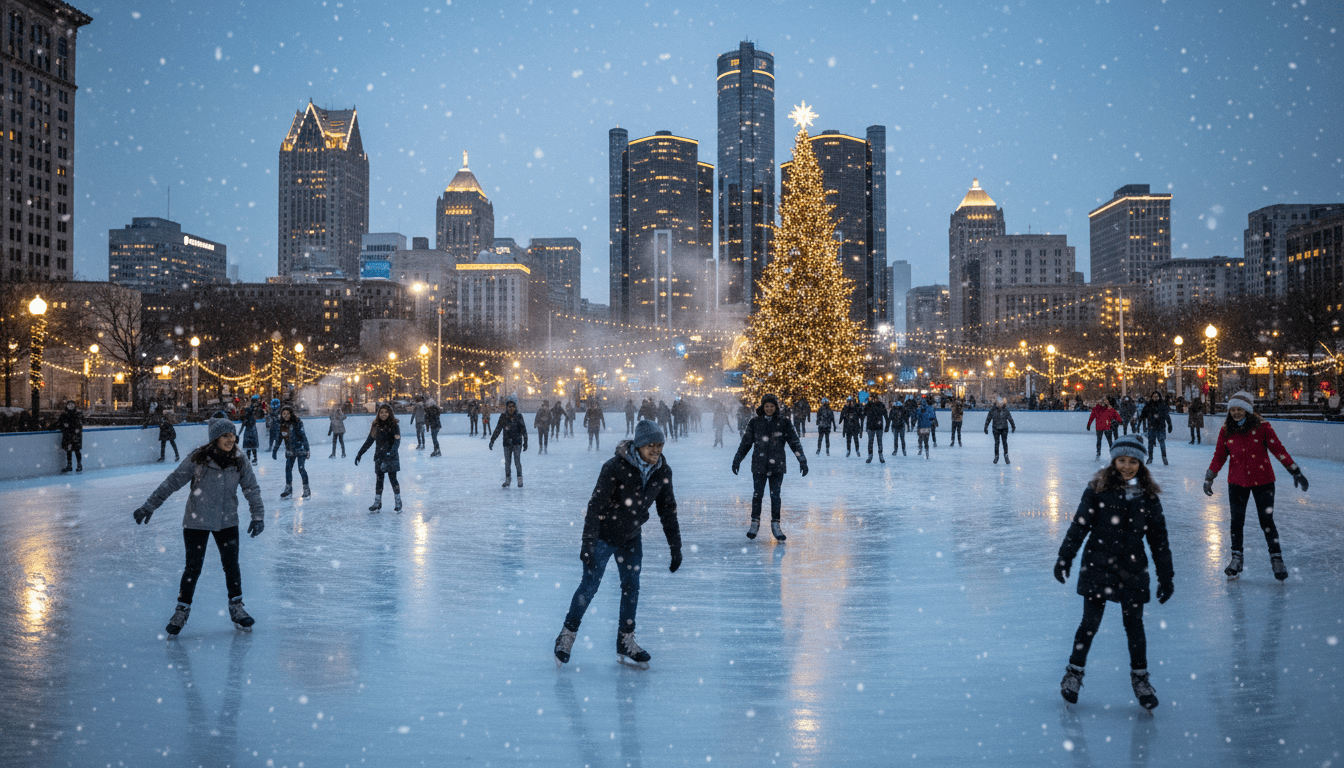
The winter season in Southeast Michigan has officially begun, marked not by the first snowfall, but by the opening of the region’s most prominent outdoor attraction: The Rink at Campus Martius Park. As crews put the finishing touches on the ice surface this week, the ice skating Detroit season signals a critical economic and social shift for the city, transforming downtown public spaces into hubs of winter tourism and community engagement.
For city planners and local business owners, the return of the rinks is about more than recreational activity; it represents a deliberate strategy to activate the city center during the colder months. According to the Downtown Detroit Partnership (DDP), which manages Campus Martius, the winter season attracts hundreds of thousands of visitors between November and March, providing a vital lifeline to restaurants and retail establishments during what was historically a dormant period for the city.
Campus Martius: The Centerpiece of Downtown Winter
The Rink at Campus Martius Park has evolved into the anchor of Detroit’s winter programming. Situated at the convergence of the city’s major avenues, the rink draws a diverse mix of office workers, suburban visitors, and tourists.
“The activation of Campus Martius changes the perception of Detroit winters,” said a spokesperson for the DDP in a recent press briefing. “It turns the weather, which can be a barrier to foot traffic, into an asset that drives density in the urban core.”
This year, the rink is expected to see record attendance numbers following a trend of increased downtown residency and tourism. Local data suggests that foot traffic in the immediate vicinity of the park spikes significantly on weekends during the skating season, directly correlating with increased revenue for nearby dining establishments such as Parc and the casual dining options surrounding the Monroe Street Midway area.
While the visual appeal of the rink—often framed by the city’s official Christmas tree—dominates social media, the logistics behind the ice skating Detroit infrastructure are complex. Maintaining outdoor ice in fluctuating Midwest temperatures requires advanced chilling systems and significant energy investment, a cost borne largely through corporate sponsorships, including support from Bedrock and the Gilbert Family Foundation.
Community Impact: Beyond the Central Business District
While Campus Martius garners the headlines, the ice skating Detroit narrative extends into the neighborhoods, playing a crucial role in community cohesion. A prime example is the rink at Clark Park in Southwest Detroit. Unlike the commercialized atmosphere of downtown, Clark Park operates with a distinct focus on accessibility and youth development.
Managed by the Clark Park Coalition in partnership with the City of Detroit, this facility provides low-cost skating and free hockey programs for local youth. The coalition’s work highlights the social equity aspect of public recreation infrastructure.
“For families in Southwest Detroit, having a regulation-sized outdoor rink is a matter of equity,” noted a representative from the Detroit Parks and Recreation Department during a recent community meeting regarding neighborhood infrastructure updates. “It ensures that winter sports are not exclusive to suburban communities or the downtown core, but are accessible to residents right in their own backyard.”
The Clark Park facility also serves as a gathering point for the diverse community in Southwest Detroit, hosting festivals and open skates that reflect the cultural fabric of the neighborhood. This dual approach—commercial tourism downtown and community service in the neighborhoods—defines the current state of winter recreation in the city.
Economic Ripples and Local Business Sentiment
The influx of visitors seeking the ice skating Detroit experience creates measurable economic ripples. Small business owners operating along Woodward Avenue and in the Parker’s Alley retail district report that the skating season bridges the gap between the busy summer festival season and the spring thaw.
“November through January used to be unpredictable,” said the manager of a coffee shop near the park, who spoke on condition of anonymity. “Now, with the tree lighting and the rink opening, we see a consistent flow of customers who come for the skating and stay for dinner or shopping. It creates a full evening itinerary for visitors.”
This sentiment is backed by broader economic trends. Cities across the northern United States are increasingly adopting “Winter City” strategies, designing infrastructure that encourages outdoor activity regardless of temperature. Detroit’s investment in outdoor rinks aligns with this urban planning trend, which views winter as an economic season rather than a liability.
Furthermore, the connectivity between the rink and other developments is improving. With ongoing Detroit downtown development projects, the walkability between Campus Martius and other attractions, such as the holiday markets, has been enhanced to keep pedestrians moving and spending within the district.
The Regional Context
The city’s efforts do not exist in a vacuum. The ice skating Detroit scene faces competition and complementarity from suburban counterparts. The Rink at Royal Oak, for example, offers a similar urban skating experience just north of the city limits. However, rather than diluting the market, urban planners suggest that a network of rinks creates a stronger regional culture of winter activity.
“When you have high-quality options in Royal Oak, Campus Martius, and Clark Park, you build a culture where skating is a standard weekend activity,” noted an urban studies researcher from Wayne State University. “It becomes part of the regional identity, much like it is in cities like Minneapolis or Toronto.”
Impact on Detroit Residents
For the average Detroit resident, the expansion of skating options offers tangible health and social benefits. Winter in Michigan is often associated with a sedentary lifestyle due to harsh weather. The availability of well-maintained outdoor rinks provides a necessary venue for physical activity.
Accessibility remains a key focus. While downtown skating comes with a price tag for rental and ice time, various programs throughout the season offer discounted or free access days for Detroit residents, sponsored by local corporations. Ensuring that the revitalization of downtown recreation remains inclusive to long-time residents is a priority for city officials as the landscape of the city continues to change.
Future Outlook
Looking ahead, the demand for outdoor winter recreation shows no signs of slowing. City officials have hinted at the possibility of smaller, pop-up synthetic or natural ice rinks in other district parks in future years, dependent on funding and community interest. As Detroit continues to rebuild its population and economy, the ability to activate public spaces year-round remains a key performance indicator for the city’s recovery.
For now, as the chiller systems hum and the Zambonis resurface the ice at Campus Martius and Clark Park, Detroit is poised for another active winter season, leveraging the cold to fuel community connection and commerce.