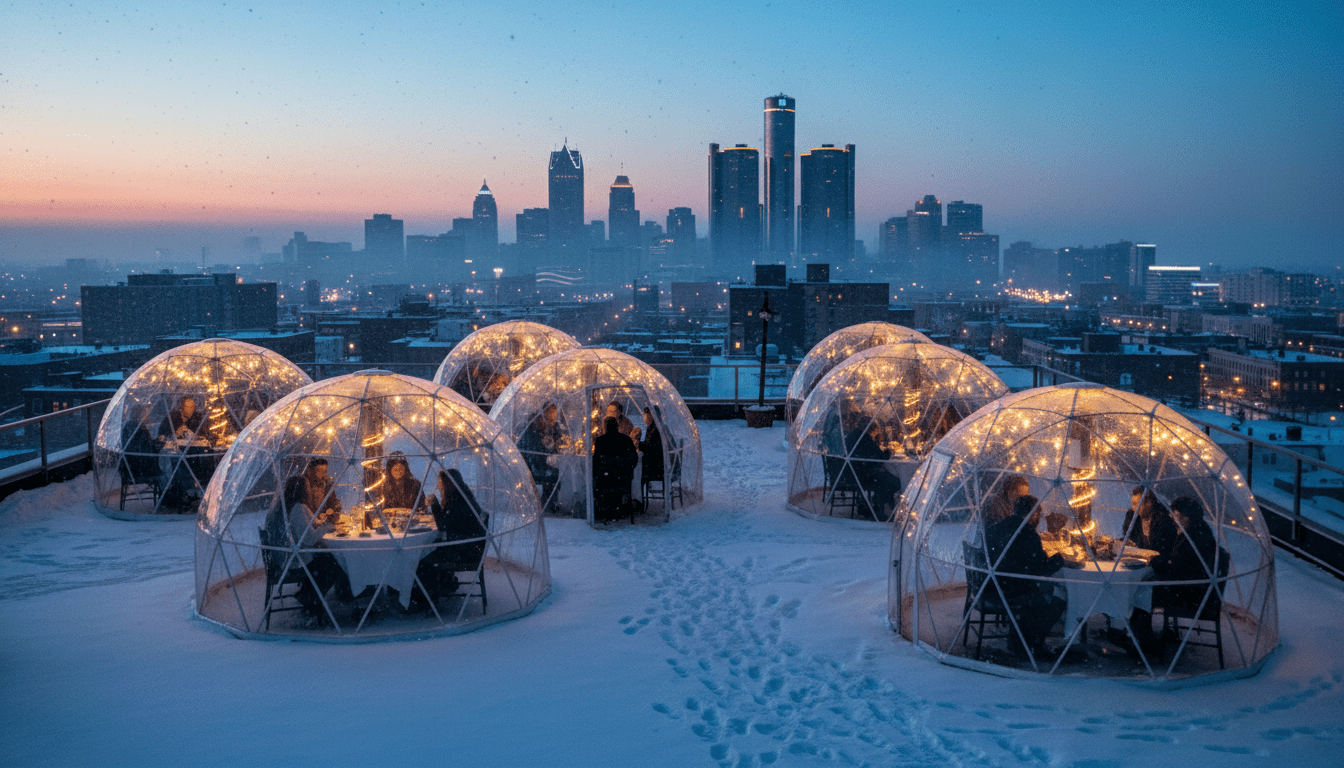
For decades, the dining culture in Detroit followed a predictable seasonal rhythm: patios bustled from May to September, and activity retreated strictly indoors once the first frost settled on the riverfront. However, the landscape of igloo dining in Detroit has fundamentally altered this pattern, turning the city’s harshest season into a viable economic period for the hospitality industry.
What began as a survival mechanism during the height of the COVID-19 pandemic—when indoor capacity restrictions threatened the existence of hundreds of local eateries—has matured into a sophisticated, permanent fixture of Detroit’s winter identity. Across the metro area, from the vibrancy of Corktown to the revitalized alleyways of Downtown, translucent heated domes are no longer just temporary shelters; they are distinct dining destinations driving revenue during historically slow quarters.
The Economics of Winter Outdoor Seating
The proliferation of igloo dining in Detroit represents a significant shift in restaurant economics. According to data from the National Restaurant Association, the integration of all-weather outdoor seating can increase a venue’s seating capacity by up to 30% during winter months. For Detroit business owners, this additional capacity is crucial for offsetting the operational costs that traditionally spike during the heating season.
Local proprietors report that the igloo model has allowed them to retain staff who might otherwise face seasonal layoffs. By maintaining a higher volume of covers through January and February, restaurants can keep front-of-house and kitchen staff employed year-round.
“It’s no longer about just surviving; it’s about creating an experience that people actually look forward to,” said a manager at a popular Downtown Detroit venue, speaking on the condition of background anonymity. “Three years ago, we were setting these up to follow health orders. Now, we are setting them up because reservations sell out weeks in advance. The demand for igloo dining in Detroit hasn’t waned; it has become a tradition.”
Investments in these structures have also become more substantial. The initial pop-up tents seen in 2020 have largely been replaced by reinforced polycarbonate structures, distinct heating filtration systems, and curated interior designs that rival the main dining rooms. This infrastructure investment signals that Detroit’s hospitality sector views the winter outdoor dining model as a long-term asset rather than a temporary fix.
Impact on Detroit Residents and Culture
For Detroit residents, the rise of winter outdoor options has reshaped social behaviors during the darker months. Historically, the “hibernation” mentality slowed foot traffic in commercial districts. The visual spectacle of illuminated domes, however, creates a sense of activity and safety that encourages pedestrian traffic.
The trend has also democratized the concept of “private dining.” While reserving a private room inside a restaurant often requires large parties or minimum spends in the thousands, igloo dining allows smaller groups of friends or families to secure a private, controlled environment for a comparatively nominal rental fee or deposit. This accessibility has made high-end dining experiences more approachable for the average Detroiter.
Furthermore, this shift supports the broader Detroit business ecosystem. When residents travel to a neighborhood for an igloo reservation, the economic impact often spills over to nearby retail shops, parking structures, and entertainment venues, creating a micro-economy that sustains commercial corridors through the winter slump.
Regulatory Framework and Safety Standards
As the trend has solidified, so has the regulatory framework surrounding it. The City of Detroit and the Buildings, Safety Engineering, and Environmental Department (BSEED) have updated guidelines to ensure these structures meet fire and safety codes. This includes strict regulations on the types of heating elements permitted—specifically prohibiting certain unventilated propane heaters inside enclosed spaces—and requirements for flame-retardant materials.
These regulations are vital for public safety. A report by the National Fire Protection Association highlights that the rapid adoption of outdoor heating elements requires rigorous oversight to prevent carbon monoxide incidents and fire hazards. Detroit’s proactive approach in formalizing these inspections has helped the city avoid major incidents associated with temporary outdoor structures seen in other municipalities.
Current Hotspots and Development
The density of igloo dining Detroit options is highest in areas that have seen recent aggressive redevelopment. Campus Martius and the surrounding blocks have utilized these structures to bridge the gap between holiday events like the tree lighting and the late-winter thaw. Similarly, the riverfront developments have utilized outdoor pods to keep the Riverwalk active as a destination, even when wind chills drop below zero.
Establishments such as Lumen at Beacon Park and Watermark Bar & Grille in St. Clair Shores serve as prime examples of how geography plays a role. By leveraging views of parks or water, these venues utilize the transparency of the igloos to sell the scenery of a Michigan winter without subjecting guests to the temperature.
Future Outlook for Detroit’s Winter Hospitality
Industry analysts predict that the “winterization” of outdoor spaces will continue to evolve. We are likely to see a move toward even more permanent, retractable structures that offer the aesthetic of the igloo but with better integration into the main building’s HVAC systems. This evolution suggests that Detroit is successfully rebranding itself as a four-season dining city, similar to Scandinavian capitals where outdoor winter culture is entrenched.
“The concept of the ‘patio season’ ending in October is effectively dead in Detroit,” noted a representative from a regional hospitality consulting group. “As long as operators are willing to invest in the infrastructure, the public has proven they are willing to put on a coat and come out.”
For more information on how local infrastructure is adapting to seasonal changes, readers can explore our coverage on Detroit transportation updates and city planning initiatives.
For official guidelines on outdoor dining safety regulations, residents and business owners can consult the City of Detroit BSEED website.