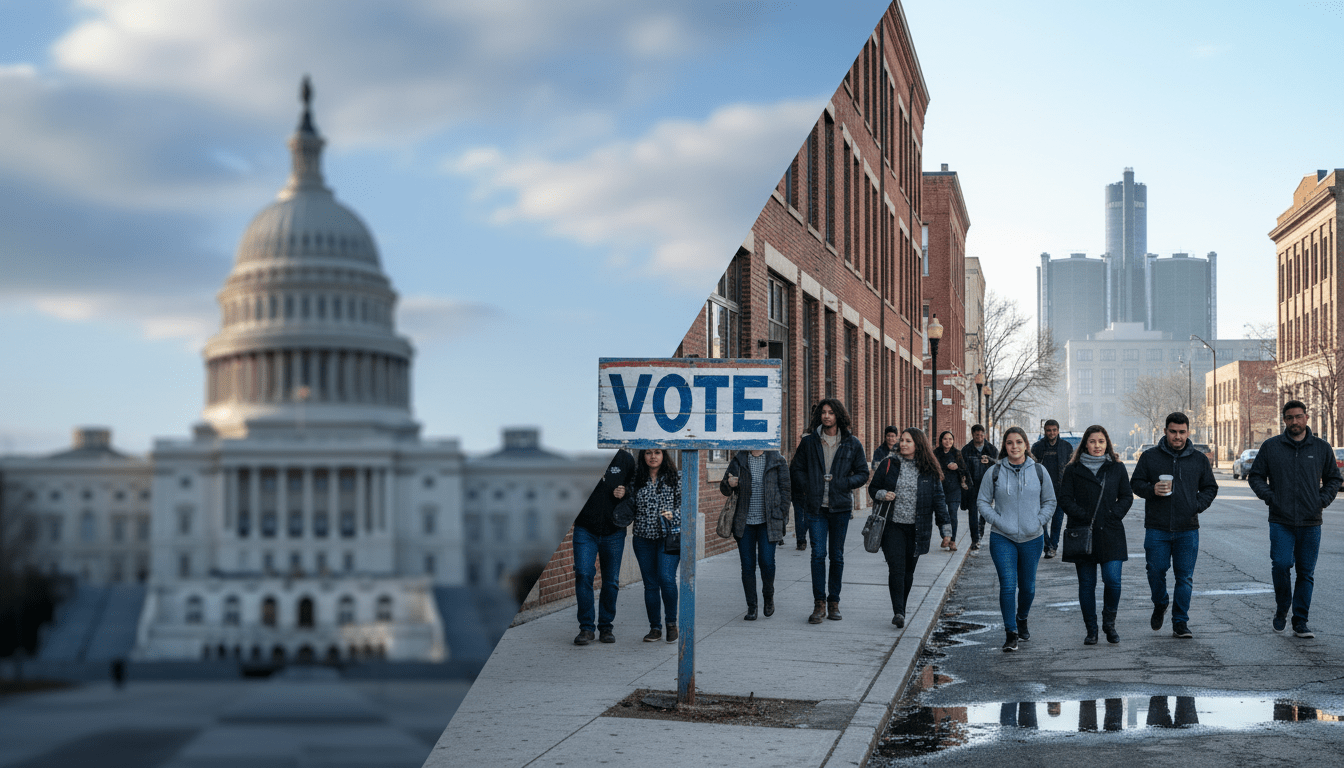
As officials in Jerusalem assess the longevity of American defense packages, a distinct shift in public opinion is rippling through the United States, with the vibration felt most intensely in political battlegrounds like Detroit. With national polling indicating a decline in unconditional public support for foreign military assistance, the conversation in Michigan—a state pivotal to national elections and home to a significant defense manufacturing sector—has moved from the fringes to the center of local discourse.
The changing tide is not merely a matter of foreign policy debate but a local issue affecting Detroit’s diverse demographics, its political representatives, and the region’s substantial defense industry. As Israel ponders the future of its security relationship with its closest ally, the sentiments expressed by voters in Wayne County are becoming a bellwether for the durability of that alliance.
National Trends, Local Echoes
Recent data from the Pew Research Center highlights a growing partisan divide and an overall decrease in support among younger Americans for unrestricted military aid to Israel. While historical support has remained robust for decades, the current conflict in Gaza has accelerated a shift in public perception.
In Detroit, these national trends are amplified by the city’s unique demographic makeup. Wayne County is home to one of the largest concentrations of Arab Americans in the country, alongside a historic Black population that has increasingly aligned with progressive foreign policy stances. This coalition was visible during the recent Michigan primaries, where the "Uncommitted" vote garnered significant numbers, signaling discontent with the status quo of US military aid to Israel.
According to political analysts at Wayne State University, the correlation between local voter sentiment and national policy is tighter than ever. "Detroit is no longer just reacting to foreign policy; through its voting patterns in a swing state, it is actively shaping the calculus in Washington," noted a senior lecturer in political science. "When support drops here, it sends a tremor that is felt in D.C. and, inevitably, in Tel Aviv."
The Defense Industry Connection
While the political debate rages, the economic reality of military aid is deeply entrenched in the Metro Detroit region. Michigan is a hub for defense contracting, a sector that provides thousands of jobs to local residents. The intersection of Detroit’s manufacturing economy and foreign military aid is complex.
General Dynamics Land Systems, headquartered in Sterling Heights—just north of Detroit—is a primary manufacturer of combat vehicles often utilized by US allies. The production of military hardware is a significant driver of the local economy, creating a tension between ideological opposition to military aid and the practical necessity of manufacturing jobs.
"It is a delicate balance," said a representative for a local manufacturing trade group, speaking on condition of anonymity. "On one hand, you have a populace that is increasingly critical of how these weapons are used abroad. On the other hand, the contracts tied to US military aid packages support supply chains that run right through Detroit and its suburbs. A reduction in aid isn’t just a diplomatic issue; it’s an economic one for Michigan."
Impact on Detroit Residents and Voters
For the average Detroiter, the debate over US military aid to Israel is often framed through the lens of domestic priorities. Community organizers in neighborhoods from Southwest Detroit to the East Side are increasingly questioning the allocation of federal funds.
During a recent town hall meeting in the New Center area, residents expressed frustration over the juxtaposition of billions in foreign military assistance against local struggles with housing and infrastructure. "We are seeing a shift where local taxpayers are asking why funding for conflicts abroad seems readily available while we fight for scraps to fix our drainage systems or improve our transit," said a local community organizer working with housing advocacy groups.
This sentiment mirrors the broader national drop in support. As inflation lingers and housing costs rise, the appetite for maintaining high levels of foreign military expenditure is waning among working-class voters. This skepticism is forcing local congressional representatives to walk a fine line, balancing traditional foreign policy alliances with the demanding cries of their constituents for domestic reinvestment.
Political Fallout and Future Outlook
The concern within Israeli leadership regarding the future of American assistance is well-founded when looking at the political landscape of Southeast Michigan. The region has become a hotbed for activism calling for conditions on military aid. The social activism in Detroit has evolved from street protests to organized electoral strategies.
Data from the Michigan Board of Canvassers regarding the recent primary elections showed that in certain Detroit precincts, the protest vote against the administration’s handling of the war exceeded 15%. This creates a precarious situation for federal lawmakers who have historically supported unconditional aid. They now face a constituency that is not only less supportive but actively mobilized against such policies.
As the United States heads deeper into the election cycle, the question of military aid to Israel will likely remain a flashpoint. For Detroit, the issue is multifaceted: it is about representation for its Arab American and Muslim communities, it is about the moral allocation of tax dollars for its working-class residents, and it is about the stability of manufacturing jobs in the suburbs.
Israeli officials pondering the future of this assistance are right to look at the polls, but they should specifically look at Detroit. As goes Detroit, often goes the state of Michigan; and without Michigan, the path to the White House—and the stewardship of future military aid packages—becomes increasingly uncertain.