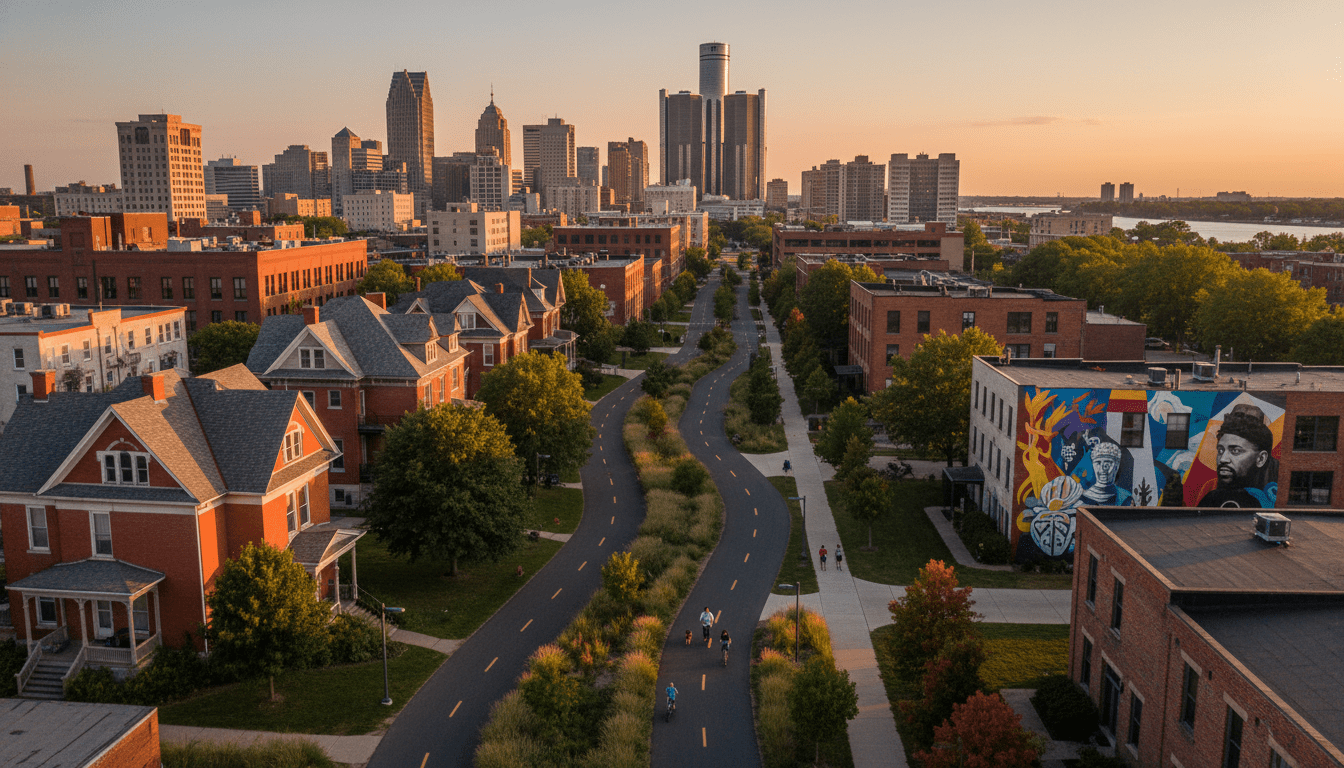
In the heart of Detroit, a transformation is taking place that extends far beyond paved paths and landscaping. The Joe Louis Greenway, a massive 27.5-mile recreational loop currently under construction, is emerging as one of the city’s most significant cultural and social development projects in decades. Designed to connect 23 diverse neighborhoods, the project aims to bridge physical divides, foster community interaction, and revitalize the social fabric of the city.
While often categorized as an infrastructure project, city planners and community leaders view the greenway as a vehicle for social equity. By linking neighborhoods that have historically been isolated by freeways and industrial corridors, the project seeks to provide residents with equitable access to public spaces, art, and economic opportunities.
Connecting Communities Through Cultural Infrastructure
The vision for the Joe Louis Greenway goes beyond simple recreation. According to the City of Detroit’s General Services Department, the project is designed to unify a fragmented urban landscape. Once completed, the loop will connect Detroit to Hamtramck, Highland Park, and Dearborn, effectively stitching together communities with distinct cultural identities.
This physical connection is expected to drive social cohesion. For decades, infrastructure decisions—such as the construction of the I-375 and I-75 freeways—severed historic neighborhoods, particularly Black communities like Black Bottom and Paradise Valley. The greenway attempts to heal some of these scars by repurposing abandoned rail lines into vibrant community corridors.
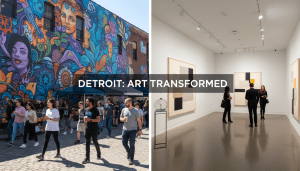
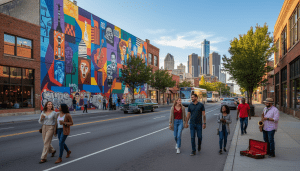
Local arts organizations are already capitalizing on this new canvas. The greenway is slated to feature extensive public art installations, effectively creating an open-air museum that reflects the history and resilience of the surrounding neighborhoods. By integrating local culture into the physical environment, the project aims to foster a stronger sense of place and ownership among residents.
Impact on Detroit Residents
For the nearly 10% of Detroit households that do not own a vehicle, the greenway represents a critical shift in mobility and social access. By providing a safe, non-motorized route to the riverfront, downtown, and other commercial districts, the path opens up new social and economic possibilities for residents in neighborhoods like Midwest, Tireman, and Core City.
Data from the City of Detroit indicates that nearly 40,000 residents live within a ten-minute walk of the planned route. For these locals, the greenway offers more than just a jogging path; it offers a gathering space.
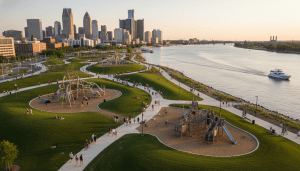
Community engagement sessions held by the Joe Louis Greenway Partnership have highlighted a strong resident desire for programming that promotes social wellness. Proposed features include community gardens, event spaces for local markets, and playgrounds. These hubs are intended to serve as “social condensers,” places where residents from different walks of life cross paths, fostering a sense of community safety and neighborliness that can sometimes be lost in sprawling urban environments.
However, the project is not without its anxieties. As with any major development in Detroit, concerns regarding gentrification are prevalent. Long-time residents have expressed the need for the social benefits of the greenway to remain accessible to legacy Detroiters, rather than serving solely as a magnet for new, wealthier transplants. In response, city officials have emphasized the importance of affordable housing preservation strategies in the planning framework surrounding the greenway.
Economic Revitalization and Social Stability
Social development is inextricably linked to economic stability, and the Joe Louis Greenway is positioned as a driver for both. The revitalization of the industrial corridors along the route is expected to attract small businesses, cafes, and bike shops, creating local jobs and keeping currency circulating within the neighborhoods.
The Ralph C. Wilson Jr. Foundation, a major funder of the project, has emphasized the importance of “working waterfronts” and green spaces in stabilizing local economies. By turning blighted alleyways and abandoned rail cuts into maintained public assets, the project aims to reduce crime through environmental design—a concept known as CPTED (Crime Prevention Through Environmental Design).
According to urban planning studies, well-maintained green spaces increase “eyes on the street,” which naturally deters illicit activity and encourages positive social use. For Detroit neighborhoods that have struggled with blight, this transformation is a crucial step toward stabilizing the local social environment.
Furthermore, the connection to the Detroit Riverfront—recently voted the best riverwalk in America by USA Today readers—extends the social vitality of the downtown area deep into the neighborhoods. This continuity ensures that the cultural resurgence seen in the city center is not isolated but shared with the broader population.
Background & Data: The Scope of the Project
The scale of the Joe Louis Greenway is ambitious. The project involves a mix of federal American Rescue Plan Act (ARPA) funds, city bond dollars, and philanthropic contributions. The total cost is estimated in the hundreds of millions, reflecting the complexity of remediation required for former industrial rail lines.
Key statistics surrounding the development include:
- 27.5 miles of continuous pathways.
- Connection to 5 cities: Detroit, Hamtramck, Highland Park, Dearborn, and connections to wider regional trails.
- 23 neighborhoods directly impacted.
- Clean-up of industrial blight: The project involves removing tons of debris and tires from abandoned railway cuts.
The framework plan prioritizes “Neighborhood Connectors,” smaller streets that lead into the main greenway loop, ensuring that the benefits radiate outward rather than staying confined to the path itself. This tiered approach is critical for ensuring that the social development benefits reach deep into the residential blocks.
What Happens Next?
Construction is proceeding in phases. Sections of the greenway, such as the Southwest Greenway which connects the Michigan Central Station area to the riverfront, are already open and seeing heavy use. Other segments, particularly those involving complex rail line conversions on the west side, are in active development.
As Detroit development continues to accelerate, the focus will remain on ensuring the Joe Louis Greenway fulfills its promise as a tool for social equity. The coming years will reveal how effectively the city can balance the influx of investment with the needs of existing communities.
For now, the greenway stands as a symbol of a unified future—a physical manifestation of the effort to bring Detroit’s disjointed neighborhoods back into conversation with one another. As the path extends mile by mile, it paves the way not just for cyclists, but for a more connected and socially resilient Detroit.
For more updates on local infrastructure and community projects, visit our Detroit Local Living section.