


Major progress on the Joe Louis Greenway was confirmed this week as city officials announced the groundbreaking of a critical new segment designed to bridge the gap between Midtown and the neighborhoods to the west. The 27.5-mile non-motorized pathway, which aims to unify the city through a network of trails and parks, is rapidly transforming from a conceptual vision into a paved reality.
Connecting Communities Through Infrastructure
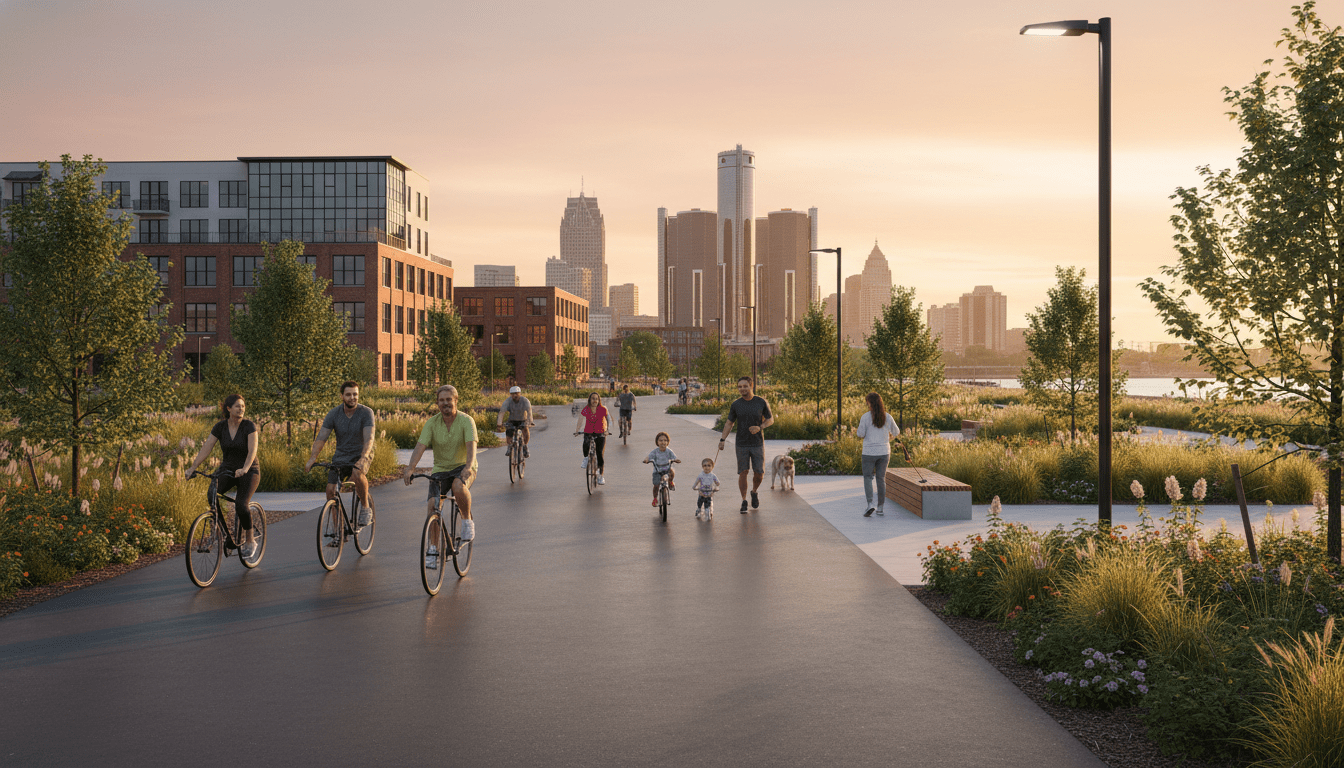
The latest phase of construction focuses on the transformation of former railway corridors into vibrant recreational spaces. According to the Detroit General Services Department, this new leg of the project will provide safe passage for cyclists and pedestrians, removing barriers that have historically separated distinct parts of the city.
“This isn’t just about building a sidewalk; it is about knitting communities back together,” stated a spokesperson for the City of Detroit during a recent briefing. “The Joe Louis Greenway represents a physical commitment to equity and access for residents who have gone without quality public spaces for too long.”
This development aligns with broader Detroit urban redevelopment updates that have prioritized green infrastructure as a catalyst for community health and economic stability.
Impact on Residents and Property Values
For residents living adjacent to the planned route, the greenway promises more than just a place to jog. Urban planners anticipate a ripple effect on local economies. Similar projects in other municipalities have shown that proximity to established greenways can stabilize housing markets and attract small businesses.
However, the City maintains that the primary focus is on current residents. Community meetings held earlier this month emphasized strategies to prevent displacement while improving quality of life. “We are ensuring that the economic benefits of the Joe Louis Greenway flow directly to the people who have stuck by this city,” noted a representative from the Detroit Riverfront Conservancy.
Residents interested in how this infrastructure might influence the market can read our in-depth analysis on Detroit housing market trends for 2024.
Background & Data: A $200 Million Vision
The project is a massive undertaking with a projected cost exceeding $200 million, funded through a mix of federal grants, city bonds, and philanthropic donations. Once completed, the loop will connect:
- 23 different Detroit neighborhoods
- Highland Park and Hamtramck
- The Detroit Riverfront
- Dearborn borders
According to data released by the Detroit Greenways Coalition, over 40,000 residents do not currently have a park within a 10-minute walk of their home—a statistic the greenway intends to correct by connecting existing parks into a unified system.
What Happens Next
Construction crews are expected to remain active throughout the fall season to complete grading and paving on the western expansion. Full completion of the 27.5-mile loop is targeted for the coming years, though specific segments are opening on a rolling basis to allow immediate public access.
As the Joe Louis Greenway continues to take shape, it stands as one of the most significant infrastructure investments in Detroit’s modern history, promising to redefine how Detroiters navigate their city.