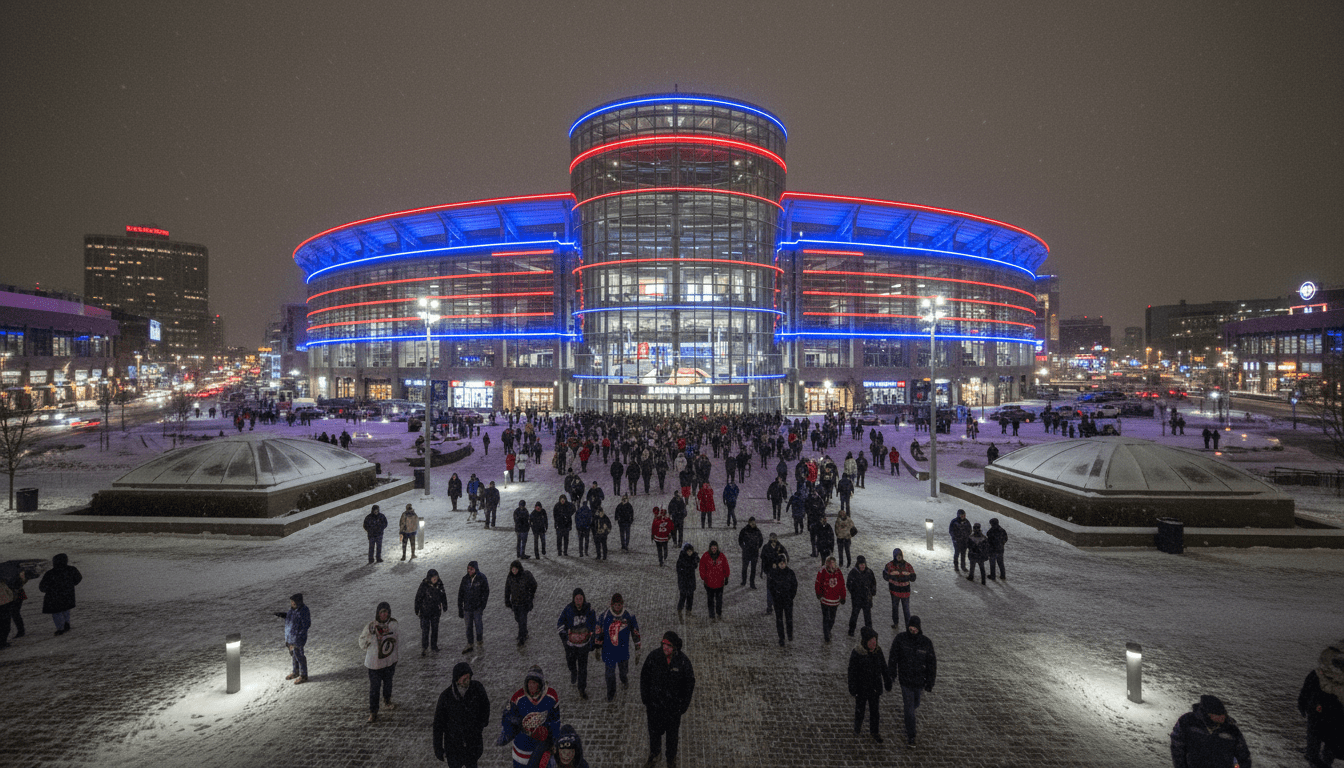
As temperatures drop across Michigan, the heat rises in The District Detroit. The convergence of the NBA and NHL schedules marks the beginning of the busiest time of year for downtown Detroit, where the Little Caesars Arena winter season transforms the Woodward Avenue corridor into a bustling hub of commerce and culture. With both the Detroit Pistons and the Detroit Red Wings playing concurrently, the arena hosts multiple events per week, driving significant foot traffic and search interest regarding logistics, dining, and entertainment.
For city planners and local business owners, the months spanning October through April represent a critical economic window. The steady cadence of home games creates a reliable rhythm for the downtown economy, impacting everything from restaurant staffing to transit schedules. This annual surge highlights the pivotal role professional sports play in the revitalization efforts of Detroit’s urban core.
The Economic Engine of The District Detroit
Since opening in 2017, Little Caesars Arena has served as the anchor for The District Detroit. However, it is during the winter months that the venue truly tests its capacity to drive regional revenue. According to reports from Ilitch Sports + Entertainment, the venue regularly attracts millions of visitors annually, a significant portion of whom arrive during the overlapping basketball and hockey seasons.
Local economists point out that the impact extends far beyond ticket sales. Data suggests that for every dollar spent inside the arena, a multiplier effect occurs in the surrounding blocks. Fans searching for “parking near Little Caesars Arena” or “restaurants open late downtown” drive digital traffic that converts into physical sales for establishments in Midtown and Downtown.
“The winter season is when we see our most consistent crowds,” said a shift manager at a popular sports bar on Woodward Avenue, speaking on condition of anonymity. “When the Red Wings play on a Thursday and the Pistons on a Friday, it allows us to forecast inventory and staffing with much more precision than during the summer months. It is the lifeblood of the winter economy here.”
Furthermore, District Detroit development updates indicate that sustained foot traffic is essential for attracting new retail tenants. The visible density of crowds during game nights serves as a proof-of-concept for potential investors looking to fill vacant storefronts in the area.
Impact on Detroit Residents and Infrastructure
For residents living in the Cass Corridor, Brush Park, and downtown lofts, the Little Caesars Arena winter season brings a mix of vitality and logistical challenges. The influx of tens of thousands of fans several nights a week requires careful coordination regarding traffic flow and public safety.
The City of Detroit has worked to mitigate congestion by encouraging the use of public transit. The QLINE and the Detroit People Mover often see spikes in ridership coinciding with puck drops and tip-offs. However, residents frequently express concerns regarding parking availability. Street parking, often utilized by locals, becomes a premium commodity on game nights, leading to increased enforcement and higher demand for residential permit zones.
Despite the traffic, many residents view the activity as a net positive. “It makes the city feel alive during the months when everyone usually stays inside,” noted a resident of the Brush Park neighborhood. “You see people walking the streets at 10 p.m. on a Tuesday, which wasn’t the case fifteen years ago. It brings a sense of safety through numbers.”
Public Transit and Accessibility
To support the heavy influx of visitors, Detroit transportation infrastructure is frequently tested during this period. The Detroit Department of Transportation (DDOT) and the M-1 Rail authorities monitor event schedules closely. Search trends from suburban visitors often focus on “where to park for Wings games,” but city officials continue to push for a “park and ride” mentality to alleviate the gridlock on I-75 and the Lodge Freeway.
Background & Data: The Numbers Game
The overlap of the NBA and NHL schedules creates specific “super weeks” where the arena is in use almost every night. According to schedule data, there are roughly 82 regular-season home games combined between the two franchises, not including concerts or other special events that fill the gaps.
This density is crucial for the hospitality industry. Data from the Detroit Metro Convention & Visitors Bureau has historically shown that sports tourism is a major driver of hotel occupancy in the winter. Visitors traveling from outside Wayne County—or from Canada—often turn a game into an overnight stay, boosting revenue for hotels like the Shinola Hotel and the Element Detroit.
Moreover, search interest data reflects the urgency of the season. Google Trends analysis for the Detroit region typically shows spikes in queries related to “Little Caesars Arena bag policy,” “Red Wings tickets,” and “Pistons schedule” peaking from November through March. This digital interest correlates directly with the physical movement of people into the city center.
Restaurants and Nightlife Adaptation
The culinary landscape of Detroit adapts specifically to this seasonal rhythm. Detroit restaurants near the arena often introduce special “game day menus” or happy hour specials designed to lure fans in before the gates open. Establishments such as Harry’s Detroit and Mom’s Spaghetti rely heavily on the pre-game rush.
Restaurant owners have noted that the demographic shifts depending on the team playing. Red Wings games tend to draw a crowd willing to arrive earlier for dinner, while Pistons games often see a surge in late-night dining post-game. Understanding these nuances allows local businesses to tailor their operations, ensuring they maximize the revenue potential of the Little Caesars Arena winter season.
What Happens Next
As the season progresses toward the spring, the focus shifts to potential playoff implications. A playoff run by either the Red Wings or the Pistons would extend this economic boom well into April or May, providing a “bonus season” for the local economy. Conversely, early exits mean a quieter spring for downtown stakeholders.
Looking further ahead, the continued development of the area around the arena remains a priority. City officials and developers are keen to ensure that the district remains a destination even on non-game days. However, for now, the winter schedule remains the beating heart of downtown Detroit’s nightly economy, proving that sports are more than just entertainment—they are a vital component of the city’s financial ecosystem.