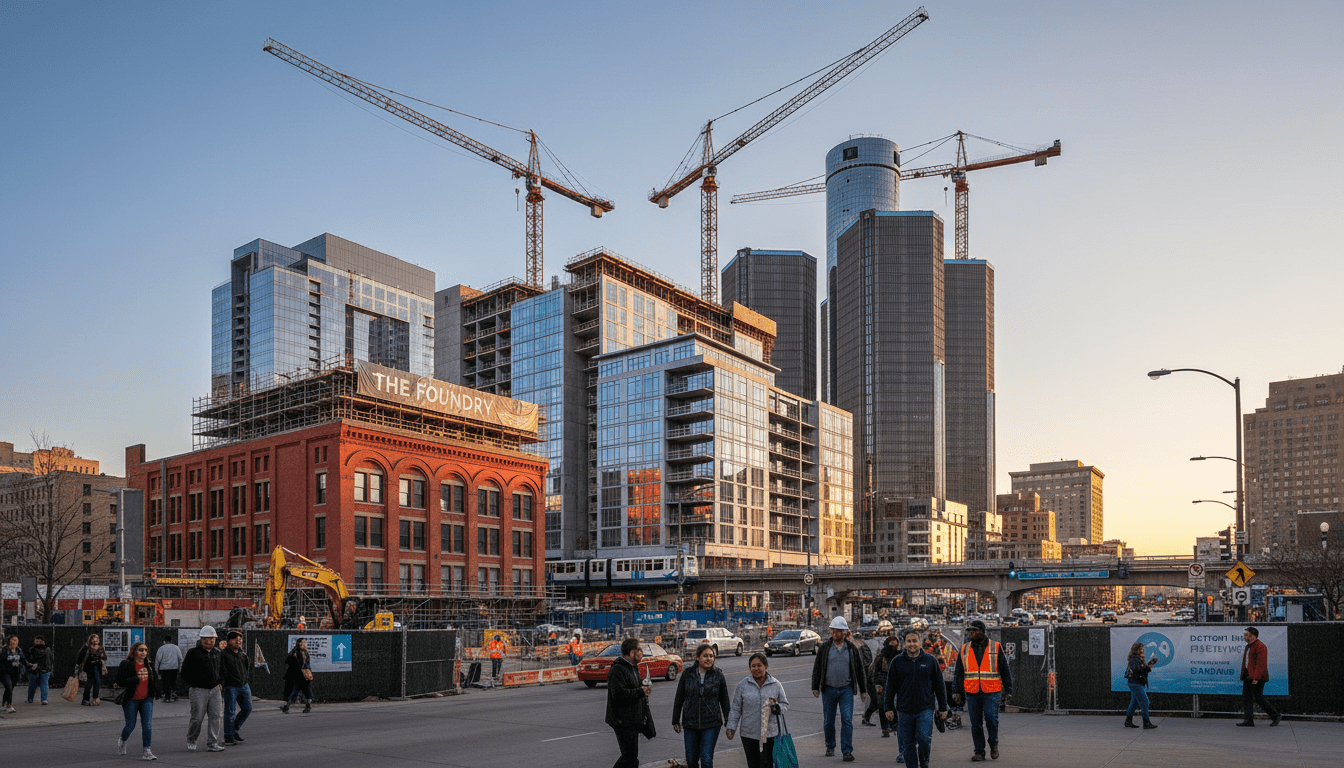
The landscape of Michigan commercial development is undergoing a significant transformation as the state moves further into the mid-2020s. From the bustling streets of downtown Detroit to the sprawling industrial parks of the metro area, developers, investors, and city planners are navigating a market defined by rapid evolution. High interest rates and shifting work patterns have altered traditional trajectories, yet the appetite for innovation in the Great Lakes State remains robust.
While the post-pandemic era initially cast a shadow of uncertainty over office spaces, a new narrative is emerging. According to recent data from regional brokerage firms and the Michigan Economic Development Corporation (MEDC), the focus has shifted heavily toward industrial growth, adaptive reuse of historic structures, and mixed-use environments that prioritize lifestyle over pure utility. For Detroit residents, these changes are not just visible on the skyline—they represent a fundamental shift in how the city lives, works, and interacts.
The Industrial Boom: Powering the State’s Economy
While high-rise office towers often capture the headlines, the true engine of current Michigan commercial development lies in the industrial sector. Fueled by the automotive industry’s transition to electric vehicles (EVs) and the reshoring of manufacturing supply chains, demand for modern industrial space has reached historic levels.
Metro Detroit continues to be a focal point for this surge. Logistics centers and light manufacturing facilities are springing up along major corridors like I-75 and I-94. Market reports indicate that vacancy rates for Class A industrial space remain incredibly tight, driving new construction projects despite higher borrowing costs.
“We are seeing a sustained demand for high-tech manufacturing spaces that can support the next generation of mobility,” said a representative from a leading Detroit-based commercial real estate firm. “It is no longer just about warehousing; it is about creating advanced facilities that support R&D and precision engineering.”
This industrial resilience provides a buffer for the broader Detroit business ecosystem, ensuring that construction jobs remain plentiful even as other sectors cool.
Adaptive Reuse: Breathing New Life into Old Offices
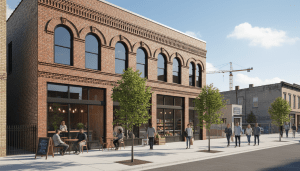
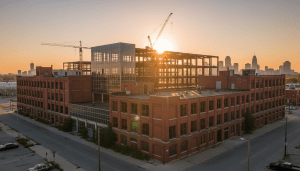
Perhaps the most visible trend in Detroit is the aggressive pivot toward adaptive reuse. With hybrid work models becoming permanent for many corporations, the demand for traditional office footprints has softened. This has forced developers to get creative with Michigan commercial development strategies, particularly in urban cores.
In downtown Detroit, older office buildings are increasingly being eyed for conversion into residential units or hospitality spaces. This “flight to quality” means that while Class A office buildings (top-tier, modern facilities) retain tenants, Class B and C buildings are being reimagined.
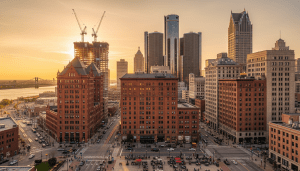
Notable projects, such as the rehabilitation of the Book Tower and the ongoing development at the Michigan Central Station district, showcase how historic preservation can merge with modern commercial needs. These projects do more than just fill space; they create walkable, 24/7 neighborhoods that attract residents back to the city center.
Impact on Detroit Residents and Local Communities
For the average Detroiter, these high-level real estate trends translate into tangible changes in daily life. The shift toward mixed-use developments—projects that combine housing, retail, and office space—is creating more self-contained, walkable neighborhoods.
Key impacts include:
- Job Creation: Construction and ongoing management of these facilities continue to drive employment.
- Neighborhood Vitality: Adaptive reuse projects often bring grocery stores, cafes, and services to areas that were previously “business-only” zones.
- Housing Availability: As obsolete offices are converted to apartments, it adds much-needed supply to the Detroit real estate market, potentially stabilizing rent growth over the long term.
“The goal is to create spaces where people actually want to be, not just where they have to be,” noted a city urban planner during a recent community forum. “When we repurpose these buildings, we are preserving Detroit’s heritage while solving modern housing shortages.”
The “Hudson’s Site” Effect and Flagship Projects
No discussion of Michigan commercial development is complete without acknowledging the transformative projects redefining Detroit’s skyline. The development on the former Hudson’s department store site is a prime example of the ambition currently driving the market. As one of the tallest architectural undertakings in the city’s recent history, it symbolizes a long-term bet on Detroit’s commercial viability.
These flagship projects serve as anchors, encouraging smaller commercial developments in their vicinity. Small business owners report that proximity to these major hubs increases foot traffic and viability for restaurants and retail shops. The ripple effect extends outward, raising property values and encouraging renovation in adjacent neighborhoods.
Challenges and Market Realities
Despite the optimism, the sector faces headwinds. High interest rates have made financing new ground-up construction significantly more expensive. According to data from the U.S. Census Bureau and construction indices, material costs have stabilized but remain elevated compared to pre-pandemic levels.
Lenders have become more cautious, requiring higher equity contributions from developers. This has led to a “pause” on some speculative projects, with developers favoring build-to-suit arrangements where a tenant is already signed before shovels hit the ground. Consequently, the frenetic pace of announcements seen in previous years may slow, leading to a more calculated, sustainable rate of growth in 2025.
Future Outlook: What Lies Ahead?
Looking ahead, the trajectory of Michigan commercial development appears to be one of adaptation rather than unbridled expansion. The focus will likely remain on:
- Green Building: Sustainability is no longer optional. Tenants demand energy-efficient buildings to meet their own ESG (Environmental, Social, and Governance) goals.
- Suburban Urbanization: Metro Detroit suburbs are increasingly mimicking the downtown experience, building town centers that offer density and walkability.
- Technology Integration: Smart buildings that utilize data to manage energy, security, and space usage are becoming the standard for Class A assets.
For Detroit, the continued evolution of the commercial sector suggests a maturing market. The city is moving beyond the initial “comeback” narrative into a phase of strategic, diversified growth. By balancing industrial strength with innovative reuse of its architectural legacy, Michigan is positioning itself to remain competitive in a fluctuating national economy.